Physical Address
Islamabad, PK
Physical Address
Islamabad, PK

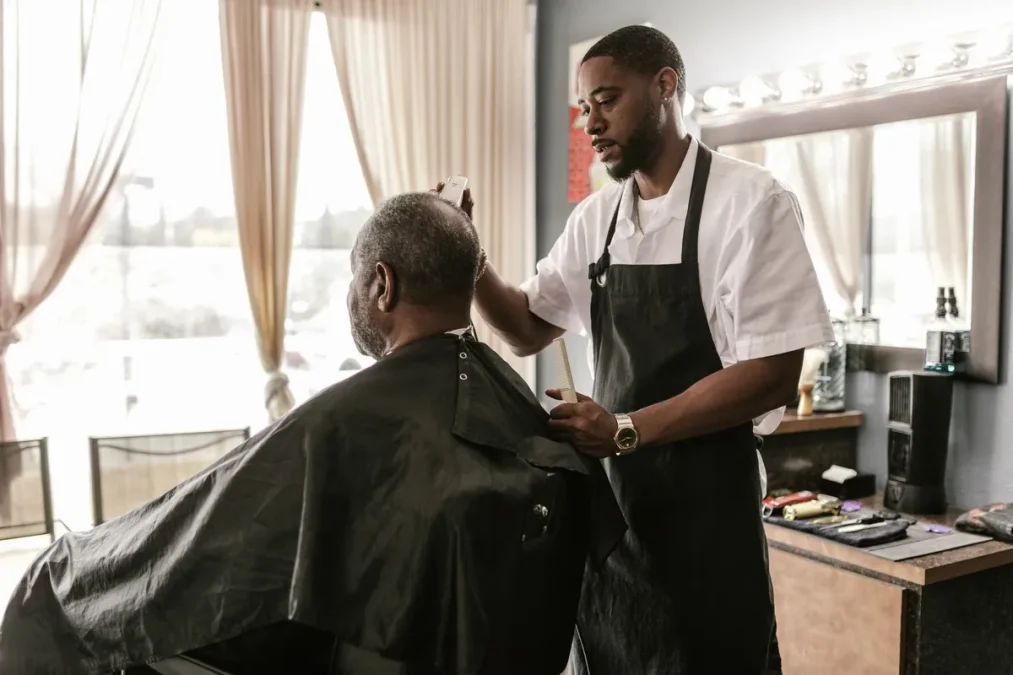
You know the cut you want. You can see it in your head. Then you sit in the chair, and the words do not come out right. You say “short on the sides” and hope for the best. The barber cuts, you look in the mirror, and the cut is not the one you asked for.
The problem is not your hair. The problem is the talk. A barber can only cut what you describe. If the words are vague, the cut will be a guess. If the words are plain and clear, the cut has a much better chance of matching what you pictured.
This guide gives you the talk. You will learn thirteen plain things to tell your barber, the words barbers use in plain words, what to do before, during, and after the cut, and the mistakes to avoid. There are no prices here, no tipping advice, and no style picks. This is a guide to the conversation, not to the cut itself.
The cut in your head and the cut on your head are two different things until you explain the first one. Your barber cannot see inside your head. He can only work with the words you give him.
“Short” is the word that causes the most trouble. Short means different things to different people. One man’s short is another man’s very short, as a tendency. “A little off the top” is no better — a little to you may be a lot to him. Vague words leave the barber guessing, and a guess is a coin toss.
A clear ask fixes this. When you say the top, the sides, the shortness, and what you do not want, the barber has a full picture to work from. The talk takes one minute. A wrong cut takes weeks to grow out.
Awkward silence costs more than a plain question. Many men sit quiet because they do not want to sound fussy. But a barber expects the talk — it is part of the job. A short talk at the start saves a long fix at the end.
“The difference between the almost right word and the right word is really a large matter—’tis the difference between the lightning-bug and the lightning.”
Mark Twain, Letter to George Bainton (1888)
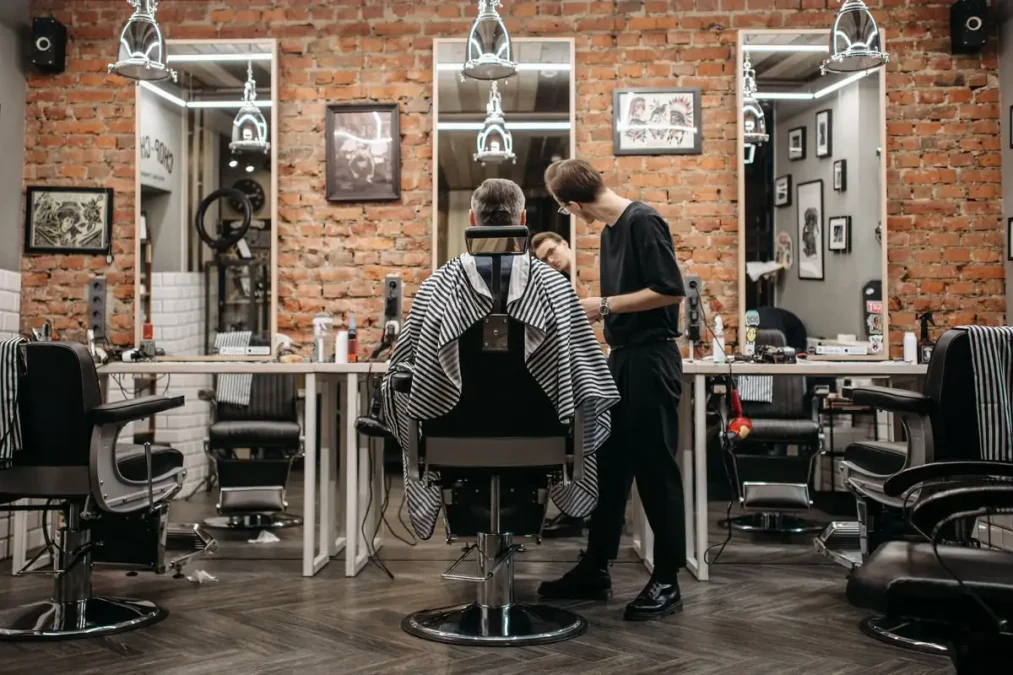
Barbers use a few words that sound strange the first time you hear them. Here they are, in plain words.
A fade is a cut where the hair gets shorter as it goes down toward the neck and ears, blending into the skin. The change is smooth, with no hard line.
A taper is like a fade, but gentler. The hair is shorter at the edges and longer on top, with a soft change as a tendency. If a fade is a sharp finish, a taper is a soft one.
A blend is the smooth change from long hair to short hair, with no hard line between the two. A good blend looks like one piece of hair, not two pieces joined together.
Texture is how the hair is cut so it looks piecey and lived-in, not flat and solid. A textured top has separate strands you can see. A flat top looks like one smooth sheet.
Length on top is how long the hair on the top of your head stays. This is the part you style every day, so it sets the whole look.
The neckline is the edge of the hair at the back of the neck. It can be tapered, squared, or rounded. Tapered fades into the skin. Squared has a straight edge. Rounded has a soft curve.
Sideburns are the strips of hair in front of your ears. They can be kept long or cut short. Say which one you want, or the barber will pick for you.
A guard is the clipper attachment that sets how short the cut is. A higher number means a longer cut. A lower number means a shorter cut. The number is the barber’s way of saying “this short”.
A cowlick is a small patch of hair that grows in a different direction from the rest. Most men have one somewhere. It matters because a cut that ignores it tends to stick up the next morning.
None of these words is a style on its own. They are the words you use to describe the style you want. Learn them once, and every visit gets easier.
For a broader background on barbers, see the Wikipedia article on the Barber.
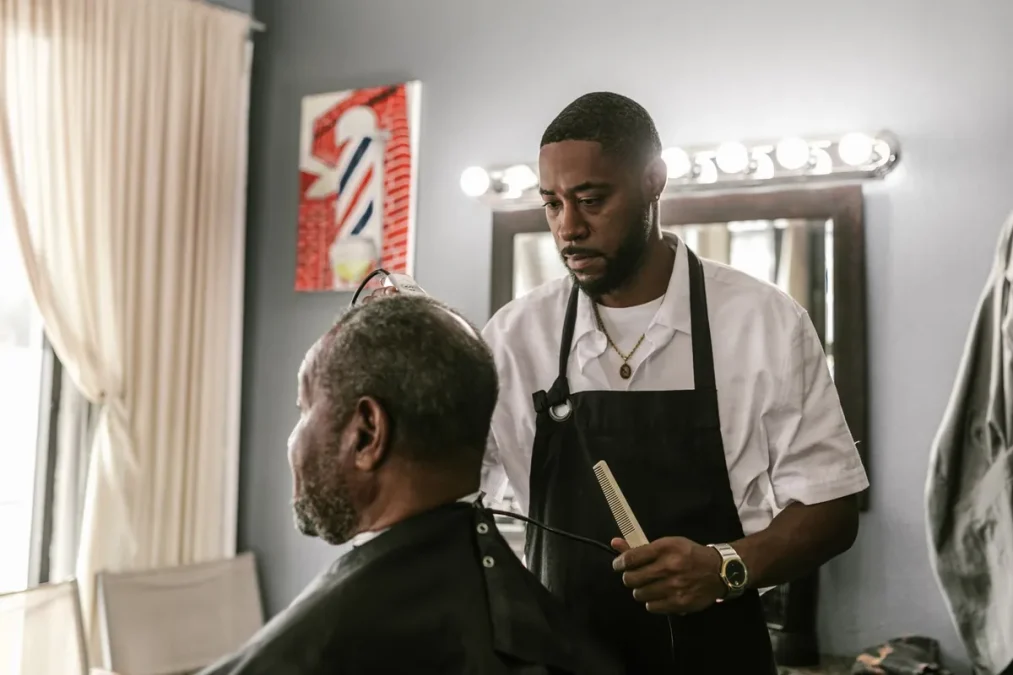
Tell the barber the length and the shape of the hair on top. Long enough to push back, short enough to stand up, or something in between. The top is the part you style every day, so it sets the whole look of the cut.
Say it in plain words. Use a plain length, like “about two finger-widths on top”. Or use a plain picture, like “long on top, short on the sides”. Then say how you style it — pushed back, to the side, or messy. The barber needs to know the top you wear, not just the top you see in a photo.
If you are not sure about the length, say so, and let the barber show you. “Keep it long enough to push back” is a clear ask. “Make it look good” is not.
Tell the barber what happens on the sides and back. Fade, taper, or scissor cut — and how the sides join the top. The sides and back frame the top. The wrong join makes the cut look uneven, as a tendency.
Name the join you want. “A fade on the sides” is clear. “A taper, not too sharp” is clear. “Scissor cut, no clippers” is clear. Then say if the sides should blend into the top or sit apart from it. Blended sides flow into the top with no line. Sides that sit apart have a clear edge where they meet the top.
The back matters as much as the sides. Say what you want at the back too — a tapered neckline, a squared edge, or a rounded one. The back is the part you never see, but everyone else does.
Tell the barber the exact shortness of the sides, in guard numbers or plain words. “Short” alone can mean very different lengths. A number or a plain comparison removes the guess.
Give the guard number if you know it. “Number 2 on the sides” is the clearest ask there is. If you do not know the number, compare it to your last cut. “Shorter than last time, but not skin short” is clear enough. “Take a little off the sides” is not — a little could mean almost nothing, or almost everything.
If you know the number from your last cut, keep it. Write it in your phone. The number is the fastest way to get the same sides twice.
Tell the barber how your hair behaves on its own. Straight, wavy, or curly. Thick or fine. And any cowlick. A cut that fights your hair’s natural way of falling tends to look wrong the next morning, as a tendency. A cut that works with it holds its shape.
Say it as straight facts. “My hair is wavy and thick.” “It falls forward on its own.” “I have a cowlick here” — and point to the spot. The barber can see your hair, but he cannot feel how it falls when you wake up. Only you know that.
This is the thing most men forget to say. They describe the cut they want, but not the hair it has to work with. The hair is half the answer. Give the barber both halves.
Tell the barber the truth about your mornings. Two minutes, ten minutes, or none at all. A cut that needs ten minutes of styling each morning fails if you only give it two, as a tendency.
Say it plainly. “I want something I can leave alone” is a clear ask. “I style it every morning, so I don’t mind some work” is a clear ask too. Both are fine. What fails is asking for a high-work cut with a low-work morning.
The barber can match the cut to your time, but only if you tell him the time. A low-effort cut and a high-effort cut can look the same in the chair. They look very different at home the next day.
Tell the barber the one thing you want him to avoid. Too short on top. A hard line. The ears fully bare. A look you had once and hated. What to avoid is as useful as what to ask for. It draws the line the barber must not cross.
Name it straight, before the clippers start. “Not too short on top.” “No hard line at the back.” “Keep the sideburns.” These are short sentences, and they do real work.
Say it before the cut, not after. After the cut, the line is already crossed. Before the cut, it is a guard rail. This is the thing that saves more cuts than any other, and it is the thing men say least.
Show the barber a photo on your phone of the cut you want. Front and side if you have two. A photo shows the length, the shape, and the finish in one look. It removes the guess from words alone, as a tendency.
Show the photo first, then say what you like about it. “The top like this, but the sides a little longer.” That one sentence does two jobs: it gives the barber the picture, and it gives him your change to it. The photo is the starting point, not the final order.
Pick a photo of a cut on hair like yours. A photo of thick straight hair will not help if your hair is fine and wavy. The closer the photo is to your own hair, the closer the cut can get to the photo.
Tell the barber where your part sits, or if you wear no part at all. Left, right, or in the middle — the part sets where the hair falls, so the barber needs to know it before he cuts. A cut built for a side part looks wrong with a middle part, as a tendency, and the other way round.
Say it in plain words. “I part it on the left.” “No part — I push it all back.” “I part it in the middle.” If you change your part from day to day, say that too, so the barber does not cut the top for one part only.
If you are not sure where your part sits, the barber can show you. Ask him to part it the way it falls on its own, and watch in the mirror. The part you wear every day is the part the cut should be built around.
Tell the barber how the hair at the front should sit. Long enough to fall on the forehead, short enough to stay clear of it, or swept to the side. The front is the first thing people see, and it is the part the barber shapes last, so say it before he gets there.
Say the length and the shape. “Keep the front long, so it falls forward.” “Short at the front, swept to the side.” “Straight across, not too short.” A plain sentence like that tells the barber the edge he is cutting toward.
A front left a little longer tends to hold its shape for longer as it grows out. A front cut very short changes shape first, as a tendency, as it grows. Say the front you want, and the cut keeps its shape for longer.
Tell the barber how often you come back. Every three weeks, every six weeks, or when it starts to look untidy. The barber can then leave a little extra length where it matters, so the cut still looks right in its last week, not just its first.
Say it as a plain fact. “I come back every five weeks.” “I want it to last a month.” “I come in when the sides lose their shape.” The barber can cut for the time between visits, not just for today.
This is the thing that saves you from a cut that looks good for a week and messy for three. A cut made to last is cut a little longer in the right places, as a tendency. A cut made for today only is cut to its shortest shape straight away.
Tell the barber what your last cut did well and what it did badly. “Last time the sides were too short.” “Last time the top was just right.” The last cut is the best guide the barber has, because it is a cut on your own head, not a photo of someone else’s.
Say it before the clippers start. The barber can then repeat what worked and change what did not. “Same top as last time, but the sides a bit longer” is one of the clearest asks there is.
This works even if the last cut was at a different barber. The new barber does not need to know who cut it. He needs to know what to keep and what to fix. Give him both, and the new cut starts from your real hair, not from zero.
Tell the barber how long you want your sideburns and how they should end. Long or short, with a straight edge or a tapered one. Sideburns are small, but they sit right next to your face, so their length and shape show at once.
Say it in plain words. “Keep the sideburns long, down to the ear.” “Short sideburns, tapered at the end.” “Straight edge, level with the top of the ear.” A plain sentence like that is all it takes.
If you say nothing, the barber will pick for you. He may pick well, or he may pick a length you would not have picked. Sideburns take ten seconds to describe, and they change the whole frame of the face.
Tell the barber what your hair goes through each day. A helmet, a hard hat, a cap, the gym, or work outside. A cut has to hold up under your real day, not just under the barber’s mirror.
Say it as plain facts. “I wear a helmet at work.” “I wear a cap most days.” “I go to the gym every morning.” The barber can then cut for the day you actually live — a little more room where the helmet presses, or a shape that still works after a cap.
This is the thing men forget because it feels like it has nothing to do with a haircut. It has everything to do with it. A cut that fights your day looks wrong by lunchtime, as a tendency. A cut that fits your day still looks right when you get home.
Bring a photo, saved on your phone, of the cut you want. Front and side if you have two. Save it before you leave home, so you are not searching for it in the chair.
Wash your hair before the visit, so the barber sees it clean and as it normally falls. Clean hair shows its true length, its true direction, and its cowlicks. Dirty hair hides all three.
Know your last cut. What you liked about it, what you did not like, and how long ago it was. “Last time the sides were too short” is useful. “Last time was fine” is not — it tells the barber nothing to repeat or to change.
Arrive with a clear head. Decide the thirteen things before you sit down, not while the cape goes on. The cape is not the time to think. The talk works best when you have already done the thinking.
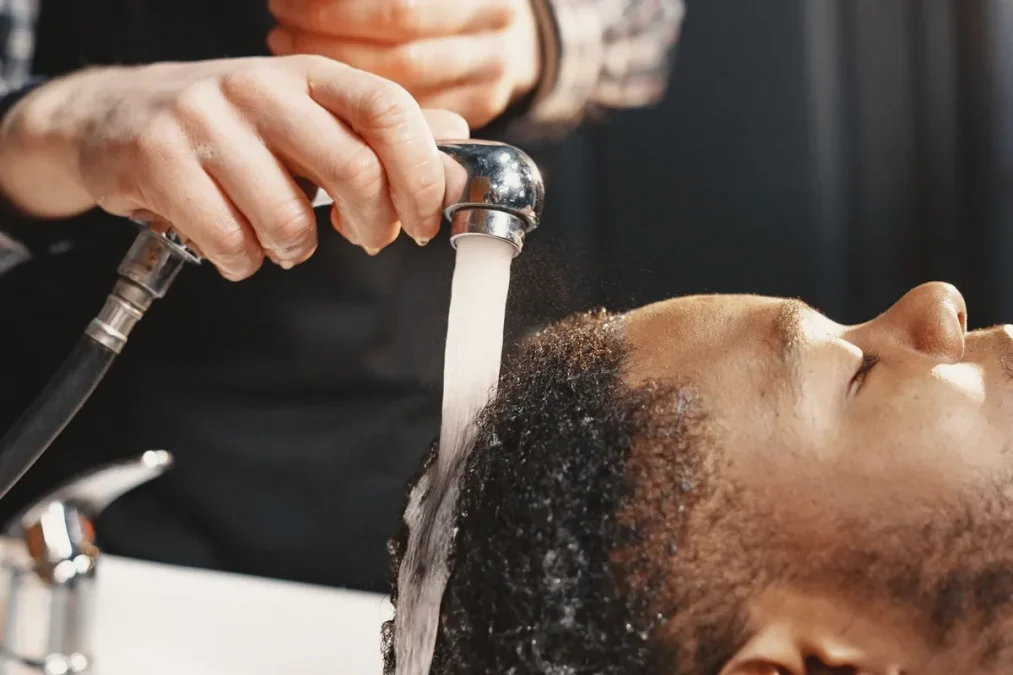
Watch the mirror. The barber works in front of you, so check the length and the shape as it takes form. The mirror is there for you, not just for the barber.
Ask for a check part-way through. “Can I see the back?” is a plain, normal thing to ask. The barber will hold a mirror up, and you will see the part you never see. Ask before the back is finished, not after.
Speak up early. A small change is easy while the cut is still in progress, and hard once it is done. Hair that is cut short cannot be put back. Hair that is still long can still be shaped.
Use plain words for fixes. “A little shorter here.” “Keep this part longer.” “Blend this line more.” Point to the spot as you say it. The barber’s hands are busy — your finger shows him where to look.
Trust the barber’s hands, but keep your eyes open. The cut is yours, and checking it is part of the job, not an insult. A good barber wants to hear it now, not see you unhappy later.
“Once more: speak clearly, if you speak at all; Carve every word before you let it fall.”
Oliver Wendell Holmes Sr., “Urania: A Rhymed Lesson” (1846)
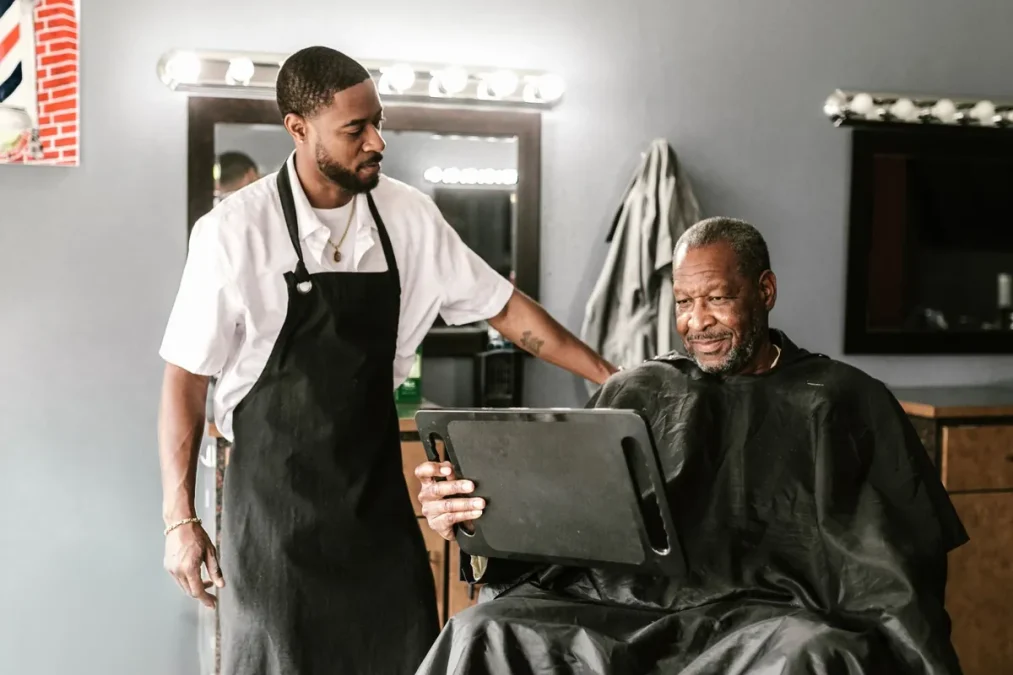
Ask how to style it. Which way to comb it, how much product if any, and how it should dry. The barber has just styled it in front of you — ask him to show you what he did, step by step, so you can do it at home.
Ask what to watch for. How the cut grows out, and what will need a trim first, as a tendency. The top grows out one way, the sides another. Knowing which part goes first tells you when to come back.
Remember what worked. Note the guard number and the top length, so the next visit starts from the same place. Write them in your phone before you leave. Next time, you will not have to start from zero.
Book the next visit by how the cut looks as it grows, not by a fixed calendar rule. When the sides start to lose their shape, it is time. The maintenance schedule guide covers the timing in full.
Saying only “short” is the first mistake. One vague word, and the barber must guess the rest. Give him the thirteen things, and there is nothing left to guess.
Forgetting what you do not want is the second mistake. Without the line, the barber can cross it by mistake. Say the line before the clippers start.
Hiding a cowlick is the third mistake. The barber finds it too late, when the cut is already set. Point to it at the start, and the cut can work around it.
Staying silent in the mirror is the fourth mistake. A fix asked for late is a fix that may not be possible. Check the cut part-way through, and speak up while there is still hair to shape.
Asking for a cut that needs styling you never do is the fifth mistake. The cut looks good in the chair and wrong at home, as a tendency. Match the cut to your real mornings, not to the mornings you wish you had.
“Experience is the name every one gives to their mistakes.”
Oscar Wilde, Lady Windermere’s Fan (1892)
Tell your barber thirteen things: the top, the sides and back, how short, what your hair does, your styling time, what you do not want, a photo, your part, the front, how long the cut should last, your last cut, your sideburns, and what your day does to your hair. Learn the words barbers use, so fade, taper, blend, and guard mean the same thing to both of you.
Before the cut, bring the photo, wash your hair, and know your last cut. During the cut, watch the mirror and speak up early. After the cut, ask how to style it and note the guard number and the top length for next time. Avoid the five mistakes, and the talk takes care of the cut.
Say that first, then describe what you do know: the top you like, how short you want the sides, how much time you spend styling, and what you do not want. A barber can work from those plain facts, and a photo of a cut you like helps even more. Knowing nothing is fine — saying nothing is the problem.
Yes. A photo shows the length, the shape, and the finish in one look, and it removes the guess from words alone as a tendency. Show it first, then say what you like about it and what you would change — “the top like this, but the sides a little longer”. A front and a side photo together work best.
A fade is a cut where the hair gets shorter as it goes down toward the neck and ears, blending into the skin. A taper is like a fade, but gentler — shorter at the edges and longer on top, with a soft change as a tendency. If you want a sharp, clean finish, say fade. If you want a softer edge, say taper. The taper vs fade guide covers the two cuts in full.
There is no one right number — it depends on how short you want the sides. A higher guard number means a longer cut, a lower number means a shorter cut. If you know the number from your last cut, say it. If you do not, compare it to your last cut — “shorter than last time, but not skin short” — and let the barber pick the number. The guard chart guide has the full numbers.
Say it while the cut is still in progress, in plain words: “a little shorter here”, “keep this part longer”, “blend this line more”. Small changes are easy early and hard at the end. A barber would rather hear it now than see you unhappy later. Checking in the mirror and speaking up is part of the job, not an insult.
Yes, wash it before the visit, so the barber sees it clean and as it normally falls. Clean hair shows its true length, direction, and cowlicks. The shampoo and conditioner guide covers washing in full.
Tell the barber, and point to the spot. A cowlick is a small patch of hair that grows in a different direction from the rest, and a cut that ignores it tends to look wrong the next morning as a tendency. Said early, the barber can cut around it or work with it.
Note what worked: the guard number, the top length, and the join on the sides. Next time, say those same plain facts — “number 2 on the sides, long on top, same as last time” — and show the same photo if you have one. The barber can then start from where you left off.