Physical Address
Islamabad, PK
Physical Address
Islamabad, PK

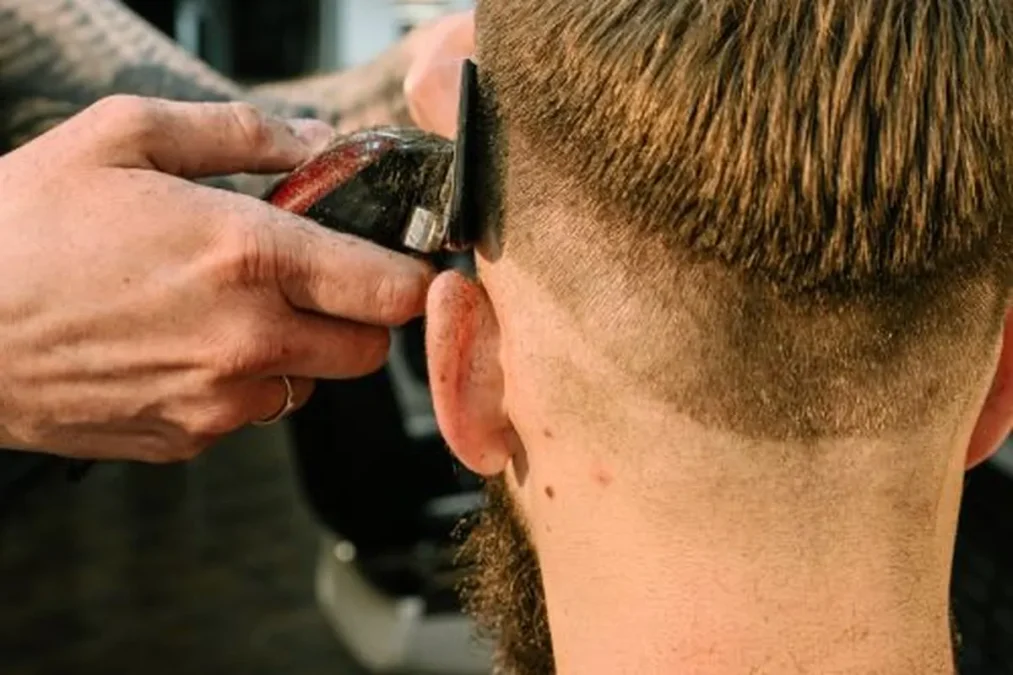
Minimalist style is easy to describe and harder to get wrong once you see it: fewer pieces, clean lines, neutral colours, nothing worn for show. The haircut that belongs with that wardrobe follows the same rule. It does not compete with the rest of the look, it does not need a performance every morning, and it does not turn into a different haircut a week after the barber. This guide to haircuts for minimalist style covers seven cuts that pass that test, how to pick one for your face shape and hair type, and the exact words to use in the barber’s chair.
A minimalist cut is not defined by a ruler. It is defined by four tests, and a cut that passes all four earns its place in this guide. A cut that fails one can still appear, but only with the failure named honestly, so you know what you are trading.
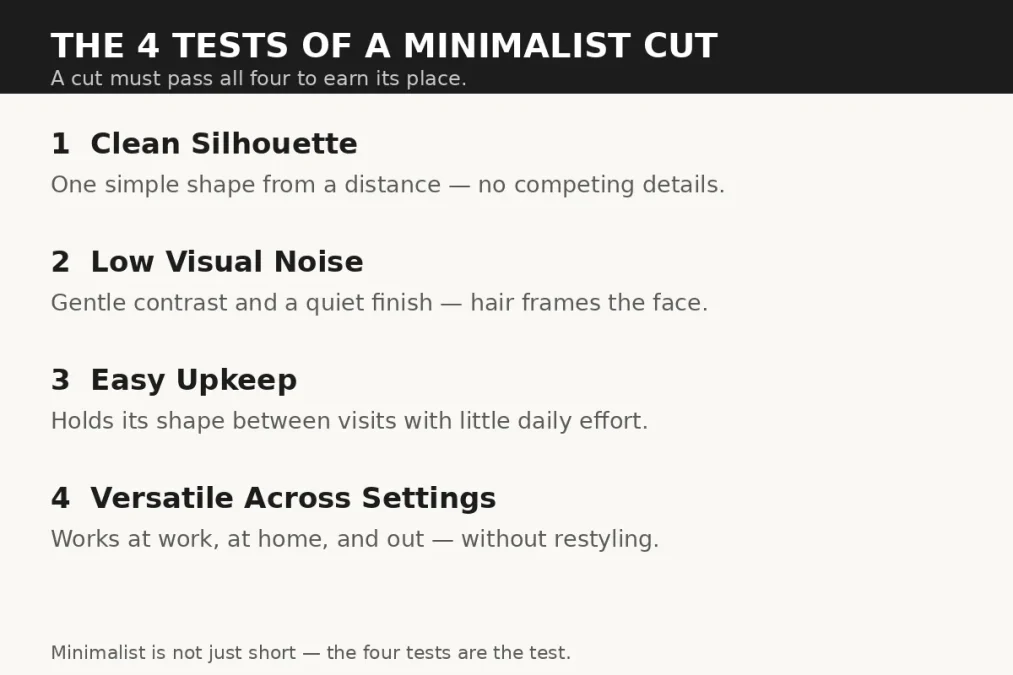
The outline of the cut should read as one simple shape from a distance, not a collection of competing details. Stand back and squint: if the shape is one calm outline, it passes. If your eye catches a sharp step, a carved line, or a section that sticks out from the rest, that is a detail asking for attention, and attention is the opposite of minimal.
Visual noise is anything in the cut that shouts: an extreme contrast between a shaved side and a long top, a pattern cut into the hair, a finish so shiny or so dry that it dominates the face. A minimalist cut keeps contrast gentle and finish quiet. The hair should frame the face, not announce itself before the face does.
The cut should hold its shape between visits with little daily effort, and it should grow out without turning into a different style within days. This is where short cuts have a natural advantage — and also a natural cost, covered in the maintenance section: a short silhouette shows growth sooner, so visits come more often, but each morning costs almost nothing.
The same cut should work at work, at home, and out, without being restyled into a different haircut each time. If a cut only looks right with one outfit register — only with a suit, or only with a T-shirt — it is a costume, not a minimalist cut.
This distinction matters, because it is the commonest mistake. A very short cut with a carved pattern or a sharp disconnect is short but not minimalist: it has a detail designed to be noticed. And a slightly longer cut with a clean silhouette and quiet finish can be minimalist even though it is not the shortest cut in the room. Length is a clue, not the test. The four tests above are the test.
This article is the bridge between two parts of the site: the haircut side and the fashion side. For the broader picture of cuts, see our men’s haircuts guide. For the wardrobe these cuts are meant to sit with, see our minimalist fashion guide. What follows is the hair side of that bridge only — the wardrobe itself stays in the fashion guide, not re-covered here.
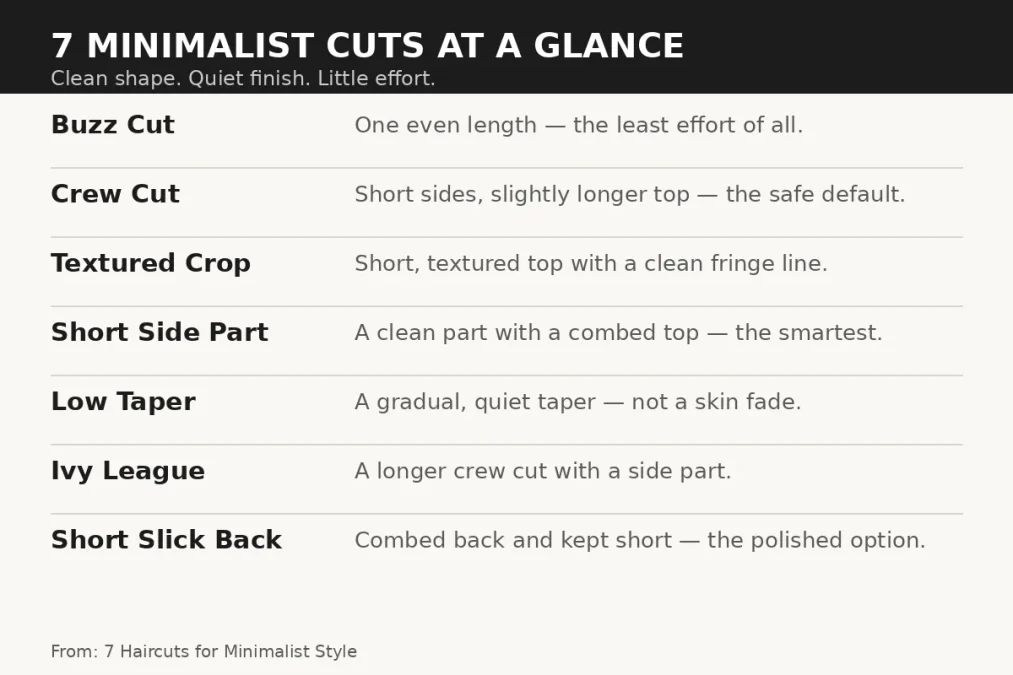
Read the seven in full below, or use the choosing sections to narrow them first: face shape, then hair type, then the barber script.
The buzz cut is the purest minimalist cut there is, and also the most honest one: there is nowhere for a flaw to hide, and nothing to fix in the morning.
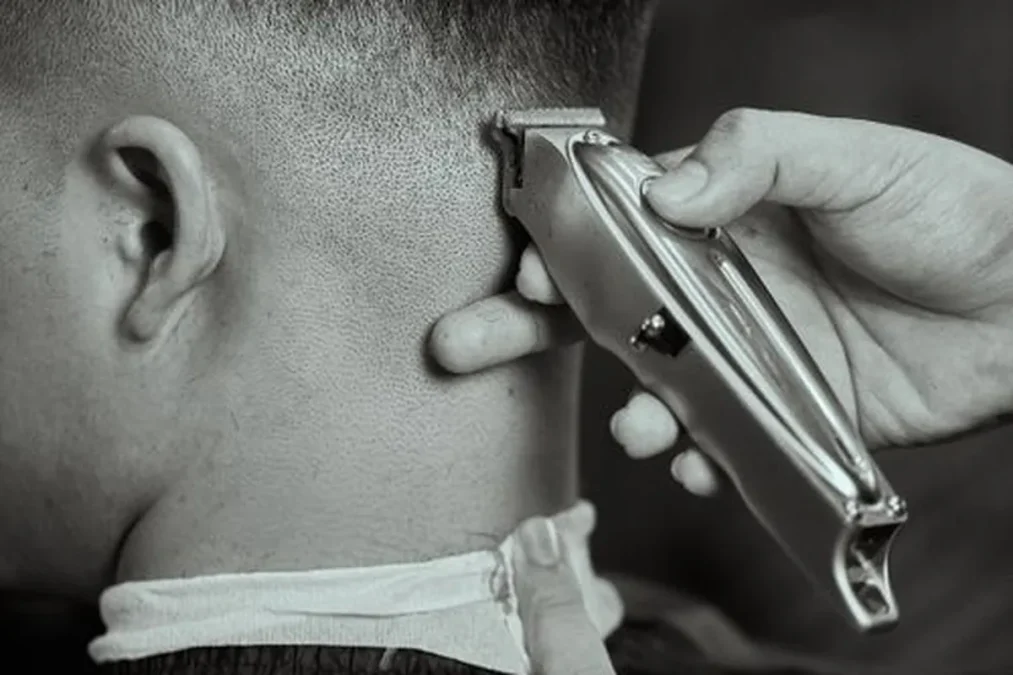
One even length all over, cut close to the head. There is no top-versus-sides contrast to manage, no part to place, no fringe to keep straight. The silhouette is the shape of the head itself, which is exactly why it reads as so clean — and exactly why it is not for everyone.
It suits men who want the lowest possible daily effort and who are comfortable with their head shape being fully on show. It suits straight and fine hair particularly well, since short length generally keeps fine hair looking fuller than long length does, and it suits thick hair too, because there is no bulk left to fight. It suits most face shapes in the sense that it adds nothing and takes nothing away — but that neutrality is also its limit: it cannot lengthen a round face or soften a square jaw, because it does not add shape at all.
Two costs, both plain. First, the head shape is the style: an uneven crown, a prominent scar, or a hairline you would rather soften will all be visible, and no styling can cover them at this length. Second, there is no styling variation: the buzz cut looks like a buzz cut every day, in every setting. For a minimalist that is usually the point, not a problem — but it is worth knowing before the clippers come out, because growing it back into something else takes time.
If the buzz cut is minimalism at its most extreme, the crew cut is minimalism at its most useful. It is the cut to pick when you do not want to think about the decision any longer.
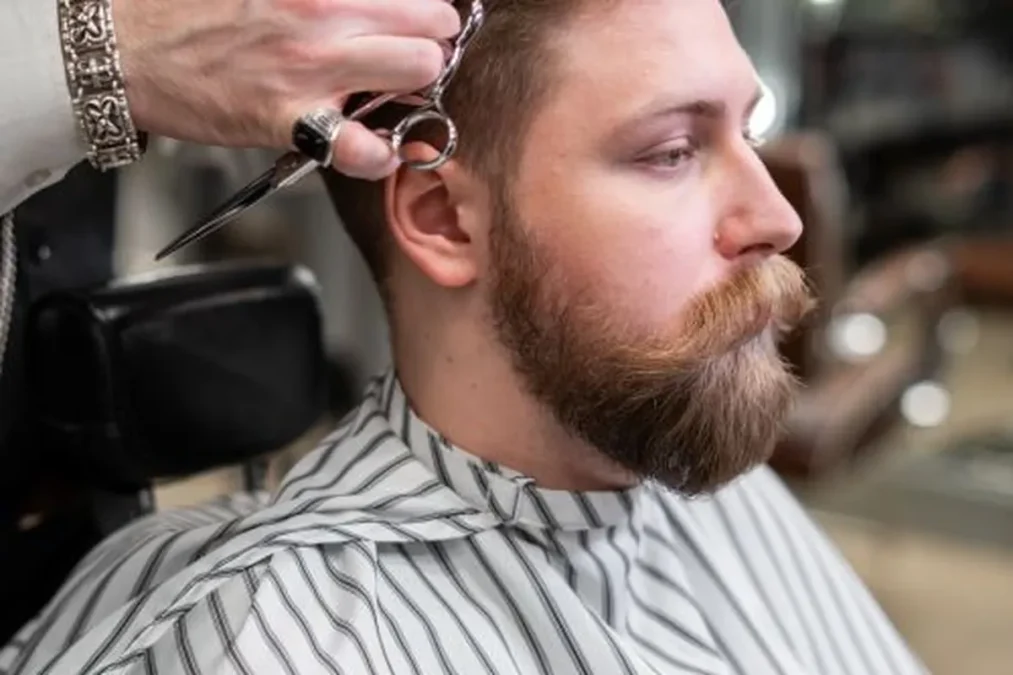
Short on the sides, slightly longer on top, tapered at the edges so the blend is gradual rather than stepped. The top is short enough to fall into place on its own, and long enough that the cut still reads as a haircut rather than a shave. That small amount of length on top is the whole difference between the crew cut and the buzz cut, and it is a useful difference: it gives the cut a shape that can be adjusted slightly, without giving it anything that needs styling.
Almost everyone, which is why it is the default. It suits straight, wavy, thick, and fine hair, and it suits most face shapes, because its proportions are balanced: short sides keep the silhouette narrow, and a little length on top gives the face a clean vertical line. For a man choosing his first minimalist cut, the crew cut is the lowest-risk starting point, and a barber will understand it instantly.
Very little, honestly. The crew cut grows out evenly, so it degrades gracefully rather than falling apart: it gets longer all over, and the silhouette stays calm. Its main cost is the same as its main virtue — it is unremarkable. If you want a cut with a visible personality, the crew cut will not give you one. For a minimalist wardrobe, unremarkable is the brief.
The textured crop is the newest cut in this guide, and the one most likely to be mistaken for a fashion statement. Kept short, it is not one: it is a clean shape with movement on top instead of a flat comb line.
Short sides with a short, textured top and a clean fringe line across the forehead. The texture comes from the way the top is cut — short layers that sit in slightly separated pieces rather than one flat sheet — not from product. The fringe is the detail that makes it a crop rather than a crew cut, and it is also the detail that needs keeping neat, as the cost section below says.
It suits wavy hair particularly well, because the wave gives the texture for free: the cut works with the hair’s natural movement instead of combing against it. It suits straight hair too, where a small amount of matte product can create the separation, and it suits thick hair kept short, since the short top removes bulk. It is a good pick for men who want a modern look without a modern amount of effort.
The fringe line. As the fringe grows, it loses its clean edge first — it starts to fall unevenly across the forehead, and the cut stops looking intentional. That means the crop shows its age sooner than the buzz or crew cut, and visits need to come before the fringe turns scruffy. Daily, it costs almost nothing: wash, let it fall, and leave it alone.
The side part is the oldest cut in this guide and the smartest-looking one. It is also the only one here that asks something of you every morning, and this section does not hide that.
A clean part on one side, a combed top that lies in one direction, and shorter sides that keep the silhouette narrow. The part itself is the detail: it gives the cut a visible line and a sense of intention that the other six do not have. Kept short, the top stays manageable; let it grow long, and the part becomes a project rather than a line.
It suits straight hair best, since straight hair holds a comb line cleanly, and it suits men who want a cut that looks deliberate in a smart setting — work, formal occasions, anywhere a suit appears. It suits oval and square faces well, where the part adds structure without fighting the jaw. On wavy hair it can still work, but the wave will fight the comb line, and the morning cost goes up.
A comb and a little product, every day. The side part does not fall into place on its own the way a crew cut does: the part has to be placed, and the top has to be combed into direction. That is a small cost — a minute or two — but it is a daily cost, and it is the reason this cut sits at the higher-effort end of this guide even though it passes the silhouette and low-noise tests easily. If a zero-effort morning is the priority, pick the crew cut instead.
The low taper is the cut for a man who likes a fade’s clean neckline but does not want a fade’s statement. The difference is the height and the gradualness: this taper stays low and quiet.
The hair is tapered gradually at the nape and above the ears, blending smoothly into the slightly longer hair above, with the top kept short and simple. The taper is low — it does not climb high up the head — and it is gradual, not stepped. That is what separates it from a skin fade: a skin fade is designed to be noticed, with a sharp contrast between shaved skin and longer hair. A low taper is designed not to be noticed, which is why it belongs in this guide and a skin fade does not.
It suits most hair types, and it suits thick hair particularly well, because the taper removes bulk exactly where thick hair tends to push out — at the nape and above the ears — while keeping the top simple. It suits men who want the neatest possible neckline without a dramatic look, and it pairs cleanly with a short top in any of the other styles here: a taper is as much a finishing detail as a cut in its own right.
The neckline. A taper’s clean edge is the first thing to blur as it grows out, so the cut looks less sharp sooner than a crew cut does, even though the top still looks fine. The daily cost is nothing — the taper needs no styling — but the visit cost is real: keeping that edge clean is what keeps the cut reading as intentional.
The Ivy League is a crew cut that grew up a little: longer on top, with a side part, short enough to stay neat and long enough to comb. It is the bridge cut inside this guide, the same way this article is a bridge between hair and fashion.
Short sides with a top long enough to part to one side and comb into place — typically the longest top in this guide, but still short by any normal measure. The part is softer than the short side part’s clean line, and the overall silhouette stays compact. Think of it as the crew cut’s smarter older brother: same family, more polish.
It suits straight hair best, since the comb direction needs to hold, and it suits men who want one cut for both casual and smart settings without restyling — the Ivy League looks at home with a T-shirt and with a jacket, which is the versatility test in action. It suits oval and longer faces less well than the crew cut does, because the extra length on top can add height where a longer face does not need it — one of the tendencies the face-shape section covers.
A little morning effort, like the side part but less: the part needs placing and the top needs a comb-through, though the shorter length forgives more than a long side part does. It also costs a little more growing-out attention than the crew cut, since the longer top loses its comb line as it passes combing length. Neither cost is large; together they are why the Ivy League sits in the middle of this guide’s effort range, not at either end.
The slick back is the polished end of minimalism: combed back, kept short, with nothing else going on. It works as a minimalist cut only because it is kept short — a long slick back is a different animal, with a different effort bill.
The top is combed straight back from the forehead, with short sides keeping the silhouette narrow, and the whole cut kept short enough that it does not need heavy hold to stay put. The finish is neat and controlled, not wet-looking or stiff: the point is polish, not armour. On straight hair the comb line holds easily; on wavy hair it takes more work, as the cost section says.
It suits straight hair and men who want the most polished look in this guide without leaving minimalism behind — a cut that looks deliberate in a smart setting and still quiet enough for a simple wardrobe. It suits faces where a clean, swept-back top flatters the forehead and hairline, and it suits men whose hairline is even enough that sweeping the hair back does not draw attention to it.
Effort, especially on wavy hair. The wave will try to return the hair to its natural direction, so a slick back on wavy hair needs more product and more combing than the same cut on straight hair, and it may still loosen during the day. Even on straight hair, the slick back needs a comb and a little product every morning — it does not fall into place. That daily cost is the reason it sits last in this guide’s effort order: it passes the silhouette and low-noise tests, but it is the least effortless of the seven.
Face shape guidance is tendencies, not rules. A tendency says a cut can flatter a shape; it does not promise it will, and head shape, hairline, and personal preference can override any tendency below. Treat this section as a starting point for the barber conversation, not a verdict.
Round faces often suit cuts with a little height on top and shorter sides — the crew cut, the textured crop, or the Ivy League — because the height can lengthen the look of the face and the short sides keep the silhouette narrow. Square faces often suit most of the seven, since the jaw already gives structure and the cut’s job is mainly not to fight it: the crew cut, the buzz cut, and the short side part all work, and the choice becomes a matter of effort and setting rather than shape. Oval faces often suit the widest range, since proportions are already balanced; if your face is oval, pick by hair type and effort instead of by shape, because shape narrows almost nothing down.
Longer faces often suit cuts that avoid adding much height on top, keeping the silhouette compact: the buzz cut, the crew cut, and the low taper, rather than the Ivy League or a high slick back. Heart-shaped faces often suit cuts with some width at the sides rather than everything pulled tight and high — a crew cut or a textured crop with a little side fullness, rather than a severe slick back that narrows the sides and emphasises the forehead. In both cases, “often” is doing real work: these are starting tendencies, and a barber who can see your head will beat a paragraph that cannot.
Ignore the tendency whenever it conflicts with something you know about your own hair or your own taste. A receding hairline can matter more than face shape for a slick back. Very thick hair can matter more than face shape for a taper. And preference matters outright: a cut you like and will keep is better than a cut a chart prefers and you will grow out in frustration. The barber script in the next sections exists so that this conversation happens in words, not just in a chart.
Hair type changes the choice as much as face shape does, and in one way more: face shape is a tendency, but hair type is a daily fact. A cut that fights your hair type will cost you effort every single morning; a cut that works with it will cost you almost none.
Straight hair holds clean lines well, so it suits the combed cuts best: the short side part, the Ivy League, and the short slick back all rely on a neat comb line that straight hair gives for free. Texture on top may need a little product to show on straight hair, since the hair has no natural separation of its own. Wavy hair suits the textured crop and the crew cut, because the wave gives the texture and the movement without being combed against. The combed cuts can still work on wavy hair, but the wave will fight the comb line, and the morning cost goes up — that is the honest trade, stated in the cut sections above, not a reason to rule the combed cuts out entirely.
Curly hair can be minimalist, but only kept short: a crop or a low taper that works with the curl, keeping the silhouette compact and the curl controlled by length rather than by product. Longer curly styling, with its own routines and its own decisions, belongs to the curly-haircut guide that follows this article in the queue — it is mentioned here only, not covered, because it is a separate node with its own detail. What matters here is the principle: short length turns curl from a management problem into a texture, and that is a minimalist outcome.
Thick hair’s issue is bulk: it pushes out at the sides and the nape, and a cut that ignores that will lose its clean silhouette as it grows. The low taper removes bulk exactly where it gathers, and the crop and crew cut keep the top short enough that bulk has nowhere to build. For the product side of thick hair — which types control bulk and frizz without stiffness — see our guide to products for thick hair. Fine hair’s issue is the opposite: length makes it look thinner, so short lengths generally keep fine hair looking fuller than long lengths do. The buzz cut and the crew cut are the safest minimalist picks for fine hair, and the textured crop can work where a little separation adds the appearance of fullness. Fine-hair product guidance is not covered in this article, and no fine-hair product article is presented here.
A minimalist cut is only minimalist if it stays that way between visits. This section is about what happens after the barber, in general terms: no fixed schedule is given, because exact trim intervals per cut are not established, and the schedule system itself belongs to a separate guide.
Short cuts show growth sooner than long ones, because a few millimetres of growth change a short silhouette more than they change a long one. The outline blurs first where the cut’s clean edge lives: the neckline on a taper, the fringe line on a crop, the part line on a side part. The top usually still looks fine when the edge has already gone — which is why a cut can look “grown out” even though most of the hair still looks right. Knowing where your cut blurs first tells you when to book, better than any calendar does.
The buzz cut and the crew cut grow out most evenly: they get longer all over, and the silhouette stays calm, so they forgive a late visit better than the rest. The taper and the crop lose their clean edge first, at the neckline and the fringe, so they show their age sooner even though the top is fine. The combed cuts — side part, Ivy League, slick back — lose their line as the top length passes combing length: the part gets harder to place, the comb direction gets harder to hold, and the cut starts to look like a longer style it was never meant to be. None of this is a fixed timetable; it is a description of what to watch for, so the visit happens when the cut needs it rather than on a date someone else chose.
For most of the seven, the daily routine is washing and letting the hair fall into place, with product optional rather than required. The buzz cut, crew cut, crop, and low taper ask nothing more than that. The combed cuts ask for a comb and a little product, as their sections say. That split is the practical heart of this article: if your morning routine is wash-and-go, pick from the first group; if you are happy to spend a minute with a comb, the second group opens up. A separate guide to keeping cuts on schedule exists in draft form and is mentioned here only; no fixed interval from it is quoted, because none is established in this article.
A good barber cut starts with good words. The script below is written to be spoken, not memorised: use the parts that fit your cut, and leave the rest.
Start with the cut name — “a crew cut,” “a low taper,” “a textured crop” — then describe the silhouette in words, not numbers: “short on top, tapered at the sides, clean outline, nothing sharp.” Length in words beats clipper numbers for most men, because a number means different things on different heads and in different barbers’ hands, and stating a number as a universal recipe would be false precision. If you and your barber already share a numbering language from previous visits, use it — but do not let a number replace the silhouette description.
The exclusions matter as much as the request, because they prevent the commonest minimalist failure: a barber adding a detail you did not ask for. Say it plainly: “no skin fade, no hard line, no disconnect, no carved pattern.” A barber who hears the exclusion will not add the detail to be helpful, and you will not discover it in the mirror at home.
A reference photo helps, but the words matter more than the photo, because the barber cuts what he hears. Show the photo, then say what you like about it in the words above — the silhouette, the length, the quiet finish — so the barber is cutting your description, not copying a stranger’s head onto yours. If the photo’s hair type or face shape is very different from yours, say that too, and ask what will change: a good barber will tell you before cutting, not after.
For general hair-care basics, see the American Academy of Dermatology’s tips for healthy hair.
The styling rule for a minimalist cut is simple: the cut should need little or no product, and if it needs a shelf of products, it is not minimalist, whatever it is called.
For the textured crop and the crew cut’s textured days, a small amount of a matte product is enough: warmed between the palms, worked through the top, and left alone. The product’s job is to show separation that is already in the cut, not to create a style the cut does not have. More product does not mean more texture; it usually means a heavier, duller result, and the fix is less product, not a different one.
For the side part, the Ivy League, and the slick back, a light pomade or a light-hold product gives the comb line without stiffness. Heavy hold is the mistake here: it turns a quiet, combed cut into a set, shell-like style, which is the opposite of the low-noise test. For a fuller account of how pomade compares with the other styling categories, see our comparison of pomade vs clay vs wax vs paste — this section gives only the minimalist verdict, not the full comparison.
Count the products a cut needs every morning. Zero or one is minimalist. Two is borderline, and worth asking whether the cut is right. Three or more, and the cut is not minimalist, however short it is: the daily routine has become the style, and the style has become a job. The shelf test is a useful check at any point, including months after the cut, when a routine has quietly grown around a cut that started simple.
Four errors cause most minimalist haircut disappointments, and all four are avoidable before the barber starts.
A skin fade, a sharp disconnect, or a carved pattern is a deliberate contrast designed to be noticed. On a minimalist wardrobe it does the opposite of what the wardrobe is doing: it pulls the eye to the hair first. If you want a fade, the low taper in this guide is the minimalist version — gradual, low, and quiet. The statement version belongs to a different style, not a failed version of this one.
Length is not minimalism. A long style kept because it seems simpler than choosing a cut will cost daily management — washing, drying, controlling, restyling — that a short cut does not ask for. If the reason for the length is avoiding a decision, the decision is still waiting, and the daily cost is its interest.
Heavy hold, heavy shine, or a large amount of any product on a buzz cut, a crew cut, or a crop turns a quiet cut into a loud one. The product should be invisible in the result: if someone can tell what you used, you used too much or the wrong category. Less product, or none, is the fix, not a different product.
A cut that looks perfect on someone else’s head shape, hairline, and hair type can look ordinary on yours, because those three facts are part of the cut’s result. The choosing sections exist for this reason: check face shape and hair type before copying, and use the barber script to translate the cut into your own version rather than a replica.
The point of a minimalist cut, in one line: the best one is the one you stop noticing — it fits the wardrobe, it fits the morning, and it stops being a decision. Pick from the seven by the tests in this article, not by the loudest photo: face shape narrows it, hair type narrows it further, and the effort you will actually spend each morning finishes the job.
For the broader picture of cuts, see our men’s haircuts guide. For the wardrobe these cuts sit with, see our minimalist fashion guide. For the product side, the full comparison is our pomade vs clay vs wax vs paste guide, and thick-hair product detail is in our products for thick hair guide. Separate guides to low-maintenance cuts and to keeping cuts on schedule are in preparation and are mentioned here only; no detail from them is quoted, because they are not published yet.
A minimalist haircut is not the shortest cut, or the simplest photo — it is the cut that passes the four tests on your head, with your hair, on your mornings.
A minimalist cut is not the shortest cut, and it is not the simplest photo. It is the cut that passes the four tests on your head, with your hair, on your mornings. Do not pick by the loudest photo. Let your face shape narrow it down, let your hair type narrow it more, and let the effort you will spend each morning finish the job.
There is no universal winner, and any article that names one is selling a preference as a fact. The four tests decide — clean silhouette, low visual noise, easy upkeep, versatility — and the best of the seven depends on your face shape, your hair type, and how much daily effort you will accept. The seven cuts plus the choosing sections above are the answer, not one cut.
No. Length alone does not decide it. A short cut with a carved pattern or a sharp disconnect is short but not minimalist, because it has a detail designed to be noticed. And a slightly longer cut with a clean silhouette and a quiet finish — the Ivy League, for example — can be minimalist even though it is not the shortest cut in the room. The four tests are the test, not the ruler.
The buzz cut, then the crew cut. The buzz cut needs nothing in the morning and grows out evenly; the crew cut needs almost nothing and also grows out evenly. The trade-off is named in their sections: the least styling variation, and in the buzz cut’s case, the head shape fully on show. If variation matters to you, the crew cut is the better low-maintenance pick, because its slightly longer top gives a little more room.
Yes, kept short. A textured crop or a low taper works with the wave or curl rather than against it, keeping the silhouette compact and letting the natural texture do the work. The combed cuts — side part and slick back — cost more effort on wavy hair, because the wave fights the comb line. Longer curly styling belongs to a separate curly-haircut guide, mentioned here only, because it is a separate node with its own detail.
Tendencies only, not a promise: cuts with a little height on top and shorter sides — the crew cut, the textured crop, or the Ivy League — can lengthen the look of a round face, because the height adds a vertical line and the short sides keep the silhouette narrow. Head shape, hairline, and personal preference can override any tendency, so use this as a starting point for the barber conversation, not a verdict.
In general terms only: short cuts show growth sooner than longer styles, because a few millimetres of growth change a short silhouette more than they change a long one, so visits come more often than they would for a longer style. No fixed interval is stated here, because exact intervals per cut are not established. A separate guide to keeping cuts on schedule is in preparation; when it is published, it will carry the detail, and this article will point to it rather than duplicate it.
Say the cut name, then the silhouette in words — “short on top, tapered at the sides, clean outline, nothing sharp” — and then say what you do not want: “no skin fade, no hard line, no disconnect, no carved pattern.” Length in words beats clipper numbers for most men, because a number means different things on different heads. A reference photo helps, but say what you like about it in words, so the barber cuts your description rather than copying a stranger’s head.
Most of the seven need little or none — wash and let the hair fall into place. The combed cuts are the exceptions: the side part, the Ivy League, and the slick back need a comb and a little matte product or light pomade. If a cut needs a shelf of products every morning, it is not minimalist, whatever it is called. No product name or price is named here; for the full product comparison, see our pomade vs clay vs wax vs paste guide.