Physical Address
Islamabad, PK
Physical Address
Islamabad, PK

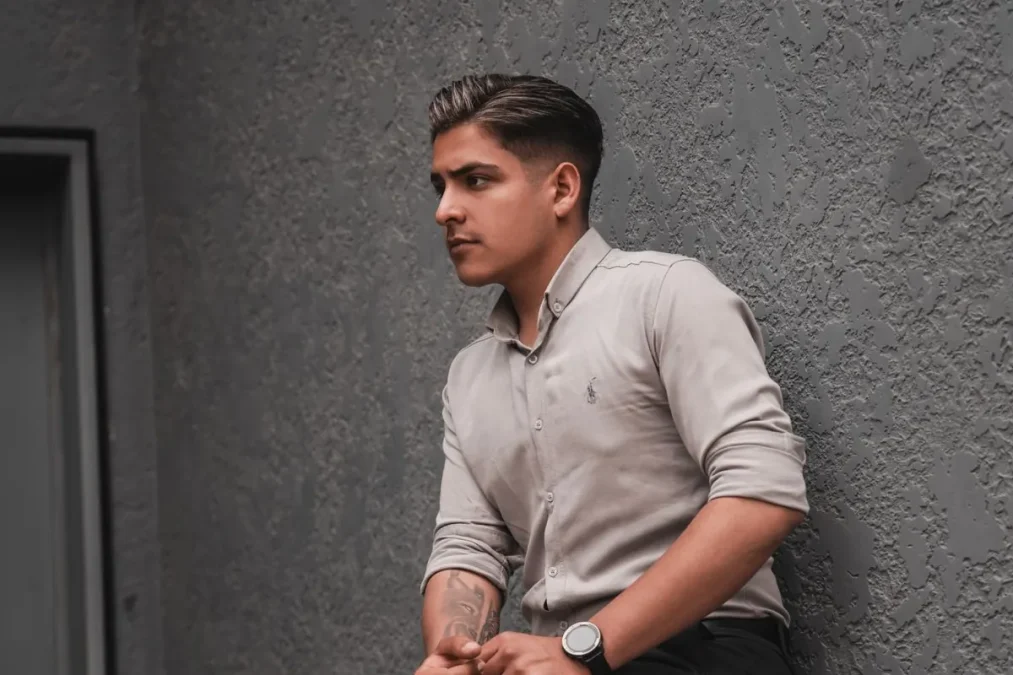
A vintage hairstyle can look timeless. It can also look like a costume. The difference is rarely the cut itself. It is how much of the past you copy at once, and how neat the finish is.
A clean side part, a combed-back top, or a lifted front can look sharp today. But when the cut, the shine, and the outfit all come from one old photo, the result tends to look like a dress-up, not a style. This guide keeps it simple: one clear old-style shape, with the rest of your grooming kept modern and tidy.
This guide covers hairstyles only. For the clothing half of a vintage look — what kinds of vintage clothing there are, and which eras they come from — see our vintage clothing guide. For general help picking a cut by hair type, face shape, and upkeep, see our main haircuts guide. Here, we stay on hair: what makes a cut vintage, what to tell your barber, and 7 complete hairstyles you can pick from.
Vintage is not one fixed cut. It is a feel carried by three things: a clear shape, a clean direction, and a neat outline. A cut can be from any era and still read as vintage, as long as those three things are there.
The shape is the first sign. A side part has a clear line where the hair parts. A slick back has one clear direction: back. A pompadour has height at the front. In each case, you can see the shape from across the room. That is what makes the cut look thought-out, not accidental.
The direction is the second sign. Vintage hair tends to be combed or brushed in one direction, not left to fall where it wants. It does not have to be stiff. It just has to look placed. A soft side sweep is still brushed to one side. A shaggy layered cut still falls in layers, not in a tangle.
The outline is the third sign. The neckline — the line where the hair ends at the back of the neck — is clean. The edges around the ears are tidy. This neat outline is a big part of why old-style cuts look polished. When the outline grows messy, even a good cut starts to look untidy.
The costume line is simple: one vintage reference at a time. Keep one old-style shape, and keep the rest simple. A side part with a plain, modern outfit reads as vintage style. A high pompadour, a heavy shine, a full old-style outfit, and old-style shoes all at once tend to read as a costume. Mixing one vintage shape with modern grooming tends to look more convincing than copying a whole old photo head to toe.
A note on words used in this guide. A part line is the line where your hair parts to one side. A fringe is the hair that falls across the forehead. A finish is how shiny or matte the hair looks when styled. An undercut is a cut with short sides and a clearly longer top. These words come up in every section below.
A vintage cut fails most often at the chair, not at home. The fix is plain wording. Say the shape first, then the sides, then the top.
Start with one sentence. “I want a side part.” Or: “I want a slick back.” That one sentence tells your barber the shape. Then add the sides: “sides short and neat.” Then the top: “top medium, combed to the side.” Three short parts, in that order, are easier to follow than a long story about an era.
Bring one or two photos of the exact shape. Photos beat words for a cut. Pick photos that show the shape from the front and the side, not photos of a whole outfit or a famous person. Tell your barber which part of the photo you want — the part line, the front height, or the side length — so there is no guesswork.
Say what you will do each morning. Before the cut starts, ask: “How much time will this need each morning?” A pompadour needs more daily work than a side part. A short crop needs less. If the answer does not fit your mornings, pick another shape now, not after the cut.
Talk about the neckline too. Ask for a clean neckline if you want the tidy vintage outline, or a natural neckline if you prefer a softer edge. The neckline sets how neat the cut looks between visits, so it is worth one sentence.
If the cut starts to drift from the shape you asked for, say so early. “The front is lower than the photo” is a clear, useful sentence while the cut is still in progress. Waiting until the end makes fixes harder. A good barber will welcome the check.
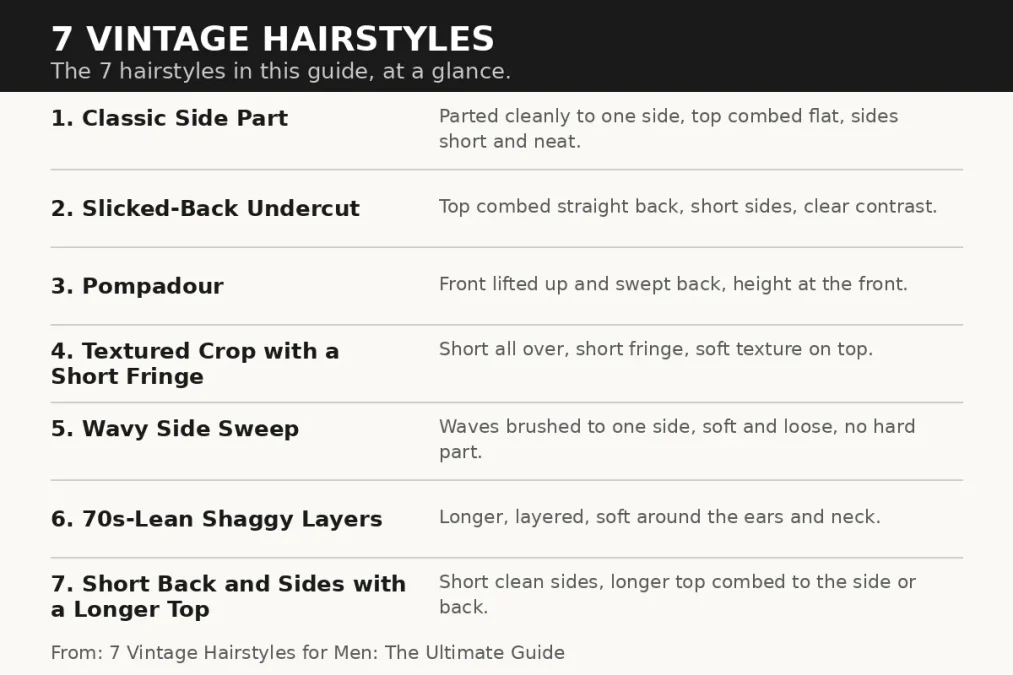
Each hairstyle below gives the shape in plain words, the length feel, a short styling note, and an upkeep tendency. Pick by hair length and by the morning time you want to spend, not by era alone.
The shape: hair parted cleanly to one side, top combed flat to the side, sides short and neat. The part line is the key feature. You can see it clearly, and it sets the whole cut.
The length feel: short to medium on top. The top needs enough length to lie flat to one side, but not so much that it falls over the part.
Styling: find the part while the hair is damp, then comb along it. A low to medium shine tends to read classic. Too much shine can tip the look toward costume, so keep the finish calm.
Upkeep tendency: this cut needs regular trims to keep the part line sharp and the sides neat. Daily styling is quick — a comb and a few minutes are often enough.
The shape: the top combed straight back, the sides short and tidy, and a clear contrast between the longer top and the shorter sides. The direction is all one way: back.
The length feel: the top needs to be long enough to comb back flat. If the top is too short, it will stand up instead of lying back. The sides stay short so the top stands out.
Styling: comb back from the front in smooth strokes. A higher shine tends to read more old-style here, so this is the shape where a shinier finish fits best. Keep the sides neat so the contrast stays clean.
Upkeep tendency: the sides need regular neatening, or the contrast fades as they grow. Daily combing is part of the look — this shape does not hold itself without a comb.
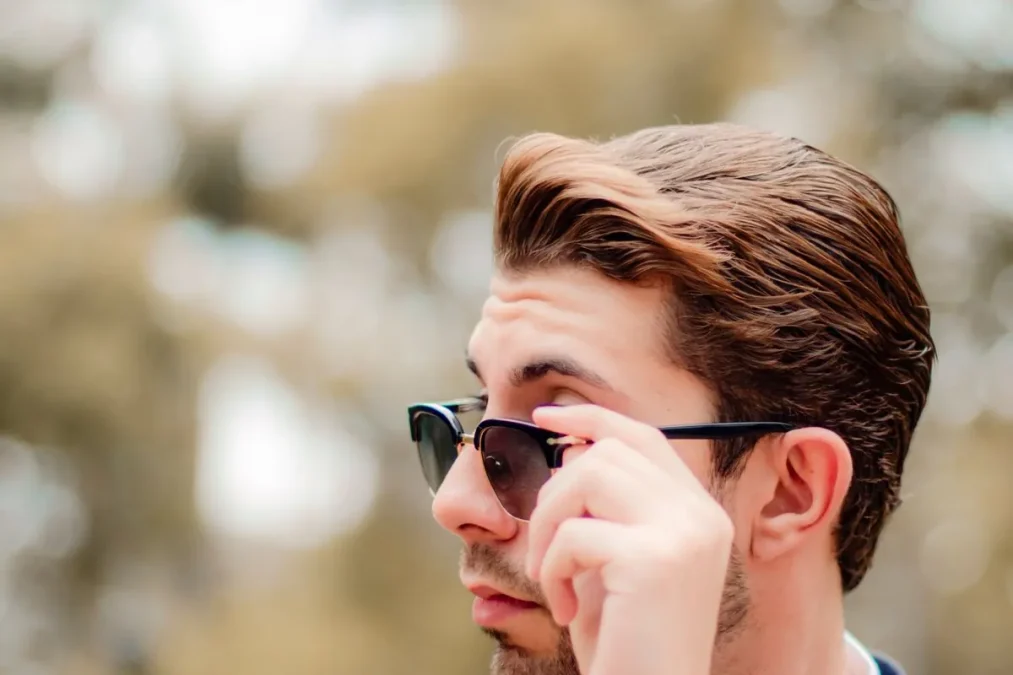
The shape: the front lifted up and swept back, the sides shorter, and height at the front as the main feature. “Pompadour” is just the name for this lifted-front shape.
The length feel: the front is longer than the rest of the top. Of the 7 shapes here, the pompadour needs the most length at the front. Without that length, the lift has nothing to stand on.
Styling: lift the front while drying or combing back, then sweep it back. The hold comes from the lift, not from piling on product. A little hold goes a long way; too much can make the front look stiff.
Upkeep tendency: this shape takes the most daily styling time of the 7. Trims keep the front shape true. If your mornings are rushed, this may not be the right pick — and that is fine. The side part gives a similar neat feel with far less work.
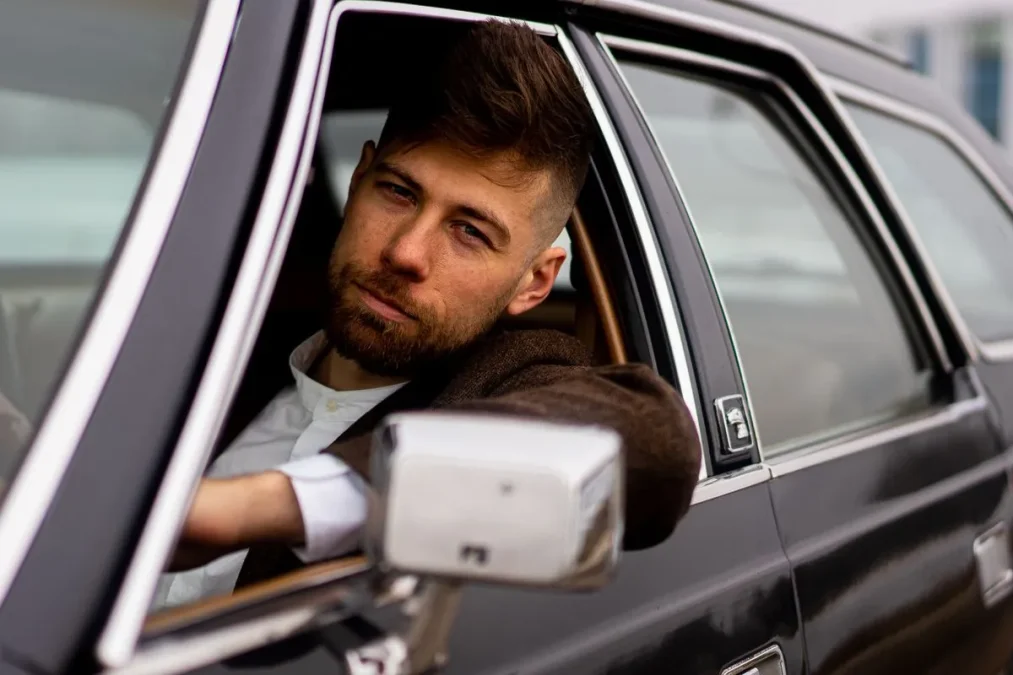
The shape: short all over, with a short fringe across the forehead and texture on top instead of a flat finish. Texture here means the hair looks piece-y and soft, not combed flat like a sheet.
The length feel: a short top. The fringe sits on or just above the brow line. This is the shortest top of the 7 shapes, apart from the short back and sides.
Styling: push the top forward lightly with fingers or a brush. A matte finish — low shine, natural look — or a low-shine finish tends to read modern-vintage here. This shape is meant to look easy, not set in place.
Upkeep tendency: a short shape loses its line sooner as hair grows, so it needs trims more often than longer shapes. Daily styling, though, is simple and fast.
The shape: waves brushed to one side, soft and loose, with no hard part line needed. The wave itself is the feature. The sides stay neat but not harsh, so the soft top stands out.
The length feel: a medium top, so the waves have room to form. Too short, and the wave has nowhere to go. Too long, and the sweep can fall over the face.
Styling: brush or comb to the side while the hair is damp, then let the wave do the shaping. Do not fight the wave’s natural direction. Work with it, and the shape will hold better through the day.
Upkeep tendency: less daily work if the wave is natural, since the hair shapes itself. Trims keep the sides tidy and stop the sweep from growing heavy.
The shape: longer, layered, and soft around the ears and neck, with a relaxed 1970s feel. Layers are just steps of different lengths cut into the hair, so it falls soft instead of heavy.
The length feel: the longest of the 7 shapes. The layers keep the length from looking like one heavy block. The outline stays soft, not sharp.
Styling: little combing is needed. Let the layers fall naturally, and tidy the outline only. This is the lowest-effort styling of the 7, but it still needs brushing to stop tangles.
Upkeep tendency: longer between visits than short shapes, since soft layers grow out gently. But it needs more brushing than a short cut. This section is kept short on purpose: for a deep look at 1970s hair, see our 70s hairstyles guide, which covers that decade in full. This guide does not repeat that list.
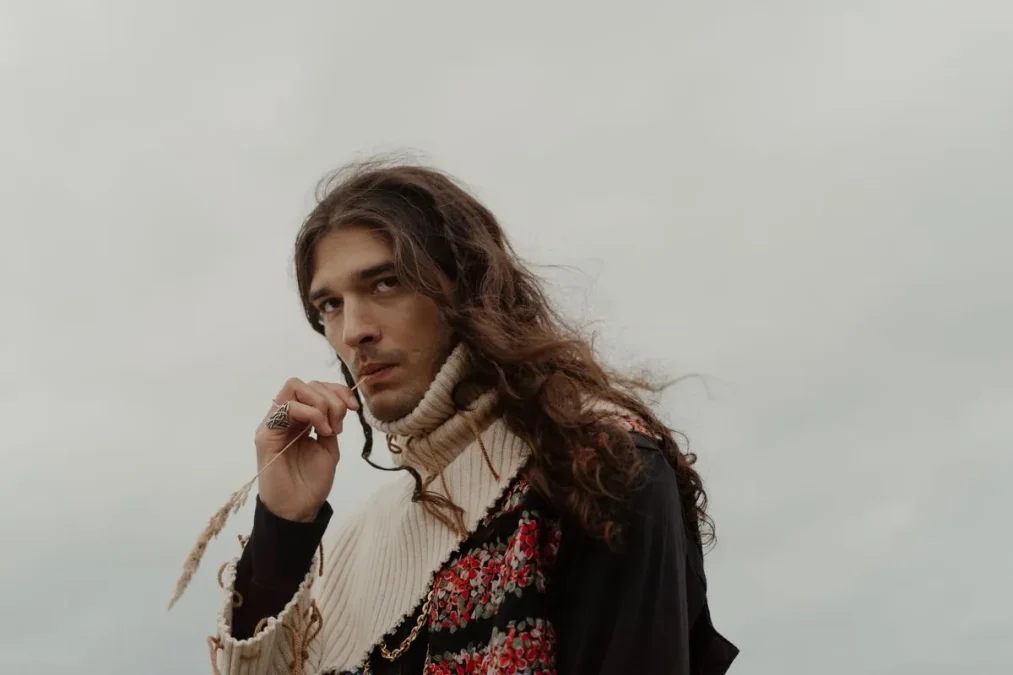
The shape: the back and sides cut short and clean, the top left longer and combed to the side or back. The contrast between sides and top is softer than an undercut — a step, not a cliff.
The length feel: short sides, medium top. The top needs enough length to comb in one direction, but it does not need the front length a pompadour needs.
Styling: comb the top in one direction — to the side for a calmer look, back for a smarter one. This is one of the quickest vintage shapes to style each morning.
Upkeep tendency: the sides need regular neatening to keep the clean outline. Top styling stays quick. This shape is a good middle ground: vintage feel, modern effort.
A few habits help every shape above. First, comb or brush in one direction. Vintage shapes look placed, not random. Pick the direction — side, back, or forward for a crop — and keep it the same each day.
Second, find the part line while hair is damp. A damp part sets cleanly and holds its line. A dry part tends to wander. If your shape has no part line, skip this step and brush in the shape’s direction instead.
Third, pick a finish and stay with it. A low-shine, matte finish reads more modern. A higher-shine finish reads more old-style. Mixing finishes through the day — shiny at the front, matte at the back — tends to look muddled. One finish, all over, looks thought-out.
Fourth, use one styling product at a time. Start with a small amount. Add more only if the shape falls during the day. Piling on product is the fastest way to make a vintage cut look stiff, and stiffness reads as costume.
Fifth, keep the neckline and edges tidy. The outline is part of every vintage look in this guide. A clean neckline between visits keeps the cut looking sharp even as the top grows out. If the edges around the ears start to blur, the whole cut looks less neat, even if the top is fine. For general guidance on keeping hair healthy, see the American Academy of Dermatology’s tips for healthy hair.
Hair type changes how a vintage shape behaves. These are tendencies, not rules. Your barber can adjust any shape to your hair.
Straight hair holds combed shapes well. Side parts, slick backs, and short back and sides tend to sit cleanly on straight hair. Lifted shapes like the pompadour may need a little hold to keep the front up, since straight hair can fall flat.
Wavy hair adds natural shape. The wavy side sweep and the shaggy layers suit wavy hair well as a tendency, because the wave does some of the styling work. Combed-flat shapes can also work, but they may need a comb pass during the day as the wave returns.
Curly hair suits looser, longer vintage shapes with less daily effort. The side sweep and shaggy layers tend to work well, since they let the curl shape the cut. Very short, flat shapes tend to need more daily work on curly hair, because the curl fights the flat finish.
Thick hair can make vintage shapes look heavy if the shape has no layers. A barber can cut layers into thick hair so the shape sits lighter. This is the barber’s call during the cut, not a home job. Tell your barber the hair feels heavy, and let them adjust.
Fine hair tends to look neater in shorter shapes. Side parts, textured crops, and short back and sides tend to hold a clean line on fine hair. Heavy, long shapes can fall flat on fine hair, so a shorter shape is often the easier pick.
Everyday wear suits the quick shapes: the side part, the textured crop, and short back and sides. They need little morning time and keep a neat outline all day. They also pair well with simple, modern clothes.
Work suits the tidy shapes: the side part and short back and sides. Both read as neat and low fuss, which fits a workday. A slick back can also work for work if the finish is calm rather than very shiny.
An evening out suits the bolder shapes: the slick back and the pompadour. More shine and more lift fit a smarter evening look, and the extra styling time feels worth it for one night.
A formal event suits the cleanest lines: the side part and the slick back. Keep the neckline tidy and the finish neat rather than messy. A formal outfit does much of the work; the hair just needs to look clean and placed.
Copying a whole old photo head to toe is the biggest mistake. One vintage shape is style. A vintage shape plus a vintage outfit plus a vintage shine plus vintage shoes all at once tends to look like a costume. Keep one reference, and keep the rest modern.
Piling on product is the second mistake. Hair that looks stiff does not look classic. It looks set. Use a small amount, and add more only if the shape falls.
Vague barber wording is the third mistake. “Something old-style” with no shape named leaves the barber guessing. Name the shape, the sides, and the top, and bring a photo.
A neglected neckline is the fourth mistake. The outline is part of the look. When the neckline and ear edges grow untidy, even a good cut looks messy. Keep the outline tidy between visits.
Mixing two strong vintage shapes in one cut is the fifth mistake. A high pompadour front with a full shaggy back, for example, pulls the eye in two directions. One shape, done well, beats two shapes fighting each other.
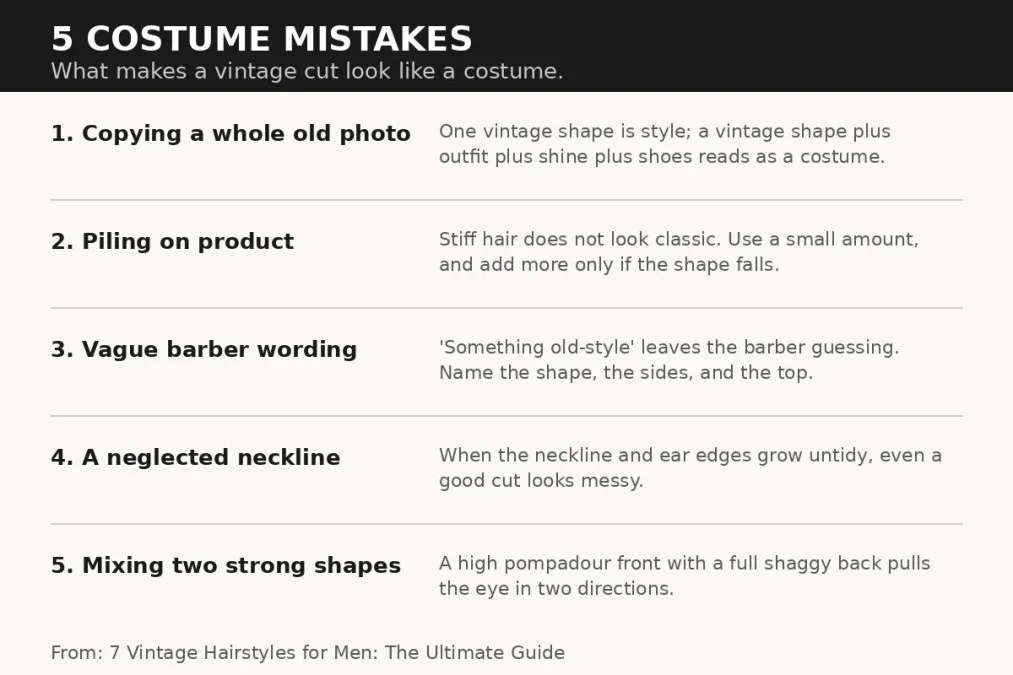
Vintage and old money overlap, but they are not the same. Vintage covers many eras and many shapes — from a bold pompadour to relaxed shaggy layers. Old money is one polished, quiet style, always neat and never loud.
The overlap is real: both like neat outlines and clean parts, and the side part fits both worlds. If you like the side part, it can sit in either style without change.
The difference is range. Vintage allows bold shapes and stronger finishes. Old money stays quiet and neat in every choice. For the full old money picture, see our old money hairstyles guide. That guide covers the old money shapes in depth; this guide does not repeat them.
For the clothing half of a vintage look, see our vintage clothing guide. For a deep look at 1970s hair, see our 70s hairstyles guide. For old money hairstyles in full, see our old money hairstyles guide. For general help picking a cut by hair type, face shape, and upkeep, see our main haircuts guide.
A vintage hairstyle works today when it keeps one clear old-style shape and the rest stays simple and modern. The 7 shapes in this guide cover that range: the side part for an easy start, the slick back for a combed-back look, the pompadour for front height, the textured crop for a short and easy cut, the wavy side sweep for natural wave, shaggy layers for a relaxed longer look, and short back and sides for a neat middle ground. Three habits carry any of them: tell your barber the shape in plain words, bring a photo, and keep the neckline tidy. Pick the shape that fits your hair and your mornings, and let the shape do the work.
The classic side part. It needs only a clean part line and hair combed to one side, and it works on short, medium, and longer hair. Daily styling is quick, and the shape is easy to describe to a barber.
Name the shape first, then the sides, then the top — for example, “a side part, sides short and neat, top medium and combed to the side.” Bring one or two photos of the exact shape. Ask what the cut will need each morning before the cut starts, so there are no surprises.
Yes, as a tendency. Looser, longer vintage shapes — like the wavy side sweep and the shaggy layers — tend to work with less daily effort on curly hair, because the natural shape does some of the work. Very short, flat shapes tend to need more daily work on curly hair.
It depends on the shape. Short shapes like the side part, the textured crop, and short back and sides are quick. The pompadour takes the most daily styling time of the 7, because the front needs to be lifted and held. Ask your barber about the daily effort before you pick a shape.
A slick back combs the top straight back and flat, with short, tidy sides. A pompadour lifts the front up and sweeps it back, so the height at the front is the main feature — and it needs more length at the front than a slick back does.
Keep one vintage reference — one shape, one part, or one finish — and keep the rest of your grooming simple and modern. Copying a whole old photo head to toe is what tends to look like a costume. A tidy neckline and neat edges also help the look read as classic, not costume.
The side part and the slick back. Both have clean lines and a neat outline, which carry a formal outfit well. Keep the neckline tidy and the finish neat rather than messy.
Vintage covers many eras and many shapes, from a bold pompadour to relaxed shaggy layers. Old money is one polished, quiet style. The two overlap on neat outlines and clean parts — the side part fits both — but vintage allows bolder shapes, while old money stays quiet and neat.