Physical Address
Islamabad, PK
Physical Address
Islamabad, PK

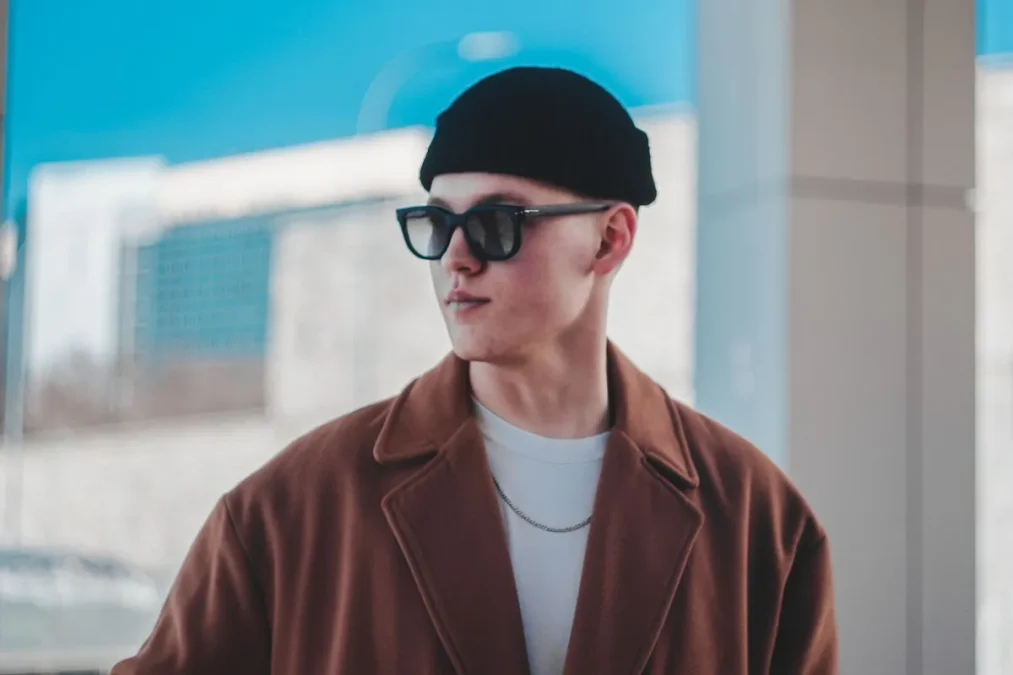
Ulzzang outfits look simple. That is the point — and also the trick. A relaxed sweater, straight trousers, and clean shoes can look sharp, or they can look like you just threw things on. The difference is not money or a big wardrobe. It is a few rules: relaxed shapes, few colours, clean layers, and one clear focus.
This guide covers outfits only. For skincare, makeup, hair, and photos in the Ulzzang style, see our Ulzzang aesthetic guide. That guide is the parent of this one. Here, we stay on clothes: the pieces, the rules, and 7 complete outfits you can copy and adjust.
Ulzzang is not one fixed uniform. It is a way of putting outfits together — soft, clean, and photo-ready — more than a single set of clothes. Two men can both dress Ulzzang and wear quite different pieces, because the rules matter more than any one item.
The four marks of the look are easy to check in a mirror. First, relaxed shapes: clothes have room to move, but they still have a shape. Second, a small colour palette: a few quiet colours that sit well together. Third, thoughtful layers: each layer shows a little, so the outfit has depth instead of looking flat. Fourth, a clean finish: nothing cluttered, nothing fighting for attention.
One line of background, because it helps to know where the word comes from: Ulzzang means “best face” and comes from South Korean internet culture of the late 1990s and early 2000s. The full story lives in the parent guide. Here, we only need the styling idea it grew into.
For background on the term itself, see the Ulzzang entry on Wikipedia.
Think in categories, not names. A category tells you the job a piece does. A name on a label tells you very little. These are the categories that build Ulzzang outfits.
Tops: a relaxed tee, a hoodie, a knit sweater, a knit polo, a cardigan, an open shirt, and a camp shirt. Most outfits start with one of these as the base, and add one more as a layer.
Bottoms: straight trousers, wide trousers, relaxed jeans, cargo trousers, and cropped trousers. The bottom sets the shape of the whole outfit, so it deserves as much thought as the top.
Outer layers: a shirt-jacket, a short coat, a long coat, and a padded jacket. The outer layer is often the piece people notice first, so it is a good place for your one focus.
Shoes: low sneakers, retro sneakers, chunky sneakers, loafers, and simple leather shoes. Shoes set the tone of the outfit. Clean sneakers keep it casual. Loafers or leather shoes lift it. Chunky sneakers push it toward street style.
Bags and small extras: a crossbody bag, a tote bag, a simple cap, and at most one simple watch or piece of jewellery. Extras finish an outfit. They should not compete with it.
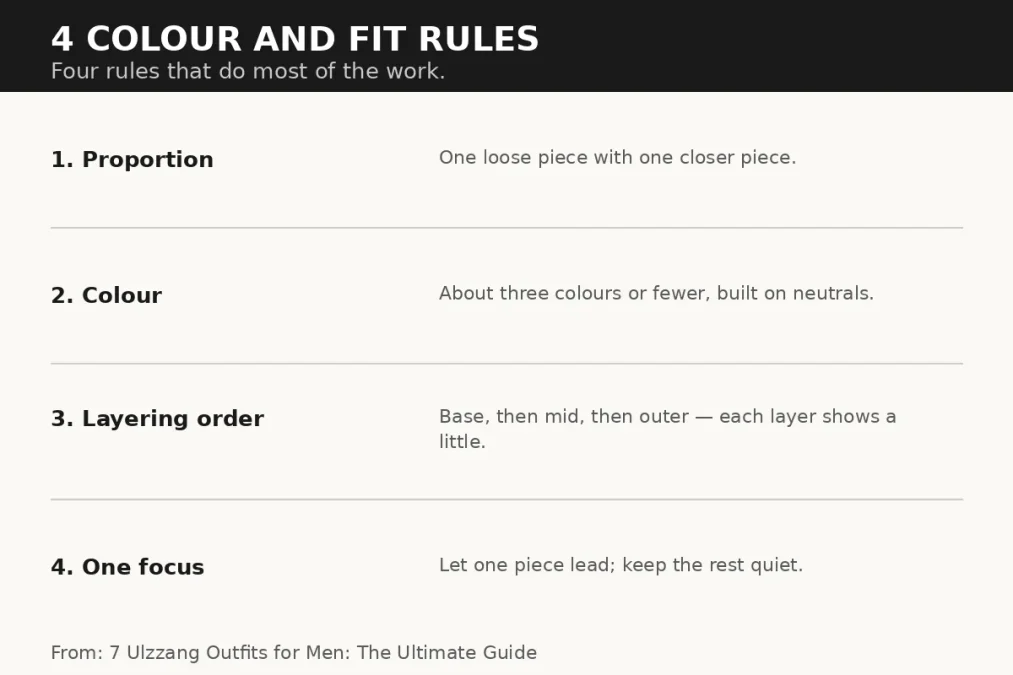
These four rules do most of the work in this guide. Learn them once, and the 7 outfits below will make sense at a glance.
The proportion rule: pair one loose piece with one closer piece. Wide trousers work with a closer top. A relaxed top works with straighter bottoms. Two very loose pieces together can look shapeless, because no part of the outfit has a clean line. Two very tight pieces can look dated, because the relaxed Ulzzang shape is gone.
The colour rule: keep an outfit to about three colours or fewer. Build on neutrals — black, white, grey, beige, and cream — and add soft tones as accents, such as muted green, light brown, or soft blue. Fewer colours make an outfit look calm and put together, even when the pieces are simple.
The layering order: base, then mid, then outer. The base is a tee or a knit. The mid layer is a shirt, a cardigan, or a knit worn open or over the base. The outer layer is a coat or jacket, worn when the weather calls for it. Each layer should show a little — a collar here, a hem there — so the outfit has depth instead of looking like one heavy block.
The one-focus rule: let one piece lead. It can be the coat, the shoes, or one strong colour. Keep the rest quiet. When every piece tries to stand out, none of them does.
A few fit checks help before you leave the house. A relaxed top should sit on the shoulders or just past them, not slide halfway down the arm. Trousers should break cleanly at the shoe, not pool around it. Nothing should pull tight, and nothing should swallow you. If a piece fails these checks, it is the wrong size, not the wrong style.
Each outfit below lists its pieces, its fit notes, its colour notes, and when it works. Copy them as they are, or swap one piece and keep the rules.
Pieces: a relaxed knit sweater, straight tailored trousers, clean low sneakers, and a crossbody bag.
Fit notes: the knit is relaxed, not baggy. It has room, but its shape is still clear. The trousers are straight and neat, which balances the soft top. This is the proportion rule at work: soft on top, clean on the bottom.
Colour notes: a cream or grey knit with black or charcoal trousers works well. Add one quiet accent at most, such as the bag in a muted tone.
When it works: everyday outings, coffee with friends, a casual day in the city. This is the easiest of the 7 outfits to start with, because every piece is simple.
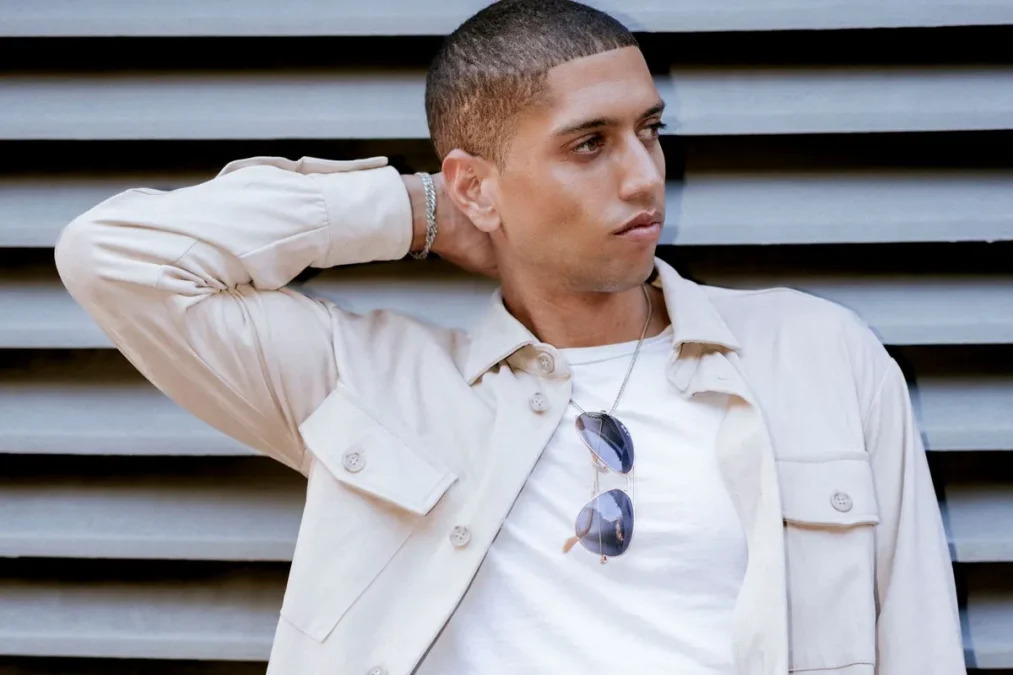
Pieces: a plain tee, an open shirt-jacket over it, wide trousers, and loafers.
Fit notes: the open layer adds depth without bulk, because it hangs free instead of adding padding. The wide trousers are balanced by the closer tee underneath. If the tee were also wide and loose, the shape would disappear.
Colour notes: a white or black tee, a beige or muted green shirt-jacket, and dark wide trousers. Three colours, each quiet, each doing its job.
When it works: mild days, a gallery or market visit, a relaxed afternoon out. This outfit shows off the layering order at its best: base, mid, and nothing else needed.
Pieces: a plain tee, an open cardigan, relaxed jeans, retro sneakers, and a tote bag.
Fit notes: the cardigan is the soft mid layer. It adds warmth and shape without weight. The jeans are relaxed but not baggy, so the outline stays clean even after a long day.
Colour notes: soft neutrals with one muted accent. A light brown cardigan over a white tee with mid-tone jeans is a good example. The tote bag stays plain, so it does not add a fourth colour.
When it works: classes, study days, long days on foot. The tote carries what you need, and nothing in the outfit needs adjusting during the day.
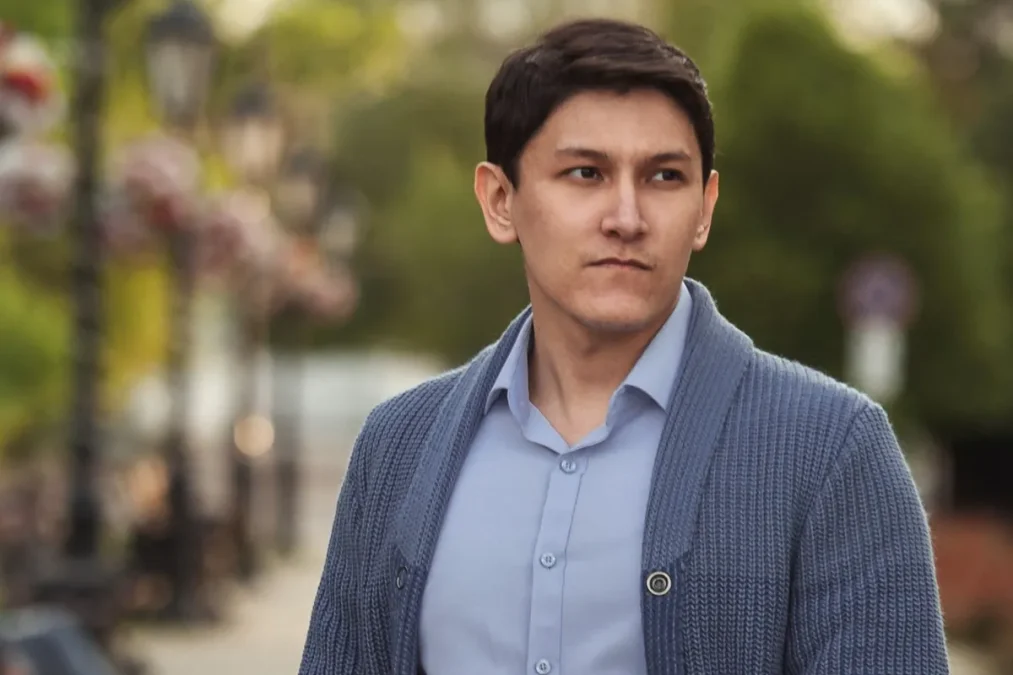
Pieces: a knit polo, a short coat over it, tapered trousers, and simple leather shoes.
Fit notes: the coat gives this outfit its shape. It should sit cleanly on the shoulders and end around the hip. The knit underneath stays close and neat, so the coat’s line is not broken by bulk.
Colour notes: a dark coat — black, charcoal, or navy in general terms — with a lighter knit for contrast. The contrast is the focus here, so the trousers and shoes stay quiet.
When it works: dinner out, an evening event, a smarter date. This is the outfit to reach for when the day calls for something a step above casual.
Pieces: a short-sleeve camp shirt worn open over a plain tee, wide cropped trousers, and low sneakers.
Fit notes: the open shirt is the light layer. It adds shape without heat. The cropped trousers keep air moving and show the shoe, which keeps the outfit from looking heavy in warm weather.
Colour notes: light tones suit the season — white, cream, light grey, soft blue. Light colours also keep the outfit looking fresh when the sun is strong.
When it works: hot days, holidays, walking around the city in summer. This is the warm-weather version of the layering rule: fewer layers, lighter fabrics, same calm palette.
Pieces: a hoodie, a padded jacket over it, cargo trousers, chunky sneakers, and a simple cap.
Fit notes: the hoodie is the warm mid layer, and its hood can sit out over the jacket’s collar for a little extra shape. The padded jacket is relaxed but not huge — it should still show your shoulders, not bury them. The cargos are roomy, so the top stays closer to balance them.
Colour notes: black, charcoal, or muted green for the outer layers, with a plain hoodie underneath. One dark palette, no bright clash.
When it works: cold days, street looks, long days outdoors in winter. This is the most street-leaning of the 7 outfits, and the chunky sneakers are what push it there.
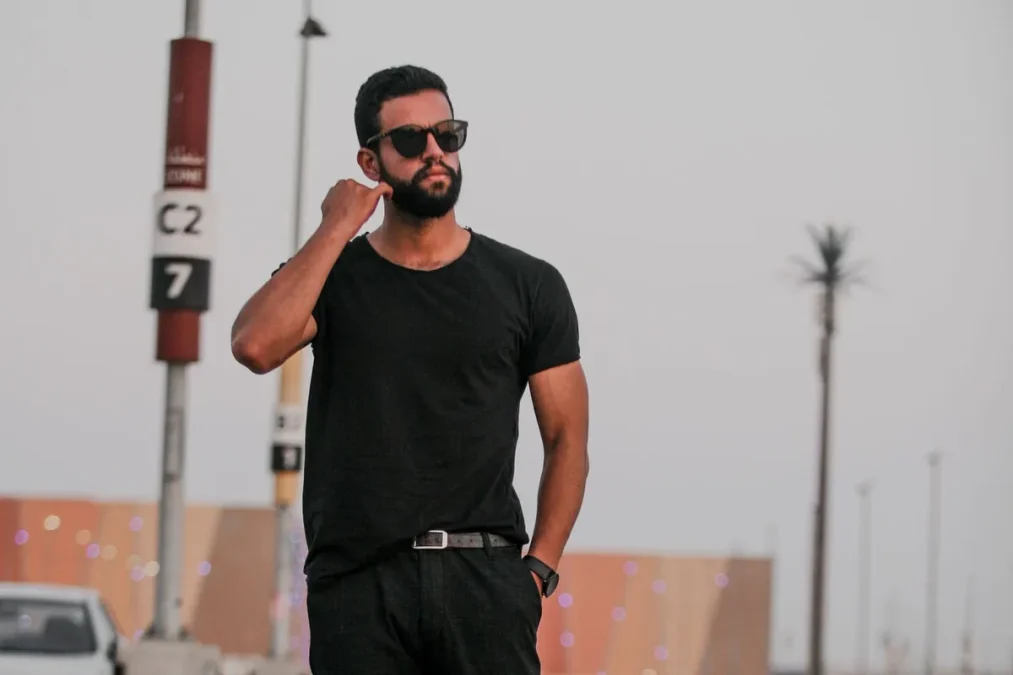
Pieces: a black knit, black wide trousers, black sneakers, and a crossbody bag.
Fit notes: one colour, different textures. The knit has a soft, rough texture. The trousers are smooth. That contrast does the work that colour usually does, so the outfit has depth without a single second colour.
Colour notes: all black. The only rule here is to keep the blacks clean — faded, washed-out black next to deep black can look uneven, so check the pieces together in daylight.
When it works: evenings, photos, days when you want a clean, sharp look with no decisions. This outfit is also the easiest to pack for, because every piece matches every other.
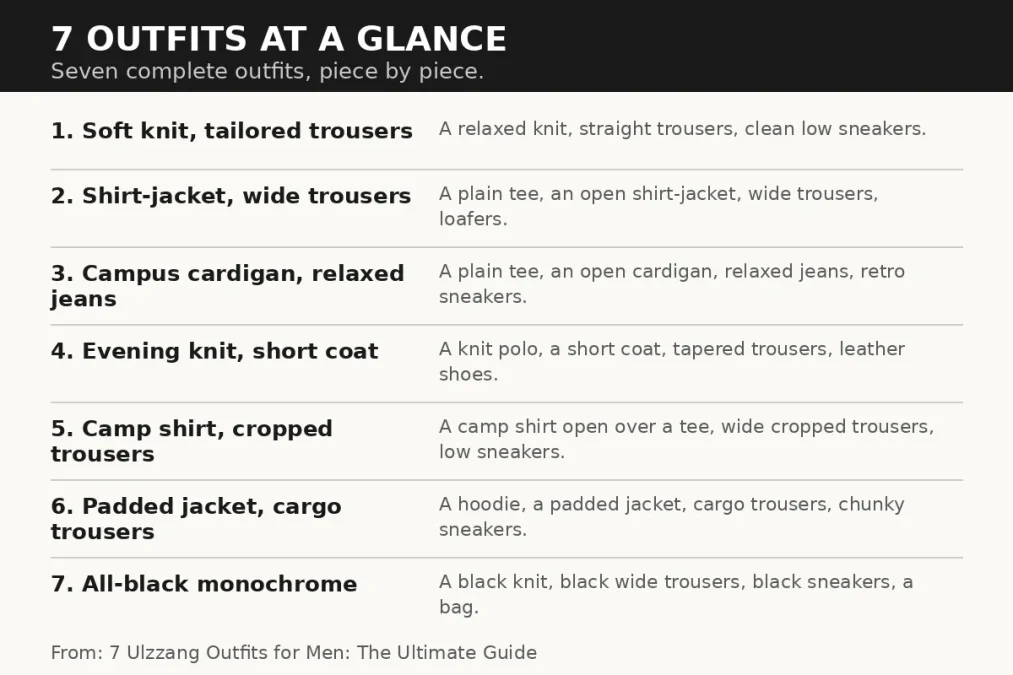
The 7 outfits cover the year, but the seasons change which ones you reach for and how heavy the layers get.
Spring: light layers. An open shirt or a cardigan over a tee, with straight or wide trousers and low sneakers. Outfits 2 and 3 fit spring best.
Summer: fewer, lighter layers. A camp shirt, cropped trousers, and breathable fabrics in light tones. Outfit 5 is the summer anchor, and outfit 1 works on cooler summer evenings with a lighter knit.
Autumn: knits and coats return. A knit sweater with a short coat, relaxed jeans or trousers, and retro sneakers or loafers. Outfits 1 and 4 fit autumn best.
Winter: warm layers that still show shape. A hoodie under a padded jacket or a coat, cargo or wide trousers, and chunky sneakers. Outfit 6 is the winter anchor, and outfit 7 works for winter evenings.
Everyday and campus: outfits 1, 2, and 3. They are soft, easy, and comfortable for long days, and none of them needs adjusting during the day.
Casual day out: outfits 2 and 5. Layered or light, with room to move, and shoes you can walk in for hours.
Smarter evening: outfits 4 and 7. A coat or a monochrome palette lifts the look without making it formal. The shoes matter most here — leather shoes or clean black sneakers, not worn-out trainers.
Photos: outfit 7, or any outfit with its colours kept to three or fewer and its layers tidy. Photos show clutter clearly, so this is where the one-focus rule pays off most.
Both styles like soft colours and relaxed shapes, so they can look close at first glance. The difference is in the lean. Soft boy leans sweeter and lighter — pastels, cardigans, gentle prints, and a softer overall feel. Ulzzang leans cleaner and more street-ready — sharper layers, monochrome options, and chunkier shoes. If you like both, keep them as two separate moods rather than mixing them in one outfit. Our soft boy outfits guide covers that style in full.
Two very loose pieces together, so the shape disappears. This is the most common mistake, and the proportion rule fixes it: change one piece to a closer fit.
Too many colours or prints fighting for attention in one outfit. Three colours or fewer, with the rest quiet, keeps the look calm.
Too many accessories at once. The look works on one quiet focus, not five. Pick the bag or the watch or the cap — not all three at full volume.
Layers that hide each other completely, so the outfit looks like one heavy block. Each layer should show a little. If a layer never shows, it is not styling — it is just warmth, and it belongs under the outfit, not in it.
Shoes that clash with the rest of the outfit’s tone. Very sporty shoes with a smart coat, or very formal shoes with a street outfit, both break the mood the rest of the outfit built.
Copying an outfit piece for piece without checking fit. The same pieces in the wrong size stop looking like the look. Fit checks come before any other rule.
You do not need all 7 outfits at once. Start with categories that repeat across them.
The starter set: 2 plain tees, 1 hoodie, 1 knit sweater, 1 cardigan or open shirt, 1 coat or jacket, 2 bottoms (one straight, one wide or relaxed), 2 pairs of shoes (one clean sneaker, one loafer or chunky sneaker), and 1 crossbody bag.
How the set covers the 7 outfits: most outfits share the same base pieces and change only the outer layer, the bottom, or the shoes. Outfits 1, 2, and 3 all start from a plain tee or a knit. Outfits 4 and 7 change the coat and the palette, not the whole wardrobe.
Add slowly. Add one category at a time, and check that it works with at least two outfits you already own before adding the next. A piece that only works in one outfit is a guest, not a part of the capsule.
For skincare, makeup, hair, and photos in the Ulzzang style, see our Ulzzang aesthetic guide. For the neighbouring softer style, see our soft boy outfits guide. For the wider picture of men’s fashion styles, see our fashion aesthetics guide.
Ulzzang outfits are not about owning more clothes. They are about choosing relaxed shapes, keeping colours few, layering in order, and letting one piece lead. The 7 outfits in this guide show those rules in action, from a soft knit day to an all-black evening. Start with the starter capsule, check fit before anything else, and adjust one piece at a time. The look will follow the rules, not the other way around.
An outfit built the Ulzzang way: relaxed shapes, few colours, clean layers, and one clear focus. It is a way of putting clothes together, not one fixed uniform.
No. Relaxed is the key word, not oversized. One loose piece with one closer piece usually looks better than everything oversized, which can look shapeless.
Neutrals first — black, white, grey, beige, cream — with soft tones like muted green, light brown, or soft blue as accents. Keeping an outfit to about three colours or fewer keeps it clean.
Yes. Use fewer, lighter layers: a camp shirt worn open over a tee, wide cropped trousers, and low sneakers, in light tones. The rules stay the same; only the weight of the layers changes.
Clean sneakers for everyday looks, retro sneakers for campus and casual days, chunky sneakers for street looks, and loafers or simple leather shoes for smarter evenings. Match the shoe’s tone to the outfit’s tone.
Both like soft colours and relaxed shapes, but soft boy leans sweeter and lighter, while Ulzzang leans cleaner and more street-ready, with sharper layers, monochrome options, and chunkier shoes. The soft boy outfits guide covers that style in full.
They can, when kept simple: neat layers, quiet colours, and clean shoes. Very relaxed or street-heavy versions suit days off better than formal settings. When in doubt, pick the smarter of the 7 outfits.
Few. Two plain tees, a hoodie, a knit, a cardigan or open shirt, one coat or jacket, two bottoms, two pairs of shoes, and one bag can build most of the 7 outfits. Add one category at a time.