Physical Address
Islamabad, PK
Physical Address
Islamabad, PK

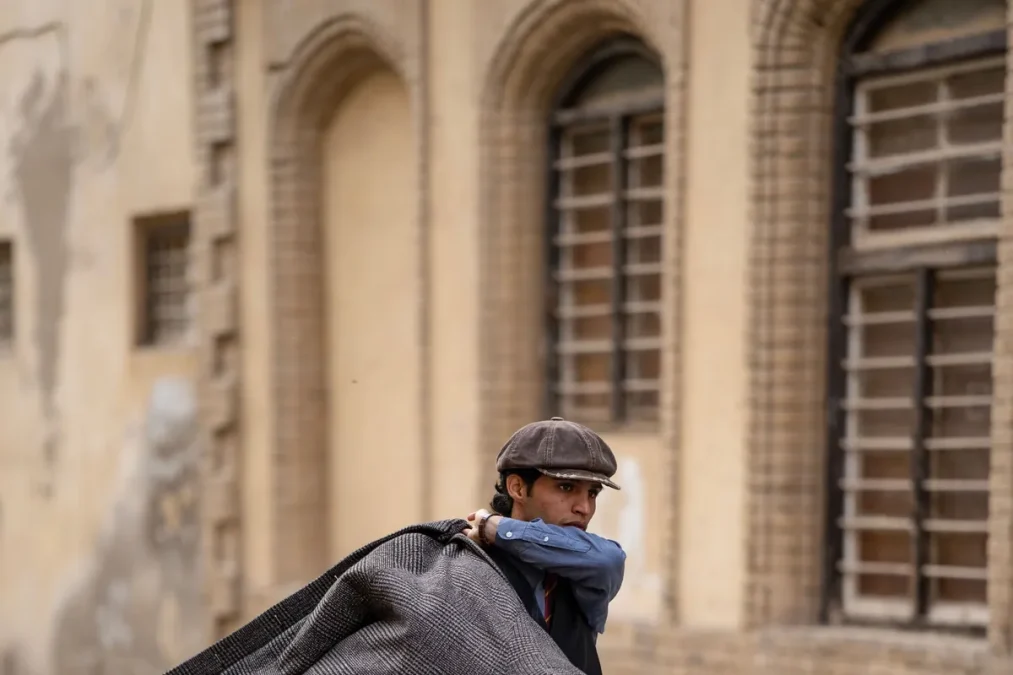
Vintage outfits look timeless. That is their charm — and also their trap. A tweed jacket, a leather jacket, or a corduroy shirt can look sharp and full of character, or they can look like a costume from another decade. The difference is not how old the pieces are. It is how many vintage pieces you wear at once, and how clean the fit is.
This guide covers outfits only. For era and garment detail — what kinds of vintage clothing there are, and which eras they come from — see our vintage clothing guide. That guide is the parent of this one. Here, we stay on outfits: the pieces, the rules, and 7 complete outfits you can copy and adjust.
Vintage is not one fixed uniform. It is a feeling carried by texture, shape, and one or two older references — more than a full set of clothes from one decade. Two men can both wear vintage outfits and look quite different, because the feeling matters more than any one era.
The selective rule is the heart of this guide. Wear one or two vintage-feeling pieces, and keep the rest modern and simple. A tweed jacket over a plain knit and dark trousers reads as vintage style. A tweed jacket, a flat cap, a waistcoat, and old-style shoes all from the same decade tend to read as a costume. Mixing decades, or mixing vintage with modern, tends to look more convincing than recreating one decade head to toe.
The three marks of the look are easy to check in a mirror. First, texture you can see: tweed, corduroy, suede, leather, or denim that gives the outfit character on its own. Second, a restrained colour base: neutrals with one warm or deep tone, rather than many colours fighting for attention. Third, a clean fit: the shape sits well on you today, even if the piece itself is old in style.
One more point, because it stops the most common mistake: vintage does not mean old-fashioned. An outfit can carry an older feeling and still look current, when the fit is clean and the rest of the outfit is simple. The age of a piece is far less important than how it sits with the pieces around it.
For background on the term itself, see the Vintage clothing entry on Wikipedia.
These are categories, not names. A category tells you the job a piece does. A name on a label does not.
Jackets and coats do most of the vintage work in an outfit. The useful ones are a tweed or wool jacket, a leather jacket, a denim jacket, a corduroy shirt-jacket, a bomber jacket, and an overcoat for cold days. Each one carries a different feeling, and each one can lead a whole outfit on its own.
Knits and tops keep the base simple. A plain knit sweater, a roll-neck knit, a knit polo, and a plain tee cover almost every outfit in this guide. The base stays plain on purpose, so the jacket or the texture can lead.
Bottoms balance the top. Straight jeans, relaxed jeans, and dark jeans cover the casual outfits. Tailored trousers, higher-rise trousers, and chinos cover the smarter ones. The rule is simple: when the top is textured or bold, the bottom stays quiet.
Shoes finish the tone. Loafers and brogues suit smarter looks. Chelsea boots suit a polished casual look. Clean retro sneakers suit everyday looks. One simple pair that matches the outfit’s tone is better than a loud pair that fights it.
Quiet extras come last, and only one at a time. A simple leather belt, a simple watch, or a plain scarf in cold weather is enough. Vintage outfits work on one clear focus, not five small details at once.
Colour: build on a neutral base, then add one warm or deep tone. Cream, charcoal, and dark tones work well with tobacco brown, olive, rust, or burgundy in general terms. Keep about three colours or fewer in one outfit. If one piece has a pattern, keep the rest plain, so the pattern has room to show.
Texture: let one textured piece lead. Tweed, corduroy, suede, leather, and denim each read as vintage on their own. When one textured piece leads, keep the other pieces smooth. Two or three strong textures in one outfit tend to fight each other, and the outfit loses its clear idea.
Fit: fit matters more than the decade. Older clothes were often cut to older sizing, so a vintage-style piece may sit differently from a modern one. Check the shoulders, the sleeve length, and the trouser shape. Small adjustments — a sleeve shortened, a trouser tapered a little — can turn a piece that looks dated into a piece that looks sharp. A shape that swallows you, or pulls tight, will spoil even the best jacket.
Layering: work in order. A base (tee or knit), then a mid layer (shirt-jacket, knit, or jacket), then an outer layer (coat) when the weather calls for it. Each layer should show a little, so the outfit has depth. Layers that hide each other completely tend to look like one heavy block.
One focus: let one piece lead — the jacket, the texture, or one strong colour — and keep the rest quiet. This one rule fixes most outfits that feel busy. When everything tries to lead, nothing does.
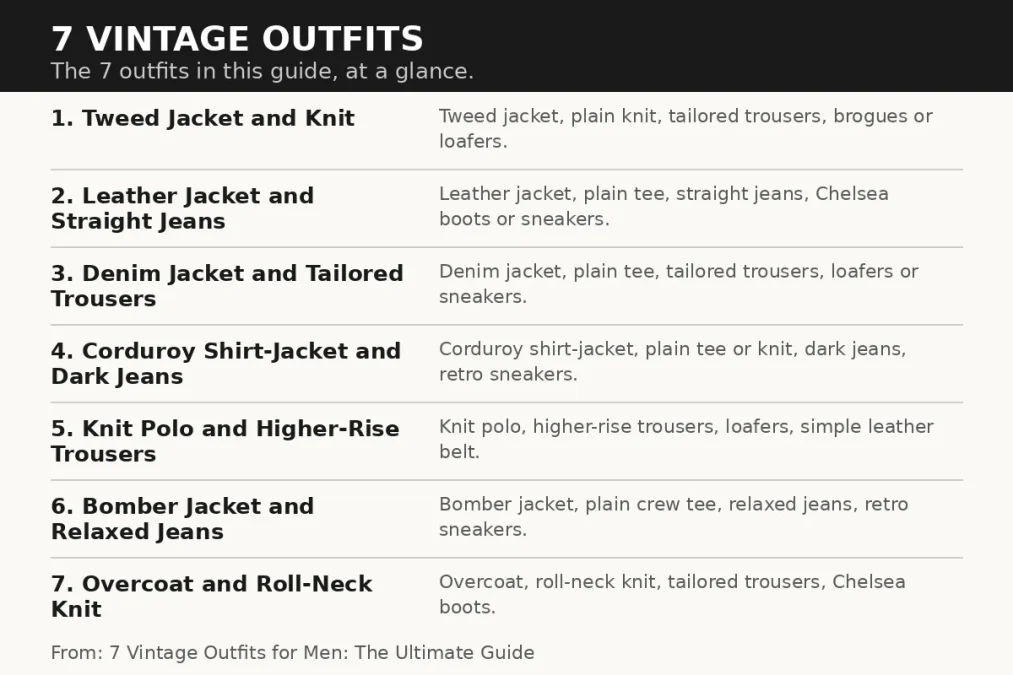
Each outfit below gives its pieces, how it sits, its colour notes, and when it works. Pick by the jacket you like and the day you have, not by a photo alone.
The pieces: a tweed or wool jacket, a plain knit sweater, straight tailored trousers, and brogues or loafers.
How it sits: the jacket gives the outfit its shape, and the knit underneath stays close and neat, so the tweed does not look bulky. The trousers are straight and clean, which keeps the look polished without a full suit.
Colour notes: brown or grey tweed with a cream or charcoal knit and dark trousers. One warm tone is enough; the tweed already carries plenty of character.
When it works: smart-casual days, dinner out, and days when you want to look polished without dressing formally.
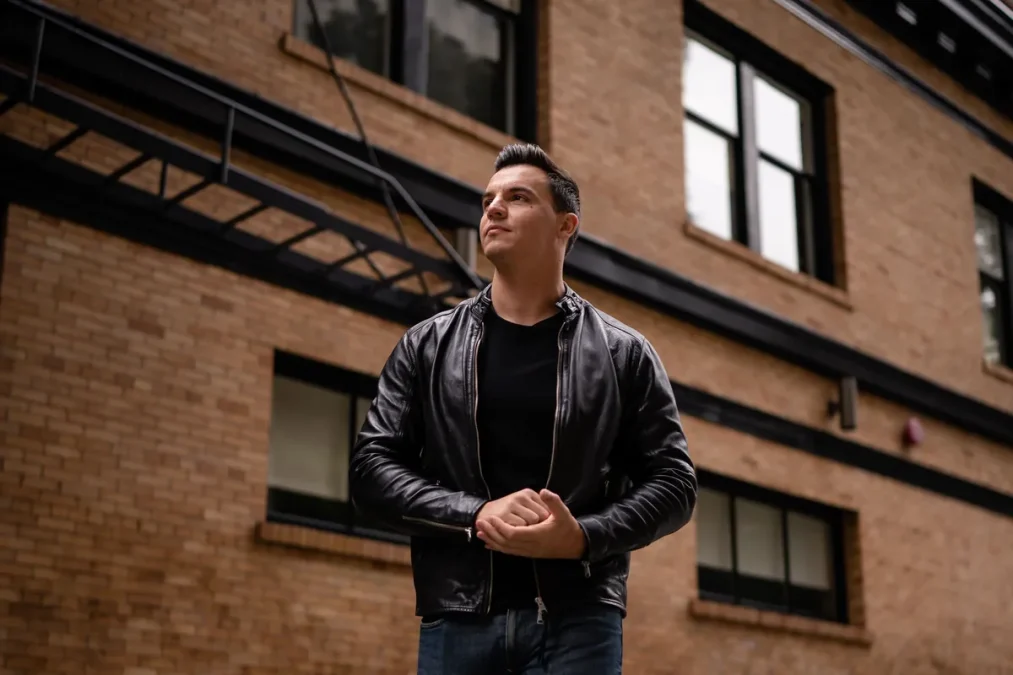
The pieces: a leather jacket, a plain white or cream tee, straight jeans, and Chelsea boots or clean retro sneakers.
How it sits: the jacket is the focus, and everything else stays simple. The jeans are straight and clean, which keeps the look sharp rather than messy. The tee stays plain, so the leather has room to show.
Colour notes: dark leather with a light tee and dark jeans. The contrast does the work, so no extra colours are needed.
When it works: everyday outings, evenings out, and casual days when you want a little edge.
The pieces: a denim jacket, a plain tee, tailored trousers, and loafers or clean sneakers.
How it sits: the tailored trousers lift the denim, so the outfit reads smart-casual rather than fully casual. The tee underneath stays plain, and the jacket stays open, so the outfit has light layers instead of one heavy block.
Colour notes: mid-blue denim with dark trousers and a white or cream tee. The dark trousers ground the lighter denim.
When it works: mild days, lunch out, and relaxed days that still need to look put together.

The pieces: a corduroy shirt-jacket worn open over a plain tee or knit, dark jeans, and retro sneakers or simple leather shoes.
How it sits: the corduroy is the texture lead. The jeans stay dark and straight, so the texture has room to show. The base underneath stays plain, so the outfit keeps one clear idea.
Colour notes: olive, brown, or rust corduroy with a plain dark base underneath. One warm tone is enough.
When it works: autumn days, everyday outings, and walks or casual meet-ups when comfort matters.
The pieces: a knit polo, higher-rise tailored trousers, loafers, and a simple leather belt.
How it sits: the higher rise gives the outfit its mid-century shape. The polo stays neat and close, so the shape looks clean, not dated. The belt is quiet, and the shoes are simple, so nothing fights the clean shape.
Colour notes: cream, navy, or brown polo with charcoal or stone trousers. Two calm colours are enough here.
When it works: smart-casual evenings, summer dinners, and days when you want a clean, classic shape.
The pieces: a bomber jacket, a plain crew tee, relaxed jeans, and retro sneakers.
How it sits: the bomber is relaxed but not huge, and the jeans are relaxed, so the shape stays balanced. The tee stays plain and close in feel, which keeps the relaxed pieces from looking shapeless.
Colour notes: a dark bomber — black, olive, or navy in general terms — with a plain tee and mid-blue jeans.
When it works: everyday casual days, weekends, and travel days when comfort matters most.
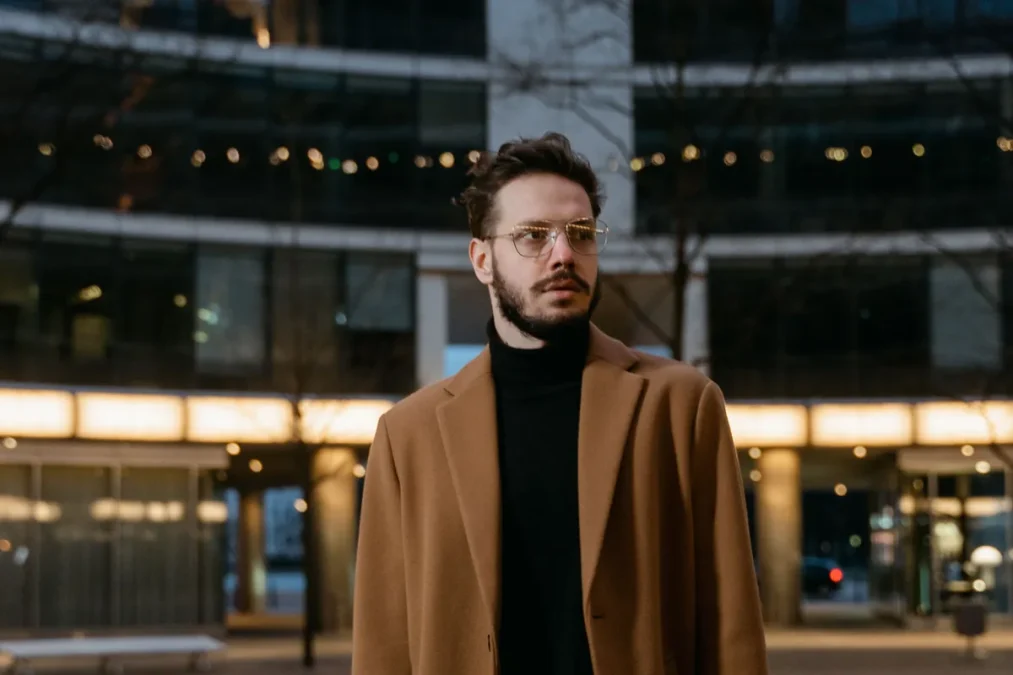
The pieces: an overcoat, a roll-neck knit, tailored trousers, and Chelsea boots.
How it sits: the coat gives the outfit its long, clean line. The roll-neck underneath stays close, so the coat does not look bulky. The trousers are straight and dark, which keeps the long line clean from top to bottom.
Colour notes: a charcoal or camel coat with a dark knit and dark trousers. One colour family, with texture doing the work that colour usually does.
When it works: cold days, smart evenings, and winter days out when you want to look sharp and stay warm.
Spring calls for light layers: a denim jacket or a shirt-jacket over a tee, straight trousers or jeans, and loafers or sneakers. The jacket is the vintage piece; the rest stays simple.
Summer calls for fewer, lighter layers: a knit polo with higher-rise trousers, or a tee with a light jacket for cooler evenings. Light tones and plain bases keep a summer outfit from feeling heavy.
Autumn is when texture returns: tweed, corduroy, and leather with knits, dark jeans or trousers, and boots or loafers. One textured piece per outfit is still the rule, even when the weather invites more layers.
Winter calls for warm layers that still show shape: a roll-neck knit under an overcoat, tailored trousers, and Chelsea boots. The coat is the lead piece, and the knit underneath stays close, so the shape stays clean.
Everyday and weekend days suit outfits 2, 4, and 6: leather, corduroy, and bomber looks that are easy, textured, and comfortable for long days.
Smart-casual days out suit outfits 1, 3, and 5: a tweed jacket, a denim jacket with tailored trousers, or a knit polo, each of which lifts the look without a full suit.
Smarter evenings and winter days suit outfits 1 and 7: a tweed jacket or an overcoat gives the outfit its polish, and the plain base underneath keeps it calm.
Photos suit any outfit with its colours kept to three or fewer, its texture clear, and its layers tidy. A simple background and a clean fit will do more for a photo than extra pieces will.
Both styles like classic pieces, so they can look close at first glance. The difference is in the lean. Old money leans polished and quiet — tailored, understated, and free of loud details. Vintage leans on era character — texture, older shapes, and pieces with a story. A vintage outfit can borrow old money polish, but it keeps one era reference visible. Our old money style guide covers that style in full.
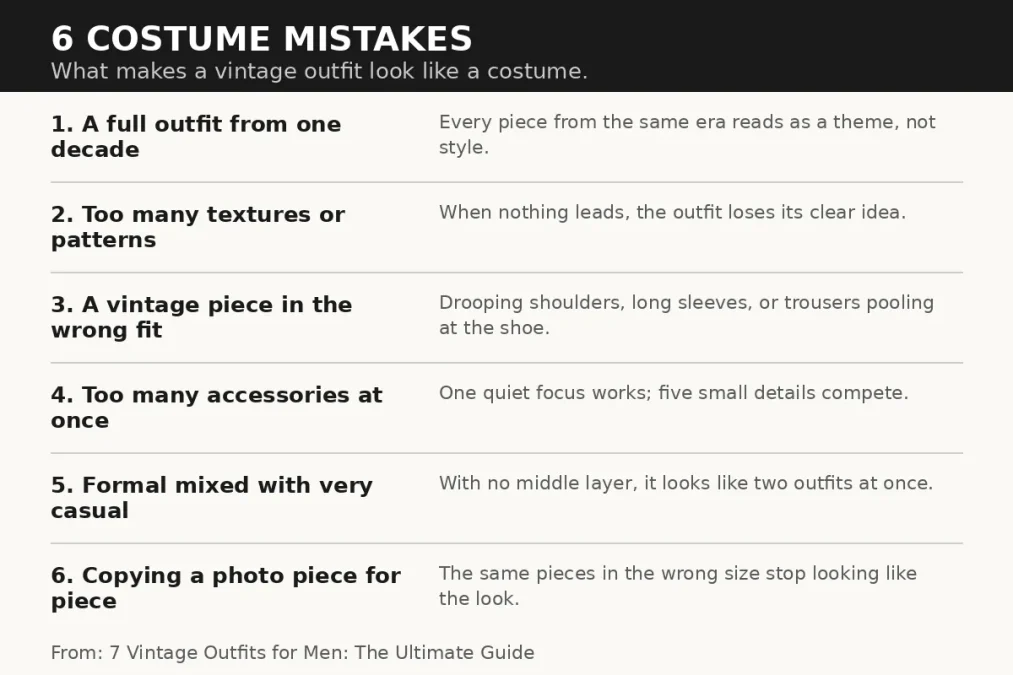
A full outfit from one decade, with every piece matching the same era. One or two references read as style; a full set reads as a theme.
Too many textures or patterns fighting in one outfit, so nothing leads. One textured piece, with the rest smooth, is a safer guide.
A vintage piece in the wrong fit, worn as it came, with no small adjustment. Shoulders that droop, sleeves that cover the hands, or trousers that pool at the shoe will make even a good piece look dated.
Too many accessories at once. The look works on one quiet focus, not five small details competing for attention.
A very formal vintage piece mixed with a very casual modern piece, with no middle layer to join them. A mid layer — a knit, a shirt-jacket, or an open jacket — can bridge a gap that otherwise looks like two outfits at once.
Copying a photo piece for piece without checking fit. The same pieces in the wrong size stop looking like the look, because fit is what makes the outfit read as current.
The starter set, in categories: 2 plain tees, 1 knit sweater, 1 knit polo or roll-neck, 1 textured jacket (tweed, leather, denim, or corduroy), 1 coat for cold days, 2 bottoms (one jeans, one tailored trousers), 2 pairs of shoes (one clean sneaker, one loafer or boot), and 1 simple leather belt.
How the set covers the 7 outfits: most outfits share the same base pieces and change only the jacket, the bottom, or the shoes. The tweed, leather, denim, corduroy, bomber, and overcoat looks all start from the same tees and knits.
Add slowly: add one category at a time, and check that it works with at least two outfits you already own before adding the next. For any older piece, check its condition and its fit in general terms before keeping it in regular use. A piece that needs work to sit cleanly is worth adjusting; a piece that cannot sit cleanly is not worth forcing into an outfit.
For era and garment detail, see our vintage clothing guide. For the neighbouring polished style, see our old money style guide. For the wider picture of men’s fashion styles, see our fashion aesthetics guide.
Vintage outfits are not about dressing from one decade. They are about one or two older-feeling pieces — usually through texture or shape — inside a simple, modern outfit with a clean fit. The 7 outfits in this guide show that idea in different forms, from a tweed jacket and knit to an overcoat and roll-neck. Keep the colours calm, let one texture lead, check the fit before anything else, and the look will feel vintage without ever feeling like a costume.
An outfit with one or two older-feeling pieces — usually through texture or shape — inside an otherwise simple, modern outfit with a clean fit. It is a feeling, not a full outfit from one decade.
Keep it selective: one or two vintage pieces, the rest modern and simple. A full outfit from one decade tends to read as a costume, while one textured jacket or one older shape inside a plain outfit tends to read as vintage style.
One or two is a good guide, especially when you are starting out. Let one piece lead — the jacket, the texture, or one strong colour — and keep the rest quiet, so the outfit has one clear idea.
A neutral base with one warm or deep tone tends to work well: cream, charcoal, and dark tones with tobacco brown, olive, rust, or burgundy in general terms. About three colours or fewer per outfit keeps the look calm.
Because texture reads as vintage on its own. Tweed, corduroy, suede, leather, and denim each carry an older feeling, so one textured piece can carry an otherwise simple outfit. Keep the other pieces smooth, so the texture has room to show.
Cleanly, on your shape today — not exactly as they were cut decades ago. Older clothes were often made to older sizing, so check shoulders, sleeve length, and trouser shape, and adjust small things rather than wearing a shape that swallows you or pulls.
It depends on the outfit’s tone: loafers or brogues for smarter looks, Chelsea boots for a polished casual look, and clean retro sneakers for everyday looks. One simple pair that matches the outfit’s tone is better than a loud pair that fights it.
Both like classic pieces, but old money leans polished and quiet — tailored, understated, and logo-free — while vintage leans on era character — texture, older shapes, and pieces with a story. The old money guide covers that style in full.