Physical Address
Islamabad, PK
Physical Address
Islamabad, PK

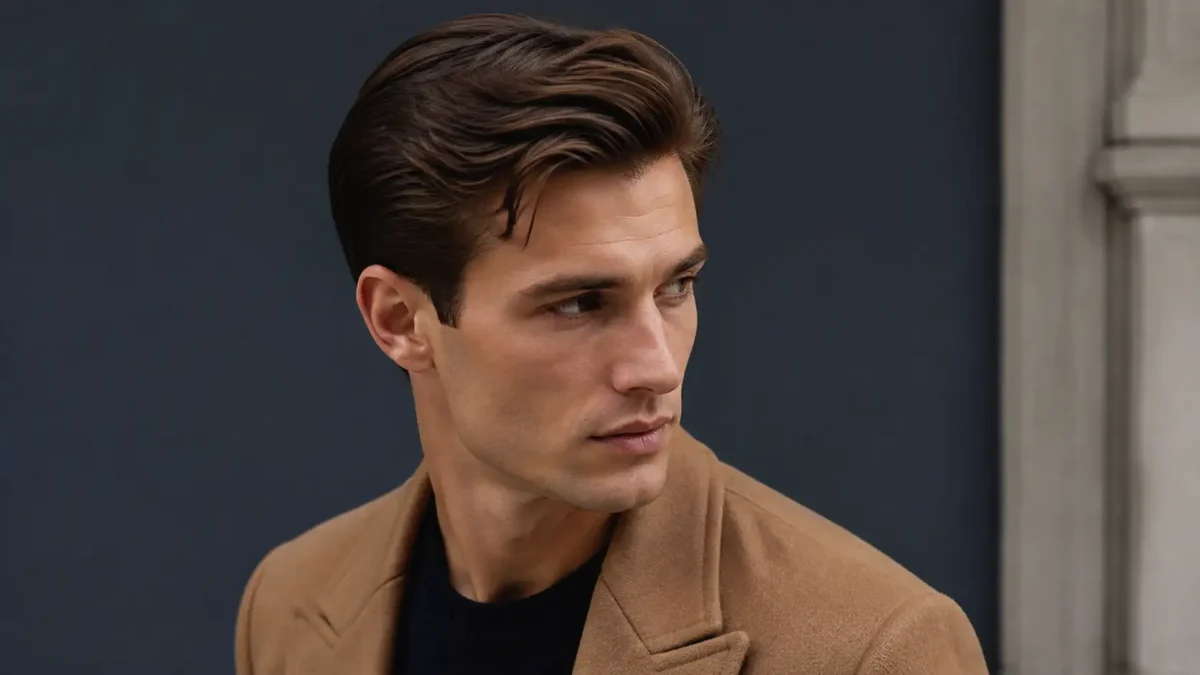
Choosing a hairstyle for the old money aesthetic is about finding a classic shape that fits your hair. The best old money hairstyles men can wear have balanced proportions, controlled volume, natural movement, and a clean finish without looking over styled.
Your hair’s length and texture should guide your choice. A short Ivy League cut behaves differently from a brushed-back style or natural wave. Face shape, hair density, and maintenance matter too, but they work best as supporting factors.
This article compares 10 styles and explains what makes each one work. You’ll also learn how to choose the right look, create the right finish, and describe the cut clearly to your barber.
TL;DR
- Old money hairstyles focus on balanced shape, controlled volume, natural movement, and low contrast.
- Popular styles are the side part, Ivy League, classic taper, slick back, crew cut, brushed back, pompadour, quiff, French crop, and natural wave.
- Choose mainly by hair length and natural texture.
- Use face shape, hair density, and maintenance as supporting factors.
- Keep the sides softly tapered or blended rather than highly contrasted.
- Use enough product to hold the shape while keeping the hair soft and natural-looking.
An old money hairstyle has a balanced shape and controlled volume. It features natural movement and restrained contrast. The hair appears polished but not stiff or overly styled. Dramatic haircut details are also avoided.
The overall shape should feel proportionate. Volume can add lift and structure, but it should not become excessively tall or wide. A refined pompadour or classic quiff suits the look when the front height is controlled. The same principle applies to shorter cuts: the top and sides should blend well instead of forming an exaggerated silhouette.
Hair should still be able to move naturally. It may sweep to one side, be brushed back, sit smoothly, or follow its natural wave without looking fixed in place.
Matte, satin, natural, and low-shine finishes can all work. The goal is enough control to keep the hairstyle neat while preserving softness and movement. Heavy or stiff styling is less consistent with this restrained finish.
The sides usually create a softer transition rather than a sharp jump from longer hair to exposed scalp. Classic tapers and scissor-cut sides are common ways to preserve that lower-contrast shape.
Scissors are not required, and fades are not automatically excluded. A subtle low fade can still fit when the transition remains restrained. Skin-close or strongly contrasting fades create a much sharper effect.
The key is the overall contrast, not whether the barber uses scissors or clippers.
These 10 options cover short, medium, structured, swept-back, and naturally textured looks. Each creates the aesthetic in a different way, so the main differences are shape, styling direction, length, and level of movement.
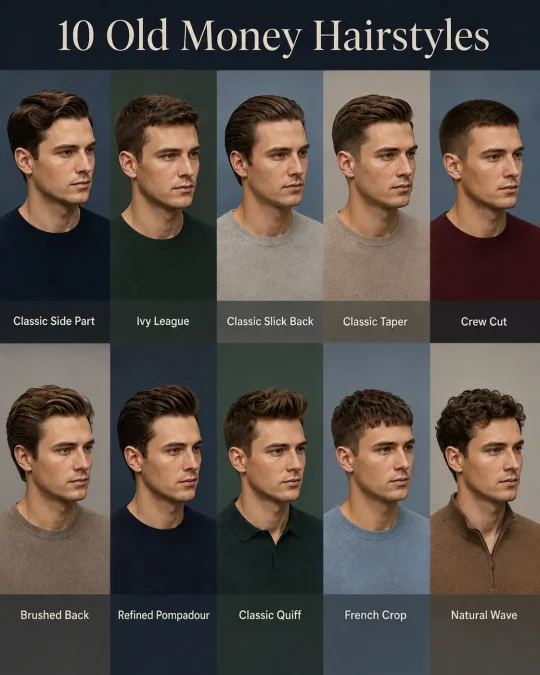
The classic side part sweeps the top neatly to one side from a natural part. The sides are usually tapered or softly blended to keep the shape balanced.
It creates a clean, structured look without needing heavy styling. The defined part and neat side sweep make the style easy to recognize.
The Ivy League sits between a crew cut and a traditional side part. It keeps the sides short while leaving enough length at the front for a soft sweep or light part.
Compared with a crew cut, it gives you more styling freedom. Compared with a fuller side part, it stays shorter and more compact.
The classic slick back directs the hair straight back from the forehead in one smooth sweep. It needs enough length for the top to flow backward as one continuous shape.
The finish is usually smoother and more controlled than a brushed-back style. A restrained finish keeps the hair polished without making it look stiff or overly glossy.
The classic taper shows how hair gradually shortens toward the sides, sideburns, and neckline. It keeps more weight higher up.
It does not require a specific styling approach. The longer hair can be side-parted, brushed back, or worn with its natural texture, giving the taper more styling flexibility than a rigidly shaped cut.
The crew cut keeps the top short and the shape compact. The sides gradually shorten for a neat, controlled look.
It requires less daily styling than longer styles like a slick back, quiff, or pompadour. A softer transition on the sides fits the clean aesthetic discussed in this article.
Brushed-back hair moves away from the face while keeping more texture, lift, and separation than a classic slick back.
A slick back has a smoother surface and more controlled direction. Brushed-back hair keeps more visible texture and separation.
The refined pompadour lifts the front up and back while keeping the height proportional to the rest of the haircut.
Unlike a more dramatic pompadour, this version avoids excessive height or sharp contrast. The result has noticeable volume at the front without making the hairstyle look theatrical.
The classic quiff also adds height at the front, but its shape is usually lighter and less rounded than a pompadour.
The front lifts upward and slightly back, then the volume decreases across the top. This gives the quiff a more relaxed shape while still keeping visible structure.
The French crop keeps the top short and directs the fringe forward across the forehead.
For this aesthetic, the fringe and side transition should stay relatively soft rather than sharply boxed. It offers a short, forward-styled alternative to the side-parted and swept-back cuts in this article.
The natural wave keeps the hair’s existing wave or curl pattern visible rather than forcing it into a straighter shape.
The sides remain controlled while the top keeps its natural movement. It gives people with wavy or curly hair a polished look without requiring the texture to be straightened or smoothed flat.
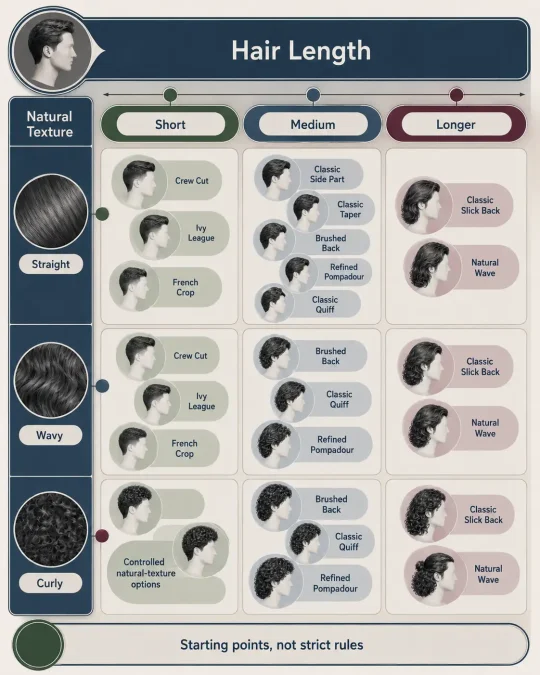
Choose your hairstyle by looking first at your current length and natural texture. Then use face shape, hair density, growth pattern, and daily styling effort to narrow the options. These factors are useful guides rather than strict rules.
Your current length affects which hairstyles are easiest to achieve. Shorter hair works well with styles such as the Crew Cut, Ivy League, and French Crop.
Medium-length hair gives you more freedom to part the hair, lift it, or brush the top back. Suitable options include the Classic Side Part, Classic Taper, Brushed Back, Refined Pompadour, and Classic Quiff.
Longer hair provides more weight and movement for a Classic Slick Back or Natural Wave. The length you need depends on your hair’s texture, density, and cut, so treat these recommendations as guidelines rather than strict limits.
Work with your natural texture instead of forcing it into a shape that is difficult to maintain.
Straight hair helps create a clean part and smooth, directional styling. This texture can suit styles such as the Classic Side Part, Ivy League, and Slick Back, although these cuts are not limited to straight hair.
Wavy hair naturally brings movement to the Brushed Back, Classic Quiff, and Natural Wave. Curly hair can also fit the aesthetic when the overall shape stays controlled and the curl pattern remains visible.
Your growth pattern matters too. When possible, choose a parting or styling direction that works with how your hair naturally falls.
Face shape can refine your choice, but it should not become a rigid matching system. Instead, look at how much height, width, or softness the hairstyle adds to your overall proportions.
Hair density also changes how a cut behaves. Thick hair may need some weight removed to keep a swept or brushed-back shape balanced. Fine hair may need enough structure left in the cut to avoid looking overly thinned.
Finally, choose a style that matches your routine. A Crew Cut or simple Classic Taper usually needs less daily shaping than a Quiff, Refined Pompadour, or Slick Back.
Style the hair in its intended direction first, then add only the volume and hold needed to keep the shape neat. The finished look should stay controlled without losing natural movement.
Start with the direction of the style. A side part directs hair across the head. A brushed-back style sweeps hair away from the face while preserving some separation. A quiff or refined pompadour needs more lift at the front.
If the style needs extra volume, you can shape damp hair with your fingers or a brush while blow-drying in the intended direction. Sea salt spray can also add light texture and lift before the finishing product. Neither step is required for every hairstyle or hair type.
Keep the final shape flexible. Wavy or curly hair can retain visible texture rather than being smoothed completely.
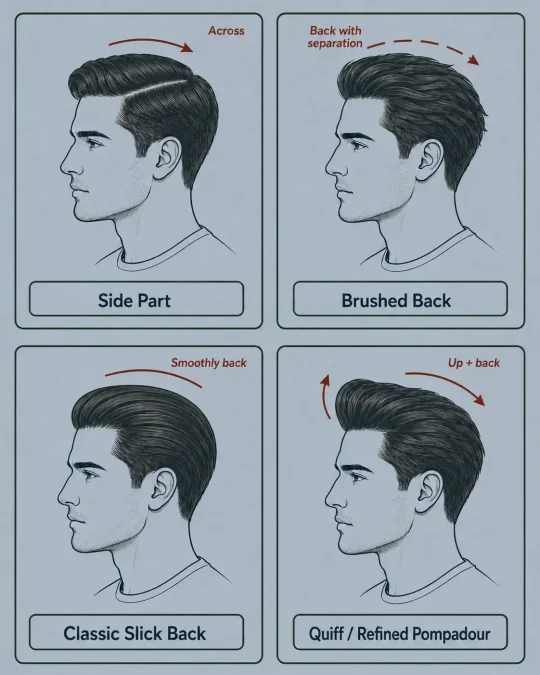
Matte, satin, natural, and low-shine finishes can all suit this aesthetic. The aim is a polished surface without making the hair look stiff, greasy, or heavily coated.
Choose the product based on the result you want. Styling cream helps create softer movement. Paste or clay adds more grip and texture, while low-shine pomade suits smoother side parts and slicked-back styles. Source: American Crew
Product formulas vary, so no single type or amount works for every style. Use only enough to hold the direction and shape while keeping the hair soft and flexible.
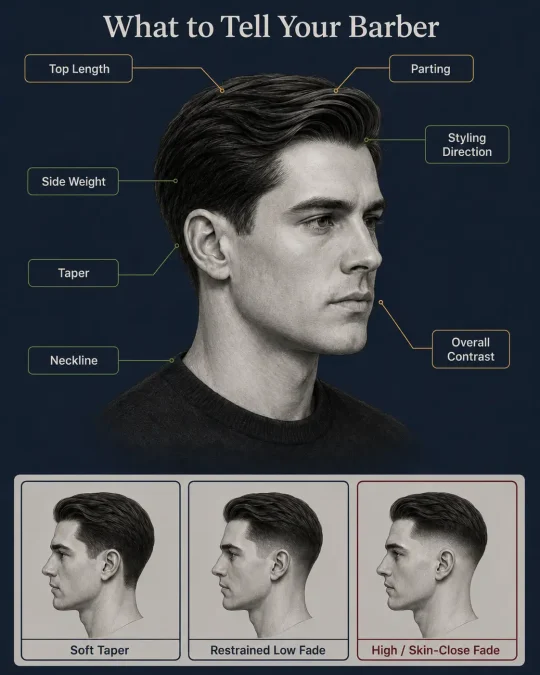
Do not rely only on the phrase “old money haircut.” Tell your barber how you want the top, sides, parting, and overall contrast to look. Bring a reference photo when possible so the shape is clear.
Start with the top length and what it needs to do. Keep enough hair for the intended shape, whether you want a side part, a brushed-back style, a quiff, a slicked-back style, or a soft fringe.
Also describe the styling direction. Say whether the hair should sweep to one side, be brushed straight back, lift at the front, or follow its natural wave.
If you want a part, ask for a natural-looking part rather than a shaved-in hard line. The placement should work with how your hair naturally falls.
Next, explain how much weight you want to keep through the sides. You can ask for a classic taper or scissor-cut sides if you want a softer, lower-contrast shape.
A subtle low fade can also work when the transition stays restrained. If you want to avoid a sharper result, tell your barber not to take the sides too high or too close to the skin.
Simple instructions like “keep some weight on the sides” or “use a soft taper, not a skin fade” can help you share your preferences more easily.
Maintain the hairstyle by controlling side growth while preserving its shape and natural movement. There is no single trim schedule that suits every cut. Hair growth, texture, haircut length, and preferred neatness all affect how soon the shape changes.
Short, precise styles may show growth sooner around the sides and neckline. Longer or softer styles can often tolerate more growth before losing their intended shape.
Book your next appointment when the taper, neckline, or overall silhouette no longer looks balanced. At home, use only enough styling product to restore the intended direction and finish. Excess products can reduce movement and make the hairstyle look overworked rather than naturally polished.
Old money hairstyles for men are defined more by balance and restraint than by one specific haircut. A side part, Ivy League, classic taper, slick back, quiff, or natural wave can all fit the aesthetic when the shape stays controlled and the finish looks natural.
Start with your hair length and texture, then consider density, face shape, and daily styling effort. Keep the sides soft, avoid unnecessary contrast, and use only enough product to hold the style without making it stiff.
The best choice is the one that works with your natural hair and still gives you a clean, polished look.
No. Old money hairstyles include side parts, Ivy League cuts, classic tapers, brushed-back styles, and natural waves. The styling direction can vary as long as the overall shape remains clean and understated.
A subtle low fade can work with some modern old money hairstyles when the contrast remains restrained. High or skin-close fades create a sharper modern effect and are less consistent with the classic aesthetic. A taper or scissor-cut sides usually produce a softer transition.
No. A side part is common in classic old money styling, but it is not required. Slick backs, brushed-back styles, tapers, quiffs, and natural waves can create the same understated look without a defined part.
No. Many old money hairstyles fit both formal and casual settings. They have defined shapes but don’t appear too rigid. A classic side part looks structured, while a brushed-back or naturally wavy style feels more relaxed.


