Physical Address
Islamabad, PK
Physical Address
Islamabad, PK


Ever showed a barber a 70s photo and got hair that looked costume-like? That happens when layers, such as face-framing pieces and crown layers, are copied without balance. Men’s 70s Hairstyles need shape, movement, and clean finishing.
Messy shags, heavy mullets, or stiff feathered cuts can look dated fast. The wrong style can fight your hair length, texture, or face shape. A strong retro idea then starts looking rough, bulky, or forced.
This guide fixes that with 17 men’s 70s hairstyles for guys. Readers comparing short, long, and fade options can also use Haircuts for Men: Short, Long & Fade Guide. You get shags, afros, surfer hair, mullets, and feathered cuts. It also covers length, texture, barber instructions, products like sea salt spray and curl cream, and styling advice.
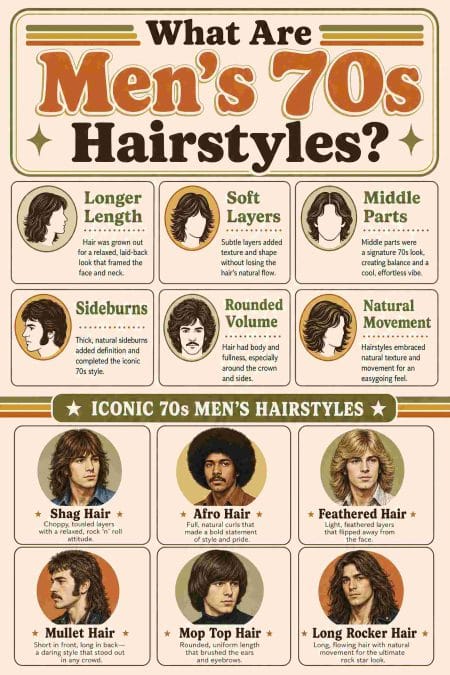
Men’s 70s Hairstyles are retro men’s haircuts with longer length, soft layers, natural texture, and expressive shape. Core styles include shag cuts, afros, feathered hair, mullets, mop tops, and long rocker hair, which also fits the broader retro style context in Types of Vintage Clothing Men. Key details include middle parts, side parts, sideburns, mustaches, rounded volume, and loose movement.
These 1970s hairstyles for men moved away from rigid short cuts and tight clipping. They appeared in films like Saturday Night Fever and Klute. How the Shag Became the Haircut of the Moment explains Klute’s role in popularizing the shag. Rock music, disco culture, hippie style, and Black pride also shaped the decade, a connection supported by Strands of Inspiration: Exploring Black Identities through Hair. Older Statista-cited estimates projected the global male grooming market at about $81.2 billion by 2024, reflecting broader interest in men’s grooming products.
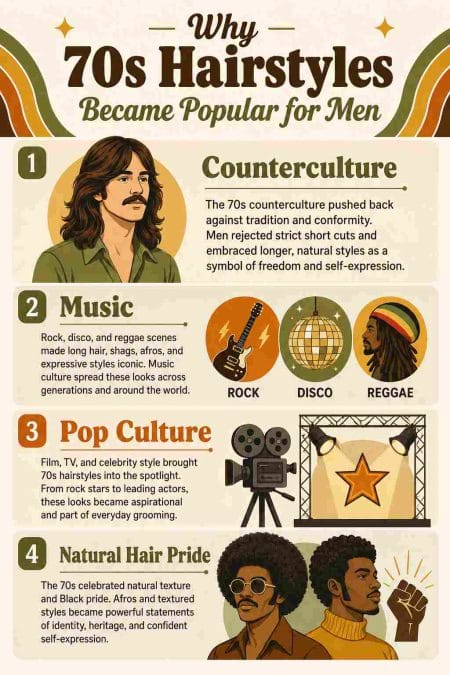
70s hairstyles became popular for men because 4 forces changed grooming: counterculture, music, pop culture, and natural hair pride. Counterculture rejected strict short cuts. Music scenes, like rock, disco, and reggae, spread long hair, shags, afros, and dreadlocks.
Male styling products, such as pomades, creams, and sprays, helped move these looks into everyday grooming. Icons like Robert Plant, Mick Jagger, Bob Marley, and John Travolta made expressive hair familiar. The U.S. hair salon market reached $60.0B in 2025, showing continued demand for haircut services and salon styling.
The 17 best Men’s 70s Hairstyles include shags, feathered cuts, afros, rocker hair, surfer hair, and mullets. These 70s men’s haircuts cover straight, wavy, curly, coily, thick, and fine hair. The shag haircut averaged 121,100 monthly searches in Fresha-reported U.S. trend data.
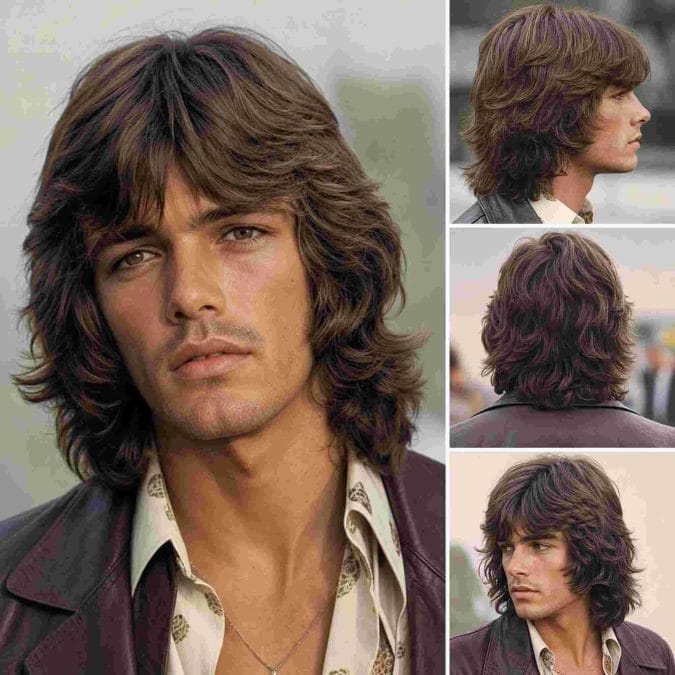
The 70s shag haircut uses choppy layers, crown volume, and textured fringe. It suits wavy, thick, and medium-length hair. Soft razored ends keep shags, feathered cuts, and surfer hair modern.

Feathered hair uses face-framing layers brushed back from the face. It suits straight, wavy, and medium-density hair. A round brush creates the winged shape.

Long straight rocker hair uses shoulder-length flow with a center part or loose side part, making it a natural fit for readers exploring Long Haircuts for Men. It suits straight and lightly wavy hair. Sea salt spray adds grit and movement.

The 70s afro is a rounded natural hairstyle built on volume, coils, and cultural identity. Readers can find more textured style ideas in Haircut Ideas for Black Men. It suits coily and dense curly hair. Leave-in conditioner supports moisture. Dermatologists’ top tips for using leave-in conditioner explains its role in frizz control, smoothness, and styling.
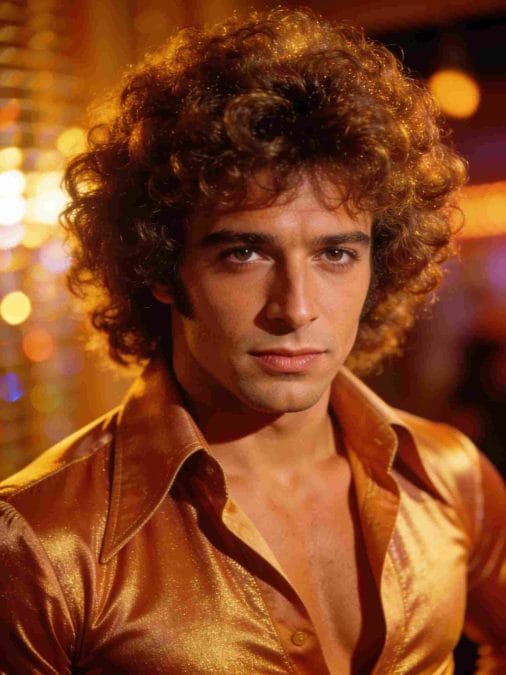
Disco curls use shiny volume, defined curls, and a polished nightlife shape. They suit curly, permed, and thick hair. Curl cream keeps the shape controlled.
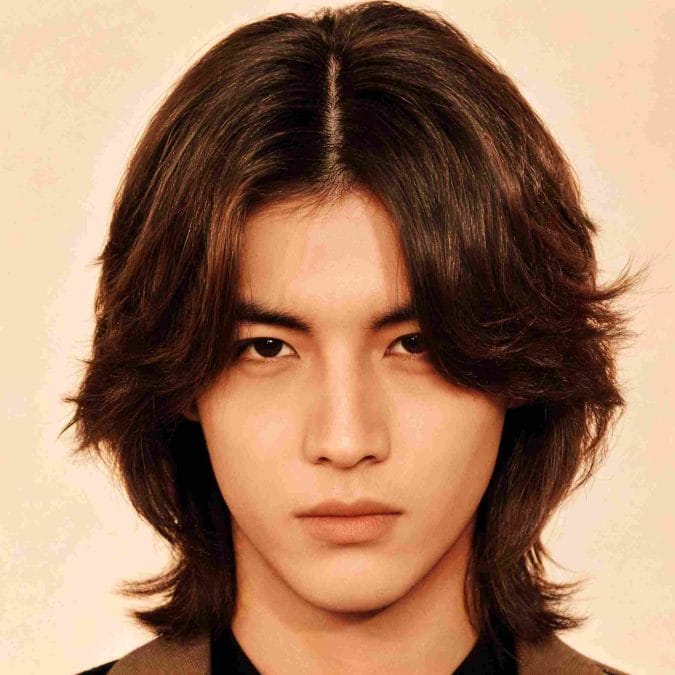
The shoulder-length middle part gives long hair a relaxed 70s frame. It suits straight, wavy, and loose curly hair. Light cream reduces frizz in shoulder-length hair, surfer hair, and loose curls.
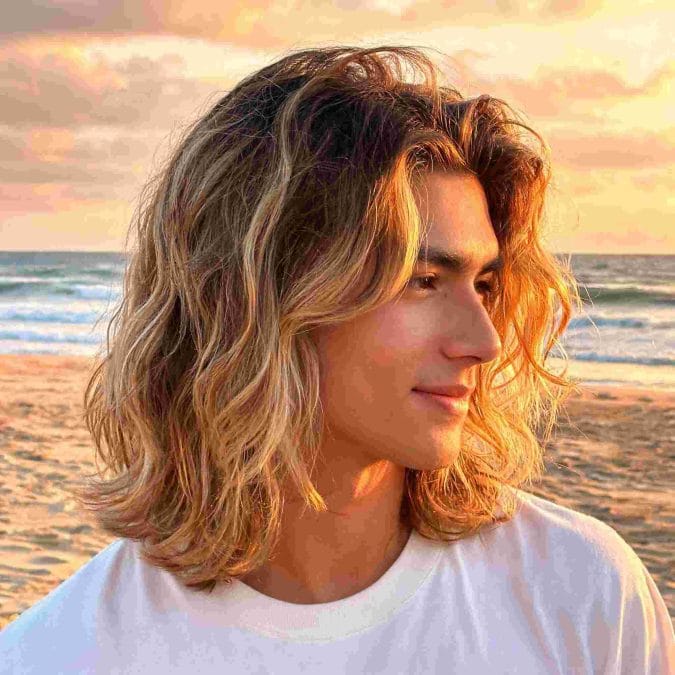
Surfer hair uses shaggy layers, beach texture, and sun-kissed movement. Mens Wavy Hairstyles Ideas gives more examples for natural waves and movement. It suits wavy, thick, and medium-length hair. Sea salt spray creates a beachy texture.

The mop top uses rounded fullness, soft fringe, and light movement. It suits straight, wavy, and medium-density hair. Matte clay separates the ends.

Side-parted 70s hair gives a cleaner retro look with soft volume. It suits short-to-medium hair. Styling cream keeps the part neat.

The 70s pompadour uses front height, brushed-back volume, and longer sides. It suits thick, straight, and wavy hair. Pomade gives control.
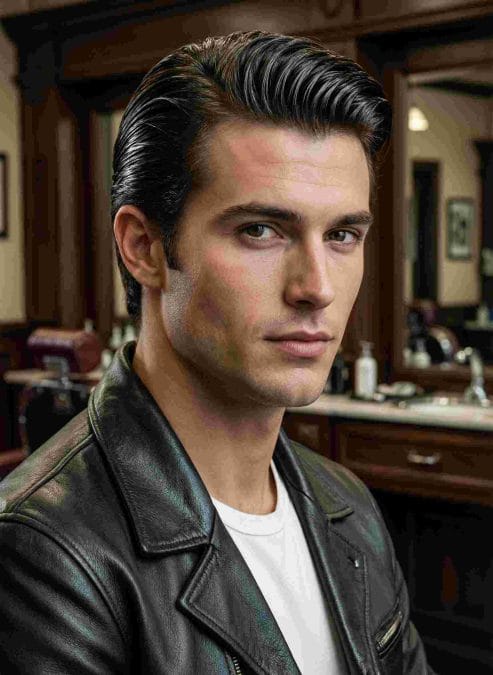
The greaser hairstyle uses slicked-back hair, shine, and structured control. It suits straight, thick, and medium-length hair. Water-based pomade reduces buildup.
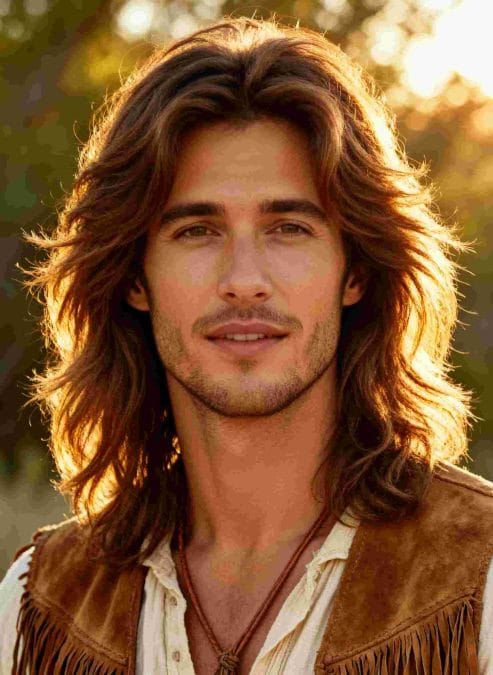
Hippie long hair uses natural length, loose texture, and minimal styling. It suits straight, wavy, and curly hair. Healthy ends keep rocker hair, hippie hair, and mullets intentional.
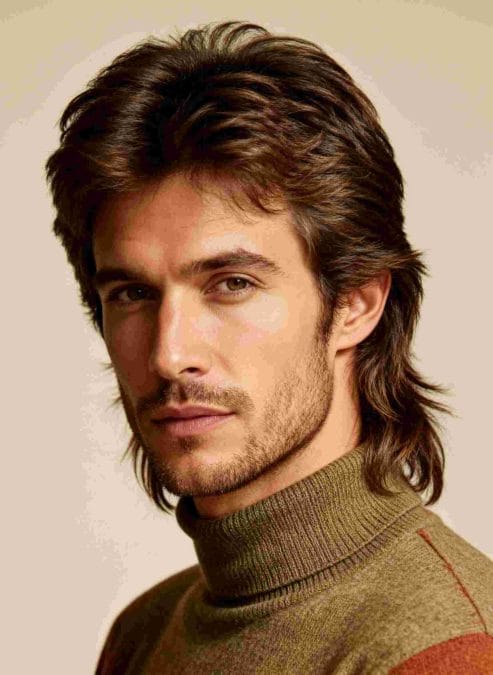
The 70s mullet keeps shorter layers on top and longer hair at the back, while Mullet Fade Haircuts for Men Style Guide explains more modern mullet variations. It suits wavy, thick, and textured hair. Soft blending keeps it wearable.

Layered medium hair gives 70s volume without extreme length. It suits straight, wavy, and thick hair. Feathered ends reduce side bulk.

The curly 70s hairstyle uses full curls, natural volume, and rounded movement. It suits curly and thick hair. Diffuser drying protects curl shape.

The short Robert Redford cut is a neat layered style with soft feathering. It suits short-to-medium hair. This cut gives a retro shape without long hair.

70s hair with sideburns and a mustache completes the full vintage grooming look. It works with shags, side parts, and long hair. Clean trimming keeps it modern.
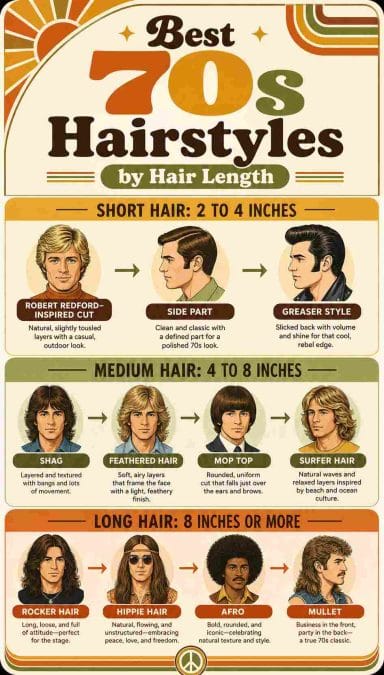
The best 70s hairstyles by hair length fit 3 categories: short, medium, and long. Short hair works with Robert Redford cuts, side parts, and greaser styles, and Nice Short Haircuts for Men Guide gives cleaner short-hair options. These cuts need 2 to 4 inches and sit above the ears.
Medium and long hair create fuller 70s volume. Medium styles, like shags, feathered hair, mop tops, and surfer hair, need 4 to 8 inches. Long styles, like rocker hair, hippie hair, afros, and mullets, need 8 inches or more.
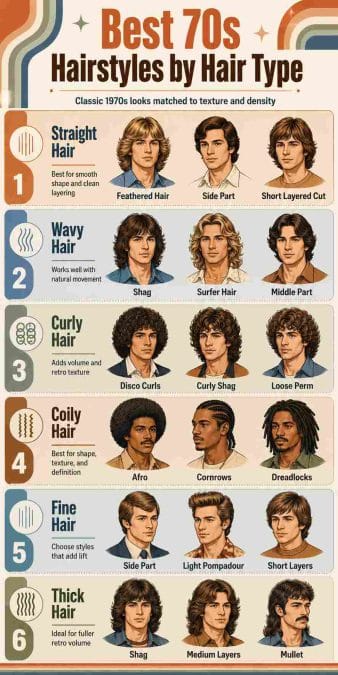
The best 70s hairstyles by hair type match 6 textures: straight, wavy, curly, coily, fine, and thick. Straight hair suits feathered hair, side-parted cuts, and short Robert Redford styles. Wavy hair suits shags, surfer hair, and shoulder-length middle parts. Curly hair suits disco curls, curly shags, and loose perms.
Coily, fine, and thick hair need shape control, lift, or weight removal. Coily hair suits afros, cornrows, and dreadlocks. Fine hair suits side parts, light pompadours, and short layered cuts. Thick hair suits shags, medium layers, and mullets. Natural hair remains a major social media topic, but hashtag counts change frequently and should be dated if used.
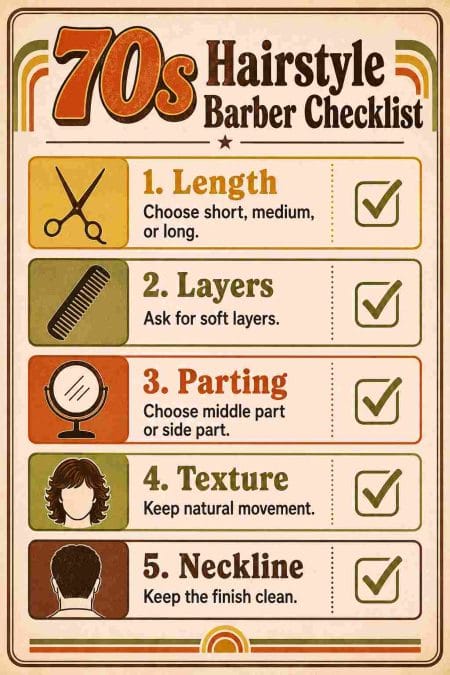
Ask a barber for a 70s hairstyle by naming 5 details: length, layers, parting, texture, and neckline. Bring 2 reference photos, such as a front view and side view. Use examples, such as Robert Redford feathered hair, David Bowie mullet, or Jimi Hendrix afro.
Request soft layers instead of a sharp modern fade. Mention 4 details: fringe length, sideburn shape, nape length, and styling routine. Clear terms help, including internal layers, scissor-over-comb sides, point cutting, and tapered neckline, which are also covered in Hair Styling Techniques for Men.
The best products for 70s hair texture are 6 lightweight groups: texture sprays, mousses, styling creams, curl products, conditioners, and flexible finishers. Sea salt sprays, texturizing mists, and beach sprays add grit for shags, surfer hair, and rocker hair. Styling creams and blow-dry lotions smooth feathered hair and side parts.
Curl and finishing products keep 70s volume soft instead of stiff. Curl creams, leave-in conditioners, and light oils support disco curls, afros, and curly shags. Matte clays, water-based pomades, and flexible hairsprays control pompadours, greaser hair, and mop tops, and 10 Products for Men’s Hair: Pomade Products explains product choices in more detail.
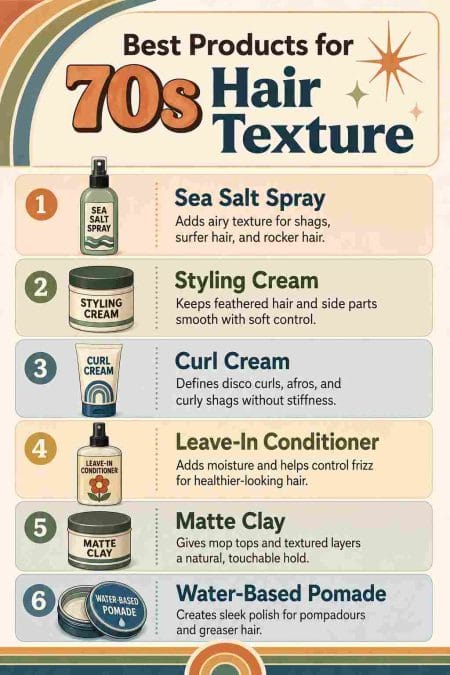
Style and maintain Men’s 70s Hairstyles with 4 habits: gentle washing, light product, texture-safe tools, and scheduled trims. Use products, such as sea salt spray, styling cream, and curl cream. Choose tools, such as round brushes, diffusers, and hair picks. Wash based on scalp oil, product buildup, and hair type, and Expert Haircare Tips for Men: How to Take Care gives more haircare guidance.
Trim timing depends on length, layers, and shape. Short styles, such as side parts and Robert Redford cuts, need trims every 3 to 4 weeks. Medium styles, such as shags and feathered hair, need trims every 4 to 6 weeks. Long styles, such as rocker hair and mullets, need trims every 6 to 8 weeks. The U.S. hair salon market later reached $60.0B in 2025.

Classic and modern 70s hairstyles differ in 3 areas: neckline, product finish, and layer control. Classic styles, like shags, afros, and mullets, used heavier layers, fuller sideburns, and rougher necklines. Many also relied on setting sprays, shiny pomades, and stronger volume.
Modern 70s hairstyles keep the retro shape but clean up the finish. Modern updates, like soft tapers, clean necklines, and matte texturizers, support daily grooming. Different Types of Fade Hairstyles gives more fade options.

The 5 common mistakes with 70s hairstyles are heavy product, dry ends, poor layers, unblended sideburns, and mismatched hair texture. Heavy gels, thick waxes, and stiff sprays flatten shags, feathered hair, and disco curls. Dry ends, heat damage, and product buildup make rocker hair, hippie hair, and mullets look rough.
Poor cutting and overdone facial hair make retro hair look costume-like. Uneven layers, harsh fades, and overgrown napes break the 70s shape. Oversized sideburns, untrimmed mustaches, and uneven mutton chops overpower the haircut. The U.S. hair salon market reached $60.0B in 2025, according to Hair Salons in the US Market Size Statistics for 2026, showing continued demand for haircut services and salon styling.
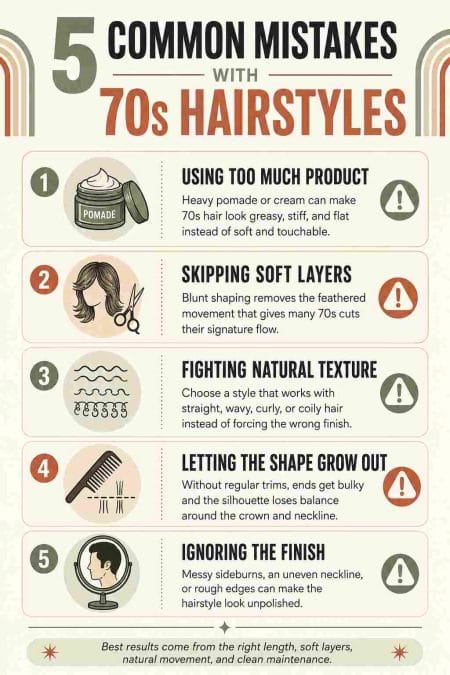
Men’s 70s hairstyles remain popular in 2026 as modern shags, wolf cuts, mullets, tapered afros, and feathered flow, while 11 Men’s Wolf Cut Hairstyles: The Ultimate Guide covers a modern shag-mullet variation. These styles keep 70s layers, movement, and natural texture. Modern versions use clean necklines, soft tapers, and light products, such as sea salt spray, matte clay, and curl cream.
Search data shows measurable demand for updated retro hair. In broader U.S. hairstyle search data, the wolf cut averaged 591,600 monthly searches nationwide, while the shag haircut averaged 121,100 monthly U.S. searches in Fresha-reported trend data.
In conclusion, men’s 70s hairstyles work best when retro shape meets modern grooming. Shags, afros, surfer hair, mullets, and feathered cuts need the right length, texture, layers, and product. The right choice matches your hair type, face shape, and daily routine. Clean necklines, soft tapers, light products, and healthy ends keep these vintage styles current. Choose 1 style that fits your hair, save 2 reference photos, and ask your barber for the exact length, layers, parting, texture, and neckline.
Men’s 70s Hairstyles are retro haircuts with longer length, soft layers, natural texture, and expressive shape. Common examples include shag cuts, feathered hair, afros, surfer hair, mop tops, and shoulder-length middle parts.
The most popular men’s hairstyles in the 1970s included shag haircuts, feathered layers, afros, long rocker hair, and side-parted medium cuts. These styles reflected rock music, disco culture, natural hair, and relaxed grooming.
Men’s 70s Hairstyles are still popular in 2026 because layered hair, retro grooming, and natural texture remain current. Modern versions use cleaner necklines, lighter products, and controlled volume.
The easiest 70s hairstyle to maintain is a short side-parted cut with light texture. It gives a retro shape without long growth, heavy styling, or daily blow-drying.
Short hair can look 70s-inspired with texture, sideburns, volume, or a soft side part. Short pompadours, greaser cuts, and textured tapers create the look without shoulder-length hair.
Ask your barber for soft layers, natural movement, and a 70s-inspired shape. Bring front and side reference photos. Mention the parting, sideburn length, neckline, and texture level.
Sea salt spray, styling cream, curl cream, leave-in conditioner, and light shine serum help style Men’s 70s Hairstyles. These products support texture, movement, curl shape, and soft volume.
Too much gel makes a 70s hairstyle look stiff, shiny, and costume-like. Shags, feathered cuts, and surfer hair need soft movement, loose texture, and natural volume.
Men’s 70s Hairstyles look outdated with heavy product, dry ends, oversized sideburns, or poor layering. Modern versions look cleaner with neat grooming, healthy ends, and controlled shape.
A 70s shag has blended choppy layers, while a 70s mullet keeps stronger length at the back. The shag looks softer. The mullet creates more contrast between the front and back.


