Physical Address
Islamabad, PK
Physical Address
Islamabad, PK

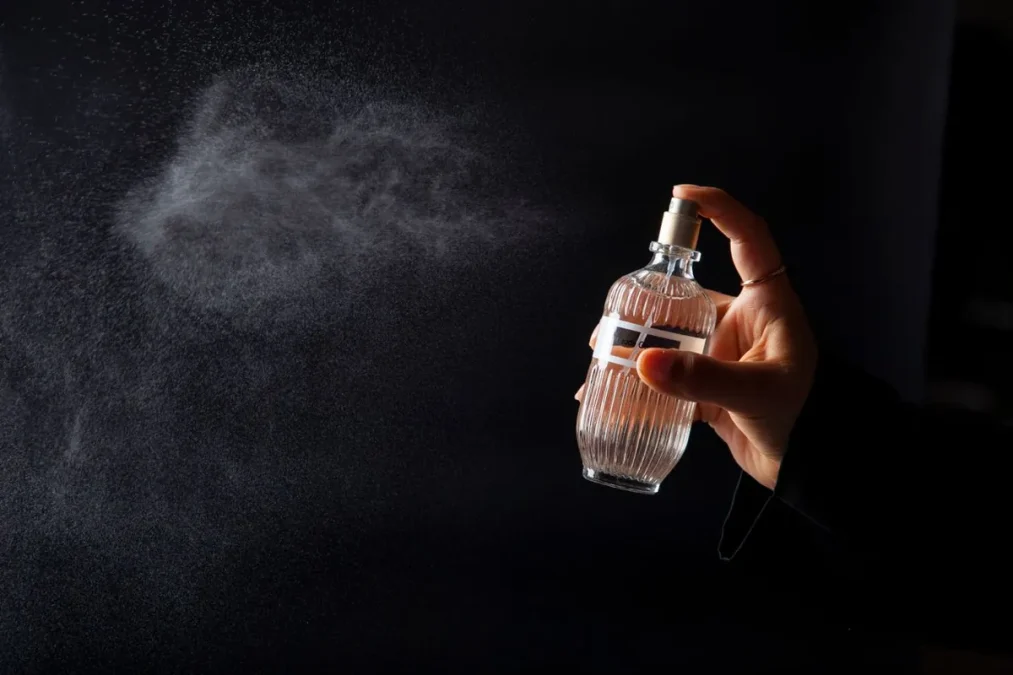
Fragrance is scent in a bottle, made to be worn on the skin. It is the last step of a grooming routine, and it is the step most men get wrong. Not because it is hard, but because no one ever taught them the basics.
This guide gives you fifteen plain basics for men’s fragrance. Know the scent families. Pick a scent that fits the moment. Test it on your skin first. Use less than you think. Spray it where it lasts. Let it settle. Store it right. Choose the strength that fits your day. Spray after your shower. Spray the skin and not the air. Wait before you spray again. Start with a small bottle. Pick what you like and not what someone else wears. Keep a note of what you like. And know when a bottle has changed. It also explains the words on the bottle. It shows how scent changes over time. It lists what to avoid. And it gives a simple routine that puts it all together.
You do not need to know brands, and you do not need to spend a lot. You need to know what you like, how to test it, and how much to use. That is what this guide is for.
Fragrance is scent in a bottle, made to be worn on the skin. “Cologne” is the word most often used for men’s fragrance. “Perfume” is the wider word for scent in a bottle, for men and women both. The two words are often used in the same way, so do not worry about which one is on the bottle.
The words that matter more are the ones that name how strong the scent is. Two words you see again and again are eau de toilette and eau de parfum. Eau de toilette tends to be lighter. Eau de parfum tends to be stronger and last longer. Think of them as two strengths of the same idea: light and strong. No fixed numbers or hours are claimed for either one, because how long a scent lasts changes with the scent, your skin, and the weather.
A bottle is not one single smell. Most scents blend more than one family, and the blend is what you smell. That is why two bottles can both be called “woody” and still smell very different from each other. The words on the bottle are a guide to what is inside, not a full picture of it.
To learn more about perfume, see the Wikipedia article on Perfume.

A scent does not smell the same all day. It changes in three steps after you spray it, and knowing the steps keeps you from judging a scent too fast.
The first smell is what you notice right after spraying. It is the lightest part of the scent, and it fades fast, in minutes, as a tendency. It is the first hello, not the whole scent.
The middle smell is what you live with through the day. This is the scent most people notice on you, and it is the part that tells you if you like the bottle or not. When you test a scent, this is the smell you are waiting for.
The last trace is the soft smell that stays longest, close to the skin. It is quiet, and you may only notice it when you lean close. It is the part of the scent that stays with you into the evening.
Judge a scent by the middle smell, not the first spray. The first smell is not the scent you wear all day. A scent can smell sharp in the first minute. It can still settle into something you like by the time the middle smell shows.
Most men’s scents fall into four plain groups. Knowing them lets you say what you like in plain words, instead of guessing from the bottle.
Fresh smells clean, like citrus or the sea. Think of lemon, orange, or a sea breeze. Fresh scents tend to feel light and clean, and they suit warm weather and the daytime as a tendency.
Woody smells like warm wood, like cedar or sandalwood. Think of a wood shop, or a warm room with wood floors. Woody scents tend to feel warm and steady, and they suit cold weather and the evening as a tendency.
Warm and spicy smells like spices, like pepper or cinnamon. Think of a spice rack, or a warm drink. Spicy scents tend to feel bold and warm, and they suit the evening as a tendency.
Floral smells like flowers. In men’s scents, flowers are usually soft, sitting in the back of the blend rather than leading it. A floral note can soften a woody or spicy scent and give it a rounder feel.
One bottle usually blends more than one family. A scent can be fresh and woody at the same time, or warm and spicy with a soft floral note. The family that stands out most is the one you name first. Start with the family you like, then test the bottle itself.
A scent is not one-size-fits-all. The day, the weather, and the moment all play a part in what fits.
A light, fresh scent tends to suit warm weather and the daytime. Heat lifts scent into the air, so a light scent stays pleasant when the day is warm. A heavy scent in warm weather can feel too much, as a tendency.
A warm, woody scent tends to suit cold weather and the evening. Cold air holds scent close, so a warm scent stays soft and steady when the day is cold. A light scent in cold weather can fade fast, as a tendency.
The season and the moment are a guide, not a rule. You can wear what you like, when you like. But if you want two bottles, keep one light scent for day and warm weather, and one warm scent for evening and cold weather. And if you want only one, pick the one that fits most of your days. One scent that fits most days is fine.
Do not buy a scent from the bottle alone, and do not judge it from a paper strip alone. Scent can smell different on skin than it does on paper or in the air, as a tendency. Your skin warmth plays a part, and every man’s skin is a little different.
Spray once on your wrist, then wait. The first smell fades fast, and the middle smell shows. That middle smell is the scent you are deciding on. Give it time. Wait at least until the first smell has faded and the middle smell has settled in.
Do not test four or five scents at once. Your nose gets tired fast, and after two or three scents they all start to blur together. Test one, wait, decide, and come back another day for the next one. A scent you like on Monday is still there on Tuesday.
Fragrance is made to be noticed up close, not across a room. A small number of sprays is enough as a tendency. Spraying too much is the most common mistake a beginner makes. It is also hard to undo once it is on. You cannot take scent off the way you can take off a jacket.
Start with a few sprays and stop there. Spray on the wrists and the neck, then wait and see how it sits. If you can still smell it on yourself after an hour, that is enough. If others can smell it from far away, it is too much.
Less is more with fragrance. A scent that sits close to the skin smells better than a scent that fills the room. When in doubt, use one spray less than you think you need. You can add a spray tomorrow; you cannot take one away today.
“Less is more.”
Ludwig Mies van der Rohe
Warm spots on the skin hold and spread scent better than cold spots. Warmth lifts the scent into the air around you. The two warm spots every man can use are the wrists and the neck.
One spray on each wrist and one on the neck is a plain starting point. Spray from a short distance, not right against the skin, and let the mist land on the warm spot. Then leave it alone.
Do not spray it on your clothes instead of your skin. Clothes hold scent in a flat way, and the scent does not open the way it does on warm skin. The skin is where the scent opens and changes over time. Spray on the skin, and let the skin do the work.
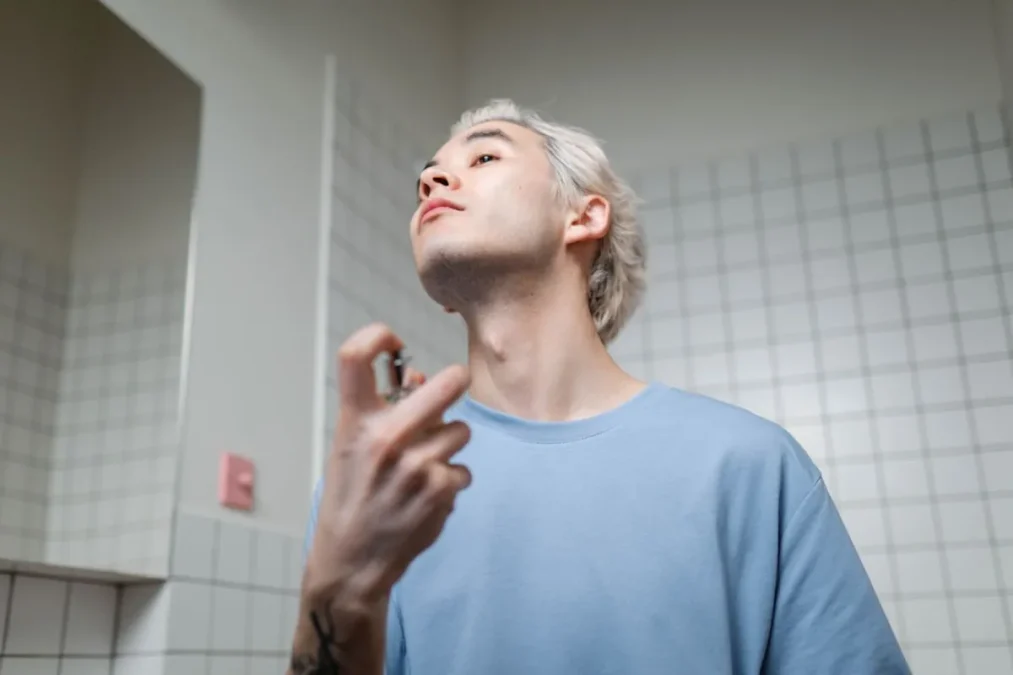
After you spray, let it dry on its own. Do not rub your wrists together. Do not pat the spot. Do not touch it while it dries.
Rubbing the wrists together can crush the first smell and change how the scent opens as a tendency. The scent was made to open in its own time, in three steps: the first smell, the middle smell, and the last trace. Rubbing skips the first step and muddles the rest.
Spray, then leave it alone. It takes only a minute or two to dry, and the scent is better for the wait.
A bottle of fragrance is not hard to keep, but it does not like heat and light. Heat and light can change a scent over time, as a tendency. A warm, bright shelf works against the bottle.
Keep the bottle in a cool, dark place, with the cap on. A drawer or a shelf away from the window is enough. The cap keeps air out and keeps the scent as it was made.
Do not keep the bottle in a hot bathroom, where steam and heat rise every day. Do not keep it in direct sun, on a window ledge, or in a hot car. Cool and dark is all it needs, and the scent stays true for longer as a tendency.
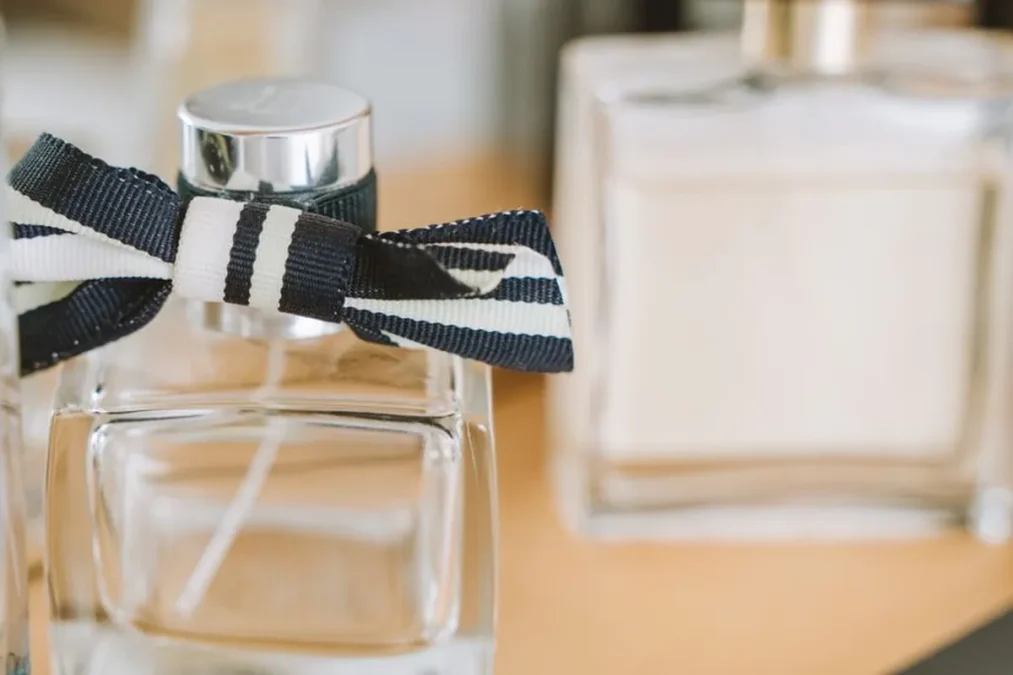
The words on the bottle tell you how strong the scent is. Eau de toilette tends to be lighter. Eau de parfum tends to be stronger and last longer. They are two strengths of the same idea: light and strong.
Pick the strength the way you pick the scent itself. A lighter strength tends to suit the daytime and warm weather, when heat lifts scent into the air. A stronger scent tends to suit the evening and cold weather, when the air holds scent close and a light scent can fade fast.
You do not need both strengths to start. If you have one bottle, read its words and use it for the days it fits best. If you want two, keep a light one for day and warm weather and a strong one for evening and cold weather. The strength is part of the choice, not a detail to skip.
A shower leaves the skin clean and warm, and scent tends to sit well on clean, warm skin. Warm skin lifts the scent, and clean skin gives it nothing to fight against.
Make fragrance the last step after your shower, not the first step before it. Shower, dry off, get dressed, then spray on the wrists and the neck. The scent goes on clean skin and stays close to it through the day.
Do not spray on skin that is already sweaty or dirty and hope for the best. Scent on top of sweat smells muddled as a tendency, and no amount of spray fixes that. Clean skin first, scent second. That order is the whole basic.
Do not spray into the air and walk through the cloud. Most of the scent lands on your clothes or on the floor. What lands on you lands unevenly: too much in one spot and nothing in another.
Spray the skin itself, from a short distance, on the warm spots: one spray on each wrist and one on the neck. The mist lands where you aimed it, and the scent opens on warm skin the way it was made to open.
The air is not the target. The skin is. A spray aimed at the skin puts the scent where it lasts; a spray aimed at the air wastes most of the bottle.
Your nose gets used to a scent fast. After an hour or two, you may stop smelling it on yourself and think it has gone. It has not gone as a tendency. Your nose has simply got used to it, while others around you can still smell it.
Do not add more sprays because you cannot smell it yourself. That is how a light scent becomes a heavy one. If you could smell it when you sprayed it, and you sprayed a few sprays on the wrists and the neck, it is still there.
Wait, and let the day tell you. If the scent is still there on your clothes in the evening, it was there all day. One round of sprays in the morning is enough for most days.
Do not start with the biggest bottle you can find. Start small. A small bottle is enough to wear a scent for days and weeks, and that is how you learn if you really like it.
Wear it on your own skin, on different days, in different weather. If you still like it after wearing it a few times, a bigger bottle makes sense. If you do not like it, you have a small bottle you can finish or set aside. Not a big bottle that sits unused on the shelf.
A scent you like on Monday can feel different on Friday, so give it time before you commit. Small first, big later, only when the scent has earned it.
A scent can smell different on each man, as a tendency. Skin warmth plays a part, and every man’s skin is a little different. A scent that smells good on a friend may smell different on you, and a scent you love may smell different on him.
Do not pick a scent because someone else wears it. Pick it because you like it on your own skin, after testing it and waiting for the middle smell. Your nose and your skin are the only test that counts for you.
What others wear is a hint, not a guide. Try the scent yourself, wear it for a day, and decide by how it smells on you. The scent is yours, not theirs.
“Style is very personal. It has nothing to do with fashion. Fashion is over quickly. Style is forever.”
Ralph Lauren
When you find a scent you like, write it down. Write the name on the bottle and the family it belongs to: fresh, woody, warm and spicy, or floral. A note on your phone or a scrap of paper is enough.
The note saves you from starting over each time. When you want another scent, the note tells you where to start: the family you liked, and the bottle that wore well on you. You can ask for the same family again, or try a new bottle inside it.
Memory fades fast with scent. A scent you liked last month is hard to name by next month, and the bottle looks like every other bottle on the shelf. A short note keeps the good ones close.
“Perfume is the most intense form of memory.”
Jean-Paul Guerlain
A bottle does not last for ever. Heat and light can change a scent over time, as a tendency. That is true even with the cap on and the bottle kept cool and dark.
If a scent starts to smell off, sour, or very different from when you bought it, stop using it. A changed smell is the sign that the scent inside has changed, and no amount of spraying brings the old smell back.
Keep the bottle cool and dark, with the cap on, and it stays true for longer as a tendency. And when the smell does change, let the bottle go. A scent that smells wrong on the skin is worse than no scent at all.
Choose. Pick a scent that fits the day. Light and fresh for day and warm weather. Warm and woody for evening and cold weather. If you want only one scent, pick the one that fits most of your days.
Test. Spray once on your wrist and wait for the middle smell. Decide if you like it on your own skin, not on paper and not in the air.
Spray. A few sprays on the wrists and the neck, then let it settle without rubbing. Less than you think is enough.
Store. Cap on, in a cool, dark place, away from heat and light. A drawer or a shelf away from the window is enough.
Nothing new here. The daily habit is four steps: choose, test, spray, store. The fifteen basics sit around it: how to choose, how to test, how to spray, and how to keep the bottle. Do it the same way each day, and fragrance becomes a simple part of your routine, not a puzzle.
Fragrance is scent in a bottle, worn on the skin, and the basics are simple. The words on the bottle tell you how strong it is. The scent changes over time, from the first smell to the middle smell to the last trace. The fifteen basics cover the whole of it. Know the four scent families. Pick a scent that fits the moment. Test it on your skin. Use less than you think. Spray it where it lasts. Let it settle. Store it right. Choose the strength that fits your day. Spray after your shower. Spray the skin and not the air. Wait before you spray again. Start with a small bottle. Pick what you like and not what someone else wears. Keep a note of what you like. And know when a bottle has changed. What to avoid is just as plain. Do not use too many sprays. Do not rub your wrists. Do not buy without testing. Do not store the bottle in heat and light. And do not mix many scents. And the routine is only four steps: choose, test, spray, store.
“Cologne” is the word most often used for men’s fragrance. “Perfume” is the wider word for scent in a bottle, for men and women both. The words on the bottle that matter more are eau de toilette and eau de parfum. They name how strong the scent is. Eau de toilette tends to be lighter; eau de parfum tends to be stronger and last longer. No fixed strength numbers or hours are claimed for either one.
A small number: a few sprays, and no more than you need. Fragrance is made to be noticed up close, not across a room. Start with a few sprays on the wrists and the neck, and stop there. If you can still smell it on yourself after an hour, that is enough. If others can smell it from far away, it is too much. This guide gives no fixed spray number, because skin, scent, and weather all play a part.
On warm spots on the skin: the wrists and the neck. Warmth lifts the scent, so these spots tend to hold and spread it better than cold spots. One spray on each wrist and one on the neck is a plain starting point. Spray it on your skin, not on your clothes. The skin is where the scent opens.
Because scent can smell different on skin than it does on paper or in the air, as a tendency. Your skin warmth plays a part, and every man’s skin is a little different. That is why the guide says to test on your own skin and wait for the middle smell before you decide. Do not judge a scent only from the bottle or from a paper strip.
This guide gives no fixed hour figure, because how long a scent lasts changes with the scent, your skin, and the weather. Eau de parfum tends to last longer than eau de toilette, as a tendency. The last trace of a scent can stay close to the skin after the middle smell fades. If you can still smell it on yourself after an hour, it is still there. Your nose simply gets used to it.
Yes. One scent that fits most days is fine. As a guide, not a rule, a light, fresh scent tends to suit warm weather and the daytime. A warm, woody scent tends to suit cold weather and the evening. If you want two, keep one light scent for day and warm weather and one warm scent for evening and cold weather.
No. Let it settle on its own. Rubbing the wrists together can crush the first smell and change how the scent opens as a tendency. Spray, then leave it alone: do not rub, do not pat, do not touch it while it dries.
In a cool, dark place, with the cap on. A drawer or a shelf away from the window is enough. Heat and light can change a scent over time, as a tendency. Do not keep the bottle in a hot bathroom or in direct sun.