Physical Address
Islamabad, PK
Physical Address
Islamabad, PK


One wrong crew cut can make short hair look flat, round, or harsh. Crew cut hairstyles for men work best with the right top length, fade, and face balance. A poor version can expose thinning areas, such as temples and crown.
You’ll learn 15 masculine crew cuts, including classic, textured, fade, Ivy League, beard, and receding-hairline styles. You also get face-shape advice, hair-type tips, barber wording, styling steps, and maintenance guidance.
For broader haircut planning, compare this crew cut with Haircuts for Men (Short, Long & Fade Guide)
The final key takeaways are:

A crew cut hairstyle for men is a short haircut with a graduated top and tapered or faded sides. The top often ranges from about 1/2 inch to 2 inches, depending on the variation. Hair stays longest at the front hairline and gets shorter toward the crown.
Short crew cuts also fit the broader category covered in 25 Short Haircuts for Men in 2026: The Ultimate Face-Flattering Guide
A crew cut has 3 core parts: graduated top, blended sides, and defined neckline. Clipper guards like #1, #2, and #4 control side length and fade contrast. Wahl explains clipper guard numbers in Ultimate Guide to Hair Clipper Guard Sizes. This structure separates it from a buzz cut with one even length. Merriam-Webster defines a crew cut as a very short haircut usually worn by men or boys in crew cut definition.

Crew cut hairstyles look masculine because short tapered or faded sides expose bone structure. The cut removes bulk around the temples and ears. This highlights 3 facial features, such as the jawline, cheekbones, and brow ridge.
The crew cut also carries 2 masculine signals: athletic discipline and military neatness. Its rowing-team roots date to the 1920s and 1930s. Modern versions, such as low fades, skin fades, and crew cuts with beards, add contrast, structure, and facial balance.
The 15 best masculine crew cut hairstyles for men include classic, short, textured, faded, military, Ivy League, beard, and receding-hairline styles. Each style changes 4 details: top length, fade height, side blend, and neckline shape.
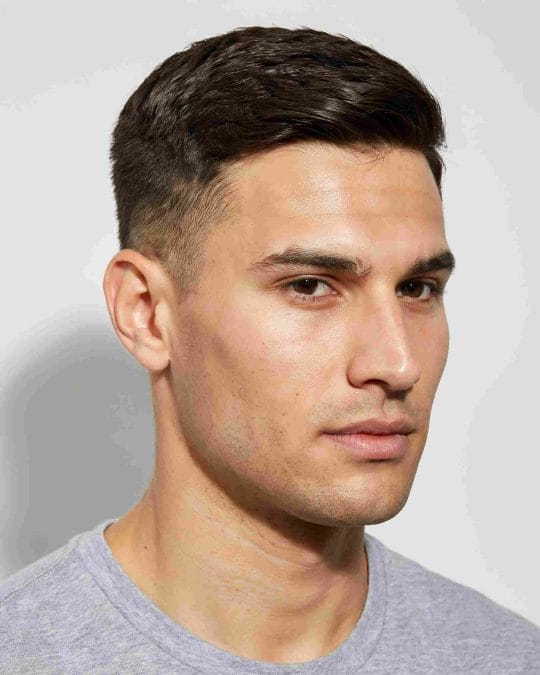
A classic crew cut uses a #4 or #5 top with softly tapered sides. This style suits office wear, casual outfits, and clean daily grooming.

A short crew cut uses a #2 or #3 guard on top. The tighter shape suits athletes, students, and men who want minimal styling.
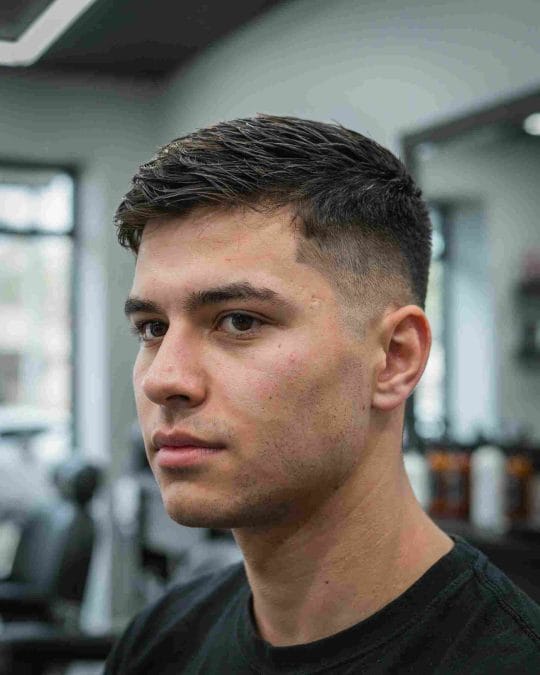
A textured crew cut adds choppy movement with point cutting or texturizing shears. Matte clay or texture paste adds separation without heavy shine.
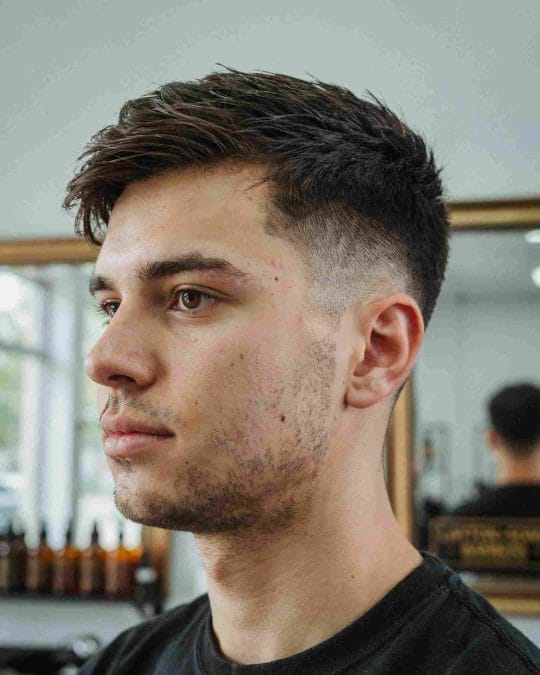
A modern crew cut fade pairs a 1.5 to 2-inch top with faded sides. The contrast creates a sharper and cleaner shape.
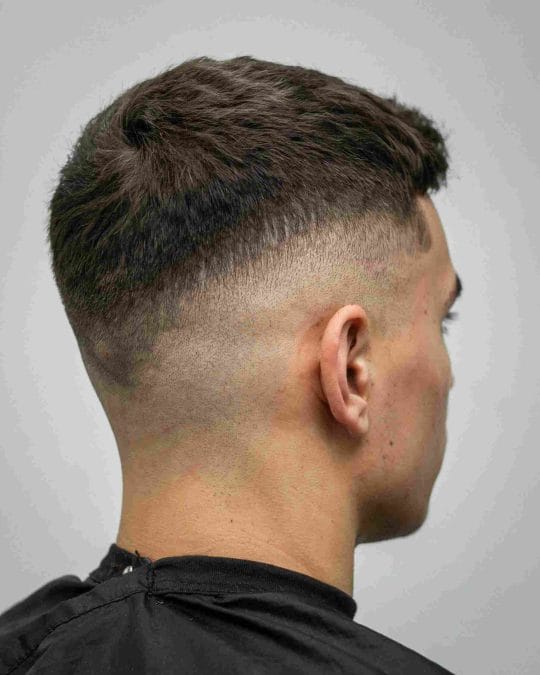
A low fade crew cut starts about 1 inch above the ears. This version suits offices, client meetings, and mature style.
Mature men who prefer classic grooming can compare age-friendly options in Timeless Men’s Haircuts Over 40

A mid fade crew cut starts around the temples for balanced contrast. It suits oval, square, and round faces.

A high fade crew cut starts 2 to 3 inches above the ears. Round faces benefit from this height because it lengthens the face.
Low fades, mid fades, high fades, and skin fades are explained in Different Types of Fade Hairstyles
A skin fade crew cut blends the sides down to bare skin. The sharp finish needs trims every 1 to 2 weeks.
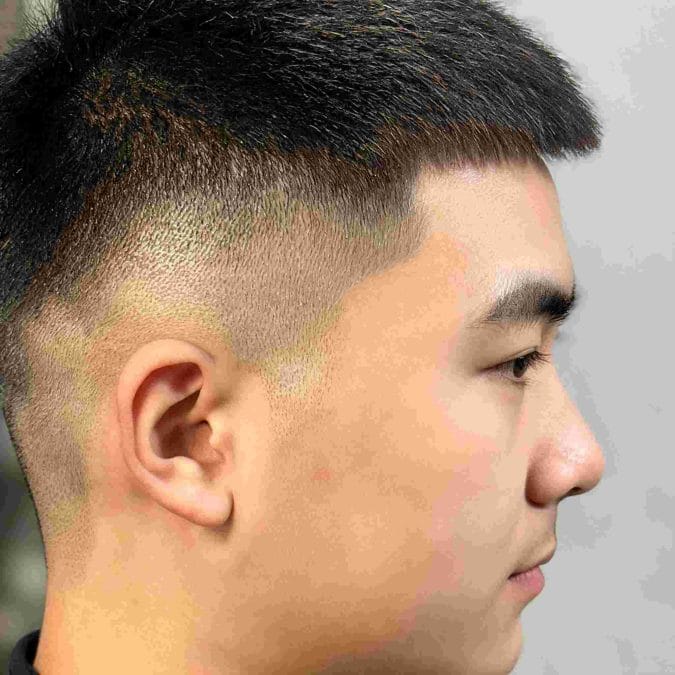
A taper fade crew cut blends the sides gradually without full skin exposure. It suits offices, client meetings, and interviews.

A crew cut with low taper keeps the blend soft around the ears and neckline. Schools, offices, and formal events suit this softer finish.

A military crew cut uses a #2 or #3 top with tight sides. This cut suits active lifestyles, hot climates, and simple grooming.

An Ivy League crew cut keeps 2 to 3 inches on top for side styling. Business outfits and formal grooming work well with this longer shape.

A crew cut with a side part adds a clean parting line through the longer top. A hard part works best when it stays thin, clean, and precise.

A crew cut with a beard balances short hair with stronger facial hair. Stubble, short boxed beards, and full beards work well.

A crew cut for receding hairline keeps the sides short and the front lightly textured. This reduces contrast around temples and crown.
The best crew cut hairstyles by face shape match 3 details: fade height, top volume, and side fullness. Round faces suit high fades with textured height. Square faces suit classic crew cuts, low fades, and soft tapers. Oval faces suit classic, Ivy League, and taper fade crew cuts.
Long, oblong, heart, and diamond faces need lower height and softer sides. Long faces suit low tapers. Heart faces suit Ivy League cuts or textured fronts. Diamond faces suit classic tapers with fuller sides.

The best crew cut hairstyles by hair type match 3 details: top length, cutting texture, and product type. Straight hair suits taper fades and Ivy League crew cuts. Wavy and curly hair suit textured crew cuts, mid fades, sea salt spray, and light creams.
Thick, thin, fine, and coily hair need different control. Thick hair suits #3 or #4 tops, texturizing shears, and matte clay. Thin hair suits short tops, low tapers, and texture powder. Coily hair suits faded sides, defined tops, and curl cream.

Ask your barber for 5 crew cut details: top length, side length, fade height, neckline, and texture. Say: “Use #4 or #5 on top. Taper the sides to #2. Keep the front slightly longer than the crown.”
Use exact barber terms, such as low taper, mid fade, tapered neckline, and point cutting. Wahl explains fade cutting and guard blending in How to Fade Hair. A #4 guard leaves 1/2 inch or 12.7mm. Neckline choices include tapered, blocked, and rounded finishes.

Style a crew cut in 4 steps: towel dry, apply product, shape the top, and let it dry. Use a dime-sized amount of product. Styling products, such as matte clay, texture paste, and styling cream, add hold, texture, and control. American Crew explains paste, clay, and cream use in Men’s Grooming Tips.
Men comparing pomade, clay, paste, and cream can use 10 Products for Men’s Hair: Pomade Products
Maintain a crew cut with regular trims based on fade type. Skin fades often need trims every 1 to 3 weeks, depending on contrast and hair growth. Mid and high fades need trims every 2 to 3 weeks. Classic tapers need trims every 3 to 4 weeks.
Product use, finger styling, and texture control are covered in Hair Styling Techniques for Men

A crew cut has a graduated top, while a buzz cut uses one even length across the head. A crew cut keeps 0.5 to 2.5 inches on top. The front stays longer than the crown, with tapered or faded sides.
A crew cut gives more styling options than a buzz cut. Styling options include texture, side part, and slight front lift. A buzz cut exposes more scalp, head shape, and hairline.
Men comparing short clipper cuts can also read What Type of Buzz Cut Should I Get?

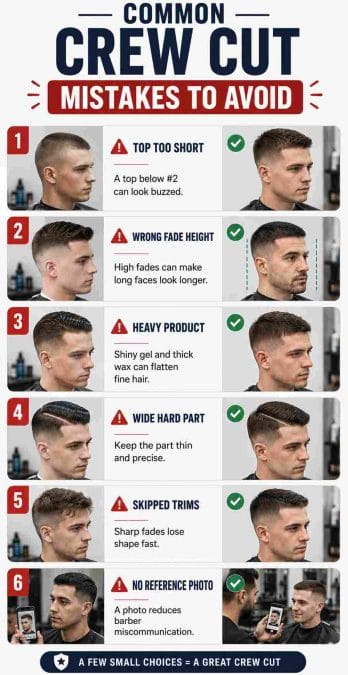
Avoid 6 crew cut mistakes:
A top below #2 can look buzzed. High fades can make long faces look longer. Low fades can leave more width near the ears on round faces.
A crew cut keeps its shape with correct length, product, part width, and upkeep. Heavy products, such as shiny gel, oily pomade, and thick wax, can flatten fine hair. Keep hard parts near 1mm. Trim skin fades every 1 to 2 weeks.
In conclusion, crew cut hairstyles for men offer a clean, masculine, and low-maintenance option for different face shapes, hair types, and lifestyles. The right version depends on top length, fade height, side blend, neckline shape, and styling product. Classic crew cuts, low tapers, and Ivy League styles suit professional settings. High fades, skin fades, textured tops, and beard pairings create stronger contrast and sharper structure. Men with thinning hair or receding hairlines benefit from shorter sides and light texture on top.
Choose the crew cut that matches your face shape, hair type, and daily routine. Save a reference photo and ask your barber for exact guard numbers before your next haircut.
A crew cut is a short men’s haircut with a graduated top and shorter tapered sides. The front usually stays slightly longer than the crown. This shape creates a clean, structured style that looks sharper than a basic buzz cut.
A crew cut can look balanced when top length and fade height match the face shape. It exposes the jawline, controls side bulk, and creates a clean masculine outline. Square, oval, and balanced round faces usually suit it well.
A crew cut does not suit everyone in the same form. Round faces often need more height on top. Long faces often need less height and softer tapering. Thin hair usually looks better with a shorter, cleaner top.
A crew cut can work well for thin hair when the top stays short and even. Shorter length reduces the contrast between thicker and thinner areas. Very high fades can expose thinning temples or a sparse crown.
A crew cut usually needs a trim every 2 to 4 weeks. Skin fades need faster upkeep because the contrast grows out quickly. Classic tapers last longer because the sides grow out more softly.
Tell your barber the top length, side length, fade height, neckline shape, and texture level. A clear request is: “Keep the top around #4 or #5, taper the sides, clean the neckline, and add light texture.”
A #4 or #5 guard is a common choice for a classic crew cut top. A #4 leaves about 1/2 inch, while a #5 leaves about 5/8 inch. Shorter guards, like #2 or #3, create a tighter look.
A crew cut has more shape on top than a buzz cut. A buzz cut is usually one short, even clipper length. A crew cut keeps the front slightly longer and blends the sides into a cleaner tapered shape.
A crew cut works well with a beard because short hair balances facial hair. Stubble gives a rugged look. A short boxed beard adds structure. A full beard works best with a low fade or taper.
A crew cut that is too short can look like a buzz cut. It can expose scalp shape, thinning areas, or uneven growth. A slightly longer front gives more balance and styling control.
Matte clay, texture paste, and lightweight styling cream work best for most crew cuts. Matte clay gives a stronger hold. Texture paste adds movement. Styling cream keeps the finish softer and more natural.
A crew cut is worth it for busy men because it takes 2-minute styling. Most versions need quick hand styling and a dime-sized amount of product. The main upkeep is regular barber trimming.
Classic crew cuts, low tapers, and Ivy League crew cuts fit professional settings. Very sharp skin fades and looks bolder.
A crew cut is still stylish in 2026 because short, clean men’s haircuts remain current. Modern versions use soft tapers, textured tops, matte finish, and beard pairing. The best version matches the face shape, hair type, and lifestyle. GQ lists the crew cut among current short men’s haircut options in The 7 Best Short Haircuts For Men in 2026.


