Physical Address
Islamabad, PK
Physical Address
Islamabad, PK

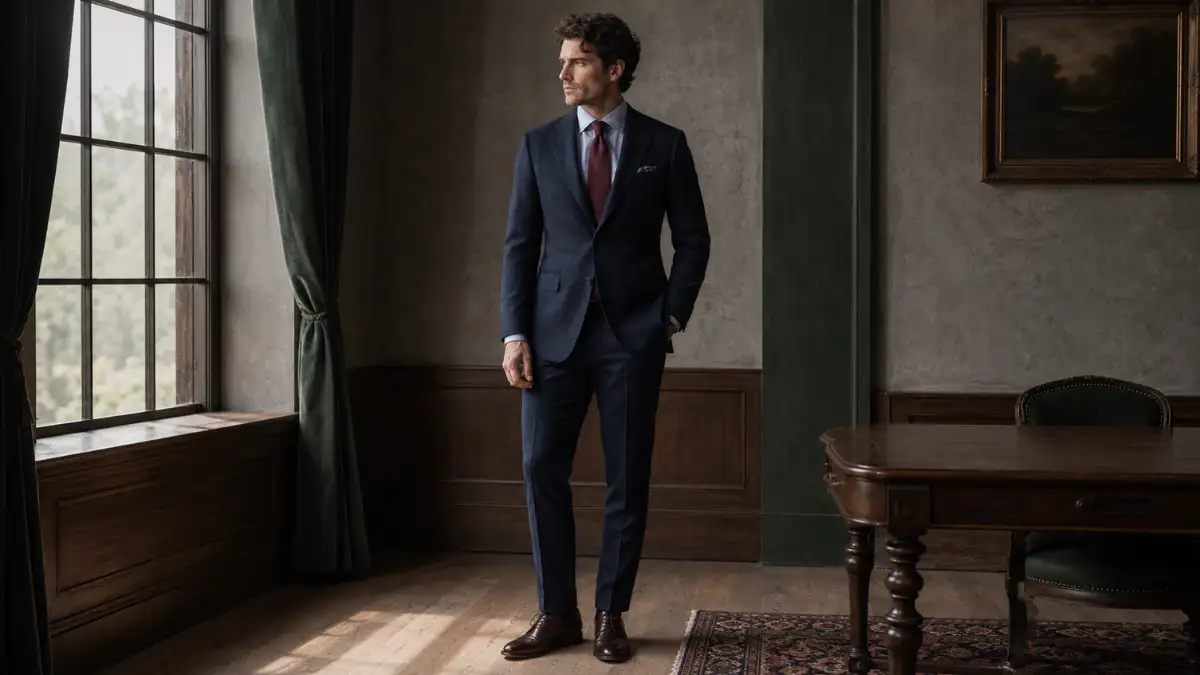
Dark academia suits work when classic tailoring incorporates vintage influences without becoming overly theatrical. The suit doesn’t have to be brown, tweed, or three-piece. What matters is how its shape, color, fabric, pattern, and formality work together.
A charcoal wool suit can fit the aesthetic just as well as a brown herringbone option. Subtle checks, textured fabrics, straighter trousers, fine knitwear, and classic leather shoes enhance the look without making it feel like a costume.
This guide covers how to judge fit, choose colors and fabrics, compare tailoring options, and style the finished suit. The goal is a dark academia outfit that feels refined, wearable, and rooted in classic menswear.
TL;DR
- Dark academia suits combine classic tailoring with muted colors, textured fabrics, and a subtle vintage influence.
- Charcoal, navy, brown, black, muted green, and burgundy can all work.
- Wool, flannel, tweed, herringbone, and restrained checks add character, but none is required.
- Choose a fit that suits your proportions and allows comfortable movement and layering.
- Both two-piece and three-piece suits work. A waistcoat is optional with a two-piece suit.
- Match shirts, knitwear, shoes, and accessories to the suit’s formality.
- Keep vintage details restrained so the outfit feels refined rather than costume-like.
Dark academia suits combine classic tailoring with muted colors, textured cloth, restrained patterns, and vintage influence. No single cut, fabric, color, or historical period defines the aesthetic. The effect comes from how these elements work together.
Classic tailoring is the foundation of dark academia. Vintage influence adds character through shape, fabric, pattern, or construction. You don’t need to copy a full historical outfit.
Museum examples show how varied traditional menswear can be. A 1933 wool suit in the Metropolitan Museum of Art is a three-piece suit. (Metropolitan Museum of Art) A 1952 suit has broader shoulders, a longer jacket, pleated trousers, and cuffed hems. (Metropolitan Museum of Art) A circa 1955 Brooks Brothers suit in the Met combines tweed and patch pockets with a conservative tailored shape. (Metropolitan Museum of Art)
These details are reference points, not rules. A modern suit can convey the same character with textured wool, a subtle heritage pattern, pleated trousers, or a waistcoat. The proportions still need to feel contemporary.
Dark academia tailoring can look polished without becoming either standard businesswear or a period costume.
A smooth dark suit with a crisp shirt and tie may read mainly as formal businesswear. Texture, pattern, and layering can shift that impression. Fine knitwear, a subtle check, or an open-collar shirt can soften the formality while keeping the outfit tailored.
There is no measurable rule for when vintage styling becomes costume-like. Keep the suit at the center and use historical details selectively. Fit, fabric, layering, and accessories should support one another rather than compete for attention.
A dark academia suit works best when the jacket and trousers create a balanced, classic silhouette. The fit should suit the wearer’s proportions, allow comfortable movement, and leave room for any intended layering. There is no single dark academia cut, and established tailoring traditions use different shapes successfully.
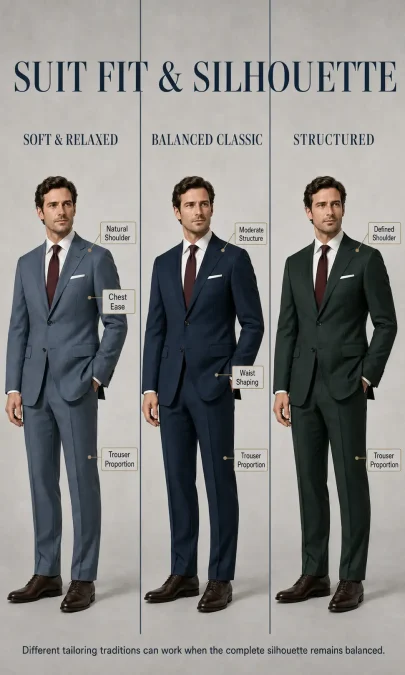
The jacket should sit cleanly across the shoulders and give the chest enough room for comfortable movement. Waist shaping can add definition without making the jacket skin-tight.
Classic tailoring offers different valid approaches. Anderson & Sheppard uses a softer English Drape cut with natural shoulders and more ease through the chest. (Anderson & Sheppard) Huntsman uses a more structured chest and defined waist. (Huntsman) Both approaches are established, so neither should become a universal dark academia rule.
The jacket also needs enough room for a fine knit or waistcoat when either will be worn. Overall proportion matters more than whether a jacket is slim, relaxed, or structured.
Straight or moderately full trousers can strengthen a classic, vintage-influenced silhouette. A higher rise, pleats, and cuffs can support that effect, but none is required.
The Metropolitan Museum of Art documents a 1952 suit with a longer jacket, broad shoulders, pleated trousers, and cuffed hems. Huntsman also uses natural-waist trousers in contemporary classic tailoring. (Huntsman) These examples establish precedent rather than a required formula.
Trouser shape should complement the jacket. A traditionally proportioned jacket paired with straighter trousers can create a more continuous, classic silhouette. This is styling guidance, not a fixed fit rule. Exact rise, pleat count, cuff depth, leg opening, or break does not define dark academia.
Both two-piece and three-piece suits can work for dark academia. The key difference lies in layering and formality.
A three-piece suit includes a waistcoat. This adds another tailored layer and a stronger historical touch. The Metropolitan Museum of Art notes wool three-piece suits from 1933 and the mid-1950s. Their presence shows that waistcoats are part of classic menswear, but dark academia doesn’t require one.
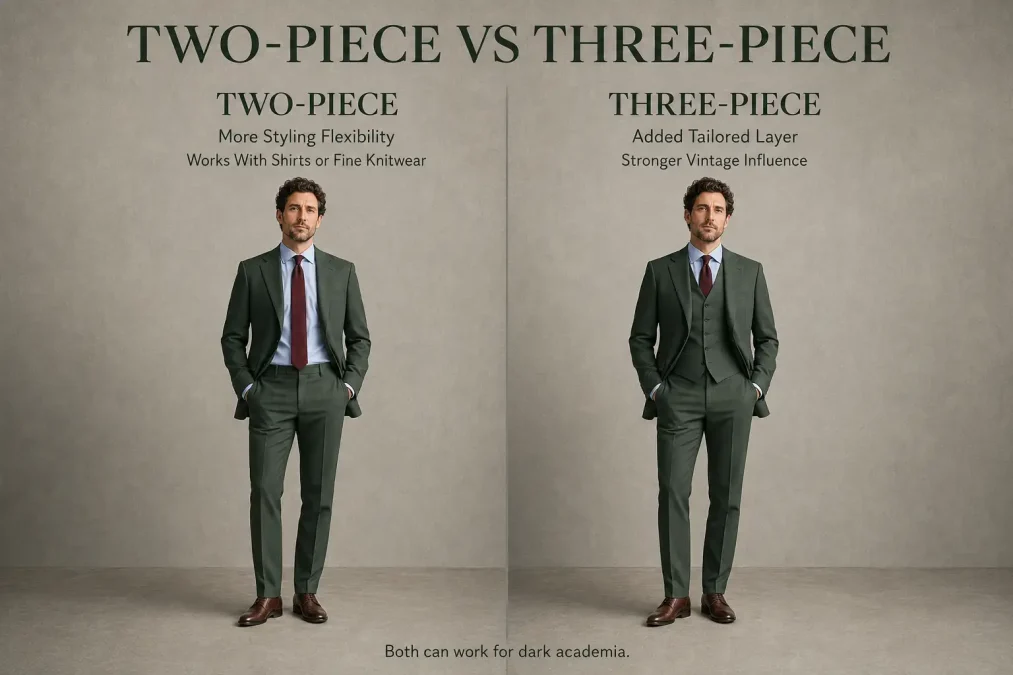
A two-piece suit offers more styling flexibility. It also works with fine knitwear. Huntsman’s current tailoring shows that a traditional checked two-piece can keep its classic feel without a waistcoat.
Choose between them based on the desired formality, layering needs, climate, and wardrobe. A three-piece is one option, not a more authentic version of the aesthetic.
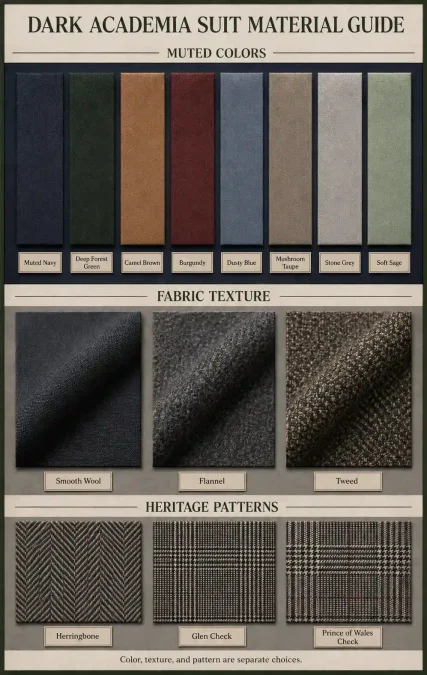
Dark colors, muted tones, textured wool, and subtle heritage patterns can all contribute to a dark academia suit. Their combined effect matters more than any single color, fabric, or pattern.
Charcoal, dark gray, brown, navy, black, muted green, and burgundy can all support the aesthetic. Cream, ecru, or beige can provide softer contrast in shirts or knitwear.
Brown is closely associated with dark academia styling, but it is not the defining color. Navy or charcoal can work equally well when the fabric, silhouette, and surrounding pieces add enough character.
A subdued palette creates the right visual context, but color alone does not make a suit part of a dark-academia look.
Wool is a useful foundation because it comes in many weights, weaves, and textures. It can range from lighter worsted suiting to soft flannel and heavier textured cloth.
Fabric weight can vary greatly even within the flannel. Holland & Sherry lists a worsted flannel at 280–310 g / 9–10 oz and a woollen flannel at 530–560 g / 17–18 oz. (Holland & Sherry — Classic Worsted Flannel; Holland & Sherry — Classic Woollen Flannel) These examples show why the fabric name alone does not indicate its weight.
Weight alone does not determine how warm a suit feels. Weave, lining, jacket construction, weather, and personal comfort can affect how warm the suit feels.
Tweed adds visible texture and heritage character, but it is optional. Lighter or smoother wool can create a more restrained interpretation. “Harris Tweed” is also a protected designation and should not be used as a generic name for all tweed. (Harris Tweed Authority)
Herringbone, Glen check, and Prince of Wales check can add classic tailoring characters. These patterns long predate dark academia, so they are suitable options rather than defining motifs.
A subtle navy Prince of Wales check can remain understated. A brown Glen check can add a stronger heritage effect. Herringbone adds texture without the larger shapes of many checked patterns.
For easier coordination, a patterned suit can be paired with quieter shirts, ties, or knitwear. This is practical styling guidance rather than a fixed pattern rule. A plain suit can work just as well when its color, texture, silhouette, and styling already support the aesthetic.
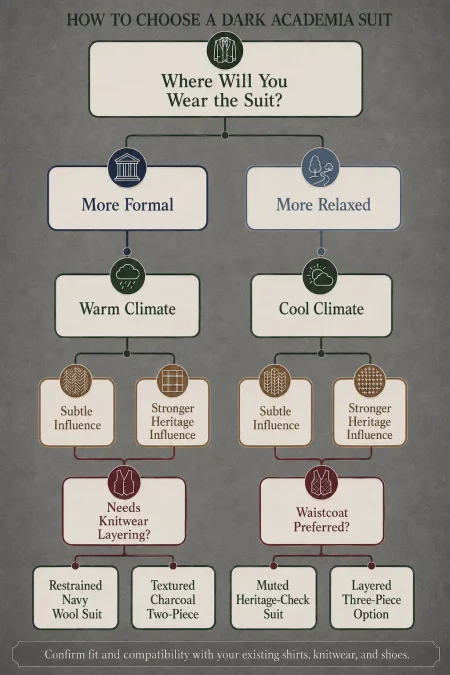
Choose a dark academia suit by balancing formality, fit, visual character, and wardrobe compatibility. The suit does not need obvious vintage details. It needs to suit the setting, work with your clothes, and express the aesthetic without feeling forced.
Start with where and how you plan to wear the suit. Cloth, pattern, shirt choice, knitwear, and footwear can all change how formal the suit feels.
A smooth dark wool suit with a restrained pattern, paired with a dress shirt, tie, and formal leather shoes creates a more polished look. Textured wool, a subtle check, fine knitwear, or an open-collar shirt can create a more relaxed feel.
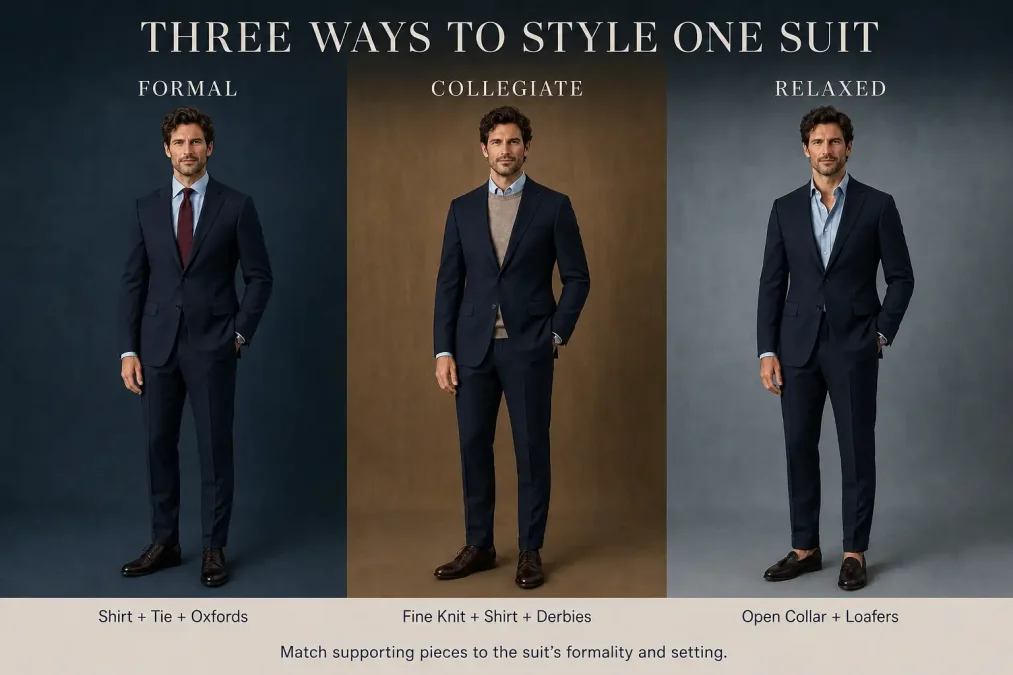
One Huntsman Prince of Wales two-piece shows this flexibility. It can be styled three ways: with a shirt and tie, an open-collar shirt, or lightweight merino knitwear.
Dark academia itself is not a dress code. Workplace or event requirements still take priority. Texture can soften formality, but it does not make a suit casual by itself.
Judge the suit as a whole. Color, texture, pattern, and fit need to support one another. A subtle checked suit can work with a plain shirt and restrained tie. A textured herringbone suit may need a pattern elsewhere. A plain charcoal suit can gain character through fine knitwear, classic shoes, and a muted palette.
Fit is key to that balance. A desirable fabric or pattern cannot compensate for poor proportions or restricted movement. Established tailoring approaches account for individual posture and body proportions rather than using one universal cut.
Avoid rigid formulas such as limiting an outfit to one pattern. The goal is visual balance, not a fixed rule.
Choose a suit that works with clothes you already own rather than one that requires a completely new wardrobe.
Check whether it pairs naturally with your dress shirts, fine knitwear, ties if you wear them, and at least one suitable pair of classic shoes. Also make sure the jacket has enough room for the layers you expect to wear.
A plain navy or charcoal suit may be easier to style when most of your wardrobe is simple. A stronger heritage check can still work when the surrounding pieces are restrained. This is a practical comparison, not a universal rule.
Climate and dress expectations also matter. A heavier fabric may suit cooler conditions, while a lighter fabric may be easier to wear in warmer weather.
There is no set number of outfits you need to create with a suit. Its usefulness depends on your existing colors, footwear, layering needs, climate, and how often you expect to wear it.
Style a dark academia suit by choosing supporting pieces that match its formality, texture, and visual weight. Shirts, knitwear, shoes, and accessories can add character, but the tailoring should remain the main focus.
A dress shirt and tie create a more traditional look. A pale-blue shirt works well with dark tailoring, while an open collar gives the outfit a more relaxed feel.
Fine-gauge knitwear offers another option. Lightweight merino can sit beneath a tailored jacket with less bulk than a heavy sweater. Huntsman has styled classic tailoring with lightweight merino, demonstrating this layered approach. The jacket still needs enough room for the added layer.
A waistcoat adds another tailored layer and gives the outfit a stronger vintage feel. Use it when you want a more layered or formal look.
Choose shoes according to the suit’s formality and the setting. Oxfords use closed lacing and sit at the dressier end of classic footwear. Derbies use open lacing and offer a slightly more relaxed alternative. Loafers can work with less formal tailoring when a softer, more collegiate feel suits the outfit.
Black and dark brown are both classic choices. Match the shoe color and formality to the suit rather than treating one option as the standard dark academia shoe.
Accessories should support the tailoring rather than define the outfit’s dark-academia character.
A restrained tie, pocket square, watch, or weather-appropriate scarf can add detail without changing the outfit’s focus. The more texture, pattern, and layering the suit already has, the less additional visual detail it may need.
Judge accessories by their effect on the complete outfit rather than by how many you wear. Judge them by their effect on the look. Fit, fabric, silhouette, and coordination should matter more than decorative details.
Keep the outfit refined by deciding how prominent you want the dark academia influence to be. Restraint helps the suit remain the main focus while the other pieces support a coordinated look.
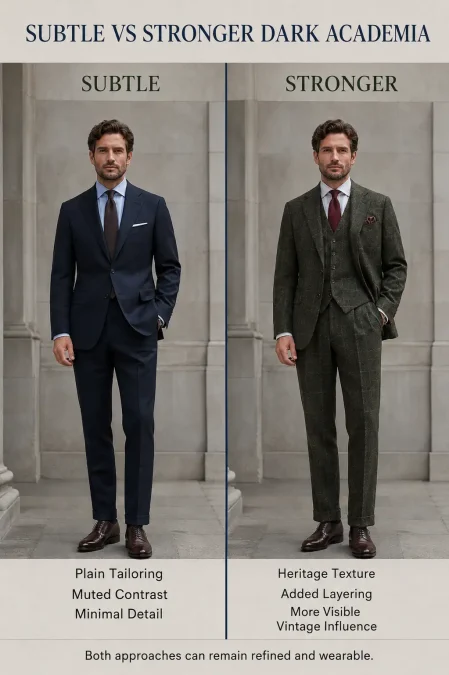
A subtle approach uses plain charcoal or navy tailoring, fine knitwear, and classic leather shoes. The dark academia influence comes from muted colors, texture, and traditional menswear rather than obvious vintage references.
For a stronger look, highlight heritage details. Herringbone or Glen-check patterns, pleated trousers, a waistcoat, or fine knitwear add vintage character to the outfit.
Neither approach is more authentic. Dark academia menswear allows different levels of interpretation rather than one fixed uniform. More heritage details do not automatically create a better outfit. Choose an intensity that suits your wardrobe, setting, and personal style.
To keep the outfit grounded, treat each piece as functional menswear. Make sure the suit, shoes, layers, and accessories work together as a cohesive menswear look before adding more pronounced dark academia elements.
You can find vintage inspiration in fabrics, patterns, proportions, or even a waistcoat. Just don’t mimic a historical outfit. Avoid decorative props or mixing flashy details to emphasize the theme.
There’s no clear moment when an outfit becomes a costume; this is subjective. A refined look feels cohesive when the fit, fabric, pattern, layers, and accessories create a unified look rather than compete for attention.
The best dark academia suit is not defined by one color, fabric, pattern, or historical detail. What matters is how the tailoring, texture, fit, and styling work together.
Start with a suit that fits your proportions and suits the settings where you plan to wear it. Then use muted colors, textured fabrics, heritage patterns, fine knitwear, classic shoes, or a waistcoat to reinforce the look as needed.
A simple navy or charcoal suit can work just as well as a brown tweed three-piece. The goal is a cohesive outfit that feels rooted in classic menswear while remaining practical, comfortable, and easy to wear.
Yes, a black suit can fit dark academia. The key is to add texture and softer contrast. Pair black tailoring with knitwear, muted shirts, or classic leather shoes. This makes the look feel less like standard formalwear. Shades like brown, charcoal, and olive also suit the aesthetic.
No. A three-piece suit is only one way to create a stronger vintage-inspired dark academia look. A two-piece suit can work just as well when its color, fabric, fit, and styling support the aesthetic. Waistcoats are useful for extra layering but are not required.
Yes. A dark academia suit does not require a tie. An open-collar shirt, fine-gauge turtleneck, or simple knit layer can create a more relaxed interpretation. A tie works better when you want a traditional or more formal appearance.
Muted colors, textured layers, classic leather shoes, and restrained accessories can shift a regular suit toward a dark-academia aesthetic. Balanced proportions also help the styling feel intentional rather than costume-like.
Yes. Dark academia can adapt to warmer weather. You can reduce heavy layering and choose lighter fabrics. Keep the muted palette and classic proportions, but choose a lighter fabric for tailoring.


