Physical Address
Islamabad, PK
Physical Address
Islamabad, PK


Men’s wavy hairstyles ideas help when wavy hair looks styled in the morning but bulky by noon. That usually means the haircut fights your natural wave pattern. Frizz, flat roots, and puffy sides make the shape look unfinished. Gel, heavy pomade, and unmatched fades often hide waves instead of improving them. These choices add stiffness, shine, or contrast without solving the real problem. A better cut works with texture, length, and face shape.
This guide covers 18 wavy hairstyles for short, medium, and long hair. It includes options for thick, fine, frizzy, and fluffy waves. You also get product tips, like sea salt spray, curl cream, and matte clay, barber instructions, common mistakes, and simple maintenance.
For broader haircut planning, compare these styles with 2026 Haircuts for Men Guide: Don’t Pick the Wrong One.
The final key takeaways are:
A wavy hairstyle looks soft and modern when natural texture, clean sides, light layers, and flexible hold work together. These 4 elements create lived-in movement without stiffness. Wavy styles, like textured fringes, French crops, and curtains, use loose S-shaped bends instead of hard, glossy lines.
Soft modern waves need at least 2 inches on top, controlled side bulk, and a matte finish. NIH StatPearls explains in Anatomy, Hair that healthy scalp hair grows about 0.35 mm per day, or about 0.5 inches per month. That growth rate affects how fast edges, tapers, and fringes lose shape. Lightweight products, like sea salt spray, texture clay, and styling cream, define waves without crunch.

Choose the right wavy hairstyle by matching hair length, wave type, face shape, and maintenance level. These 4 factors control movement, side bulk, and styling time: hair length, wave type, face shape, and maintenance level. NIH StatPearls reports scalp hair grows about 0.35 mm per day, or about 0.5 inches per month.

Hair length decides how much wave pattern appears after drying. Short wavy hair, around 1 to 3 inches, suits textured crops, French crops, and tapers. Medium wavy hair, around 4 to 6 inches, suits curtains, quiffs, and bro flow. Longer waves also connect with 15 Epic Long Haircuts for Men in 2026: Styles That Wow for Every Lifestyle, especially surfer waves, bro flow, and layered flow.
Wave type decides how much layering, moisture, and product the haircut needs. Type 2A waves usually respond better to lightweight volume products. Type 2B waves need definition. Type 2C waves need bulk control, moisture, and soft layers.
Face shape helps balance hairstyle width, height, and softness. Oval faces suit curtains, side parts, quiffs, and bro flow. Round faces suit height, like quiffs and textured crops. Square faces suit soft texture, like side parts and flow. Long faces suit curtains, fringes, and layered cuts.
The best men’s wavy hairstyles ideas are 18 cuts that use natural waves, clean sides, and soft texture. NIH StatPearls reports healthy scalp hair grows about 0.35 mm per day, or about 0.5 inches per month. This matters because fringes, tapers, and fades lose shape as hair grows.
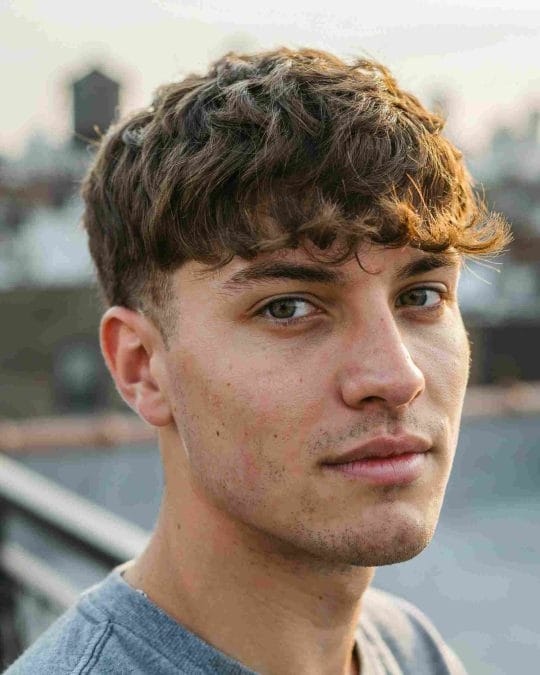
A textured wavy fringe uses 2 to 3 inches of forward waves across the forehead. This style suits loose waves, defined waves, and fine wavy hair. Matte clay adds separation.
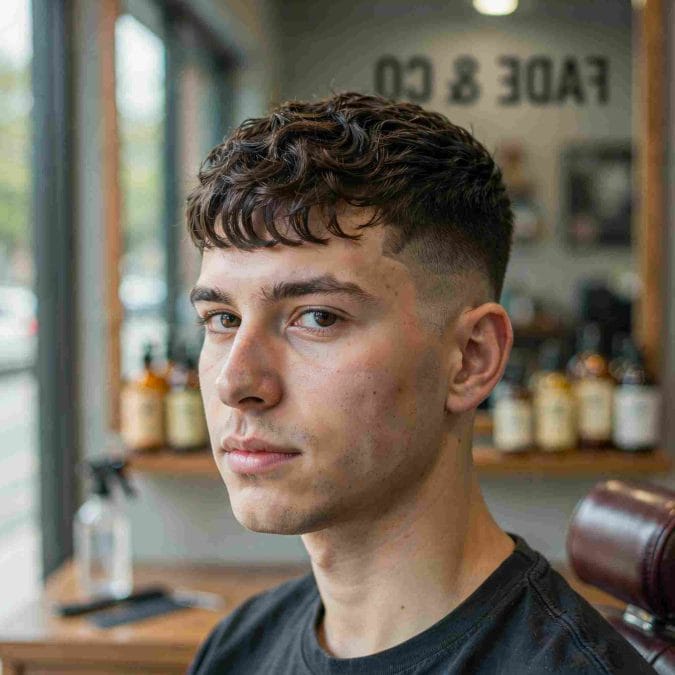
A wavy French crop combines a short fringe, textured top, and faded sides. It suits low-maintenance styling. Sea salt spray adds shape without stiffness. More crop variations appear in 12 Stylish French Crop Hairstyles For Men – 2026 Essential Style Guide.
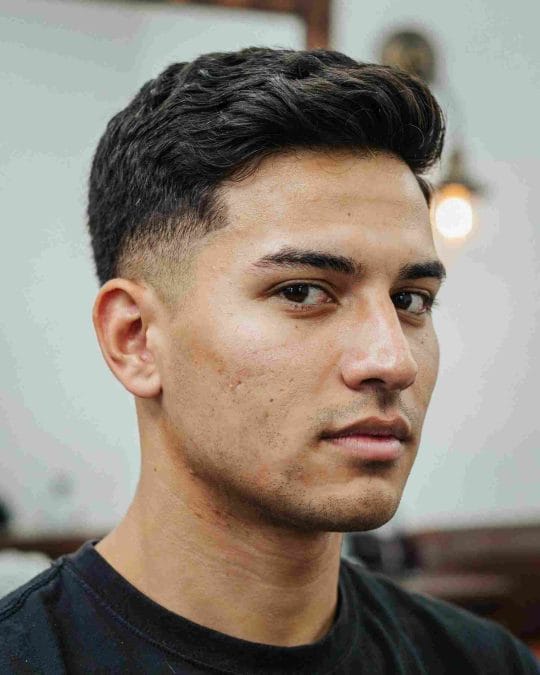
A short wavy taper keeps the neckline clean while preserving 2 to 3 inches on top. The cut suits work, college, and everyday style.
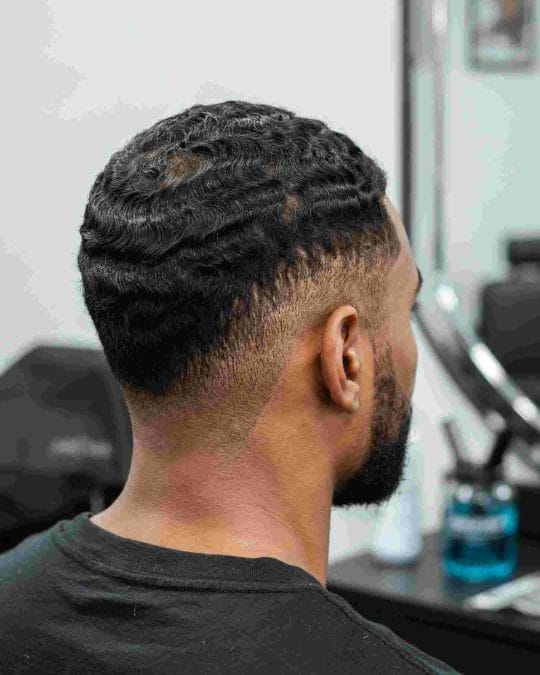
A wavy low fade starts just above the ears for soft contrast. This fade suits thick waves, textured tops, and relaxed styling. Compare low fade, mid fade, and taper fade options in 27 Fade Hairstyles for Men: Proven 2026 Picks.
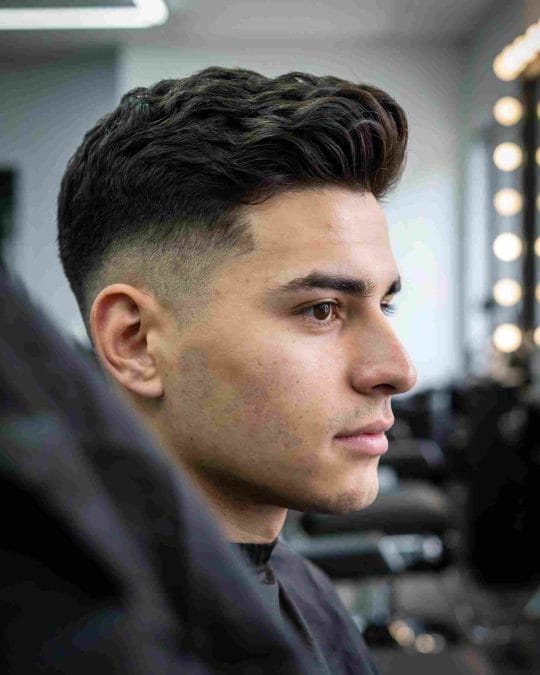
A wavy mid fade starts near the temple line for sharper contrast. It suits round faces, dense waves, and 3 to 4 inches on top.

A wavy side part follows the hair’s natural parting line. The shape suits office outfits, dinner looks, and formal grooming.

A wavy quiff lifts 4 to 5 inches of front hair upward. It suits thick waves, oval faces, and round faces needing height.

A wavy slick back pushes 4 to 6 inches of hair away from the face. Light cream, matte clay, or soft pomade keeps separation visible.

Wavy curtains use a center part to frame both sides of the face. They suit medium hair, soft layers, and relaxed modern style.

A Korean wavy middle part creates airy volume with a clean center split. It suits face-framing layers, neat sides, and Korean-inspired grooming.
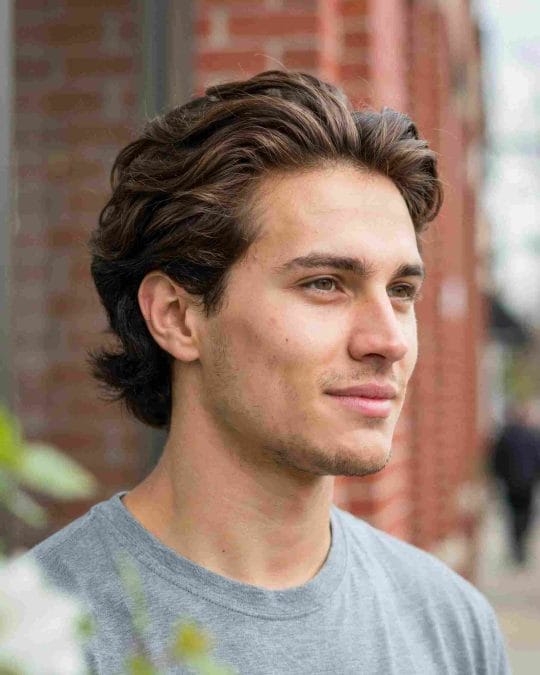
A wavy bro flow pushes medium hair back toward the ears. It suits oval faces, longer faces, and low-shine styling.

A medium-length wavy flow keeps 4 to 6 inches of loose movement. Sea salt spray, curl cream, and air-drying keep the shape natural.

A textured wavy shag uses choppy layers, crown volume, and face-framing texture. It suits thick waves, messy texture, and soft movement.

A wavy wolf cut blends shag layers with a longer back. This cut suits medium length, bold texture, and natural wave separation. A fuller breakdown of shag layers and longer back shape appears in 11 Men’s Wolf Cut Hairstyles for 2026: The Ultimate Guide.

A wavy mullet combines a textured top, shorter sides, and a longer back. It suits heart-shaped faces, oblong faces, and edgy styling. Compare textured backs, short sides, and modern mullet shapes in Mullet Fade Haircuts For Men: 14 Unique Modern Styles – Guide [2026].
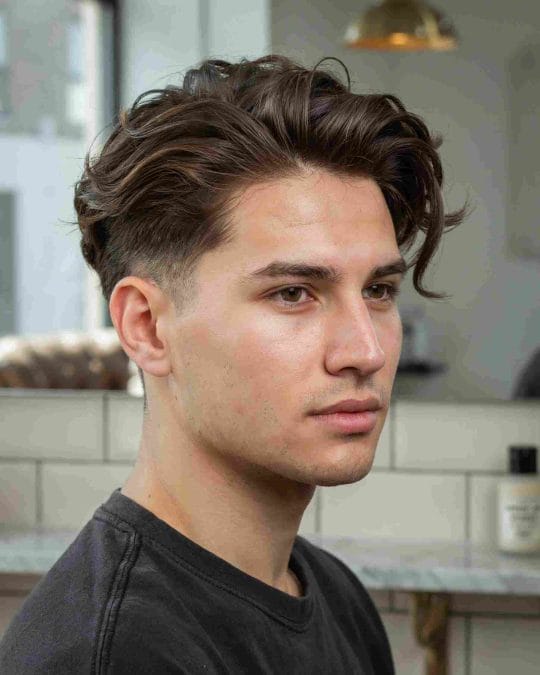
A wavy undercut contrasts buzzed sides with longer waves on top. This style suits thick hair, high volume, and bold shape.

Surfer wavy hair creates relaxed beach texture through medium or long layers. Conditioner, salt spray, and air-drying keep it soft.

Long layered wavy hair uses 7 inches or more for flow and movement. Leave-in conditioner, wide-tooth combing, and light layers reduce bulk.
The best wavy hairstyles by hair type match hair density, strand thickness, and frizz level. NIH StatPearls also notes healthy adults usually have 80,000 to 120,000 scalp hairs. Density affects bulk, lift, and product choice.
Thick wavy hair suits layered cuts, like textured shags, wolf cuts, and undercuts. These styles remove bulk and prevent a triangle shape. Styling paste or matte clay controls 2C waves without stiffness.
Fine or thin wavy hair suits short textured cuts, like wavy crops, soft fringes, and tapers. These styles add lift without heavy length. Sea salt spray or texture powder adds body to 2A waves.
Frizzy or fluffy wavy hair suits moisture-focused styles, like curtains, bro flow, and medium flow. These cuts help 2B and 2C waves clump together. Leave-in conditioner, curl cream, and microfiber towel squeezing reduce puffiness.
The best wavy hairstyles by face shape balance 4 points: forehead, cheekbones, jawline, and face length. Each face shape needs the right volume placement. Wavy hair adds softness, movement, and width where needed.
Oval faces suit balanced wavy styles, like curtains, side parts, quiffs, and bro flow. This shape works with short, medium, and long waves. Avoid heavy fringe that hides too much forehead.
Round faces often look more balanced with taller wavy styles, like quiffs, mid fades, and textured crops. Height on top adds length. Cleaner sides reduce cheek width. Avoid flat bro flows and heavy low fringes.
Square faces suit structured soft styles, like side parts, tapers, and medium flow. Natural waves soften a strong jawline. Avoid harsh geometric cuts that add extra angles.
Diamond and long faces suit face-framing styles, like curtains, bro flow, and layered flow. These cuts balance cheekbones and reduce extra height. Heart-shaped faces also suit soft fringes and textured crops.
Style wavy hair naturally with 3 steps: apply damp-hair products, scrunch gently, and dry with low heat. Damp-hair products, like curl cream, sea salt spray, and leave-in conditioner, control texture and frizz. The American Academy of Dermatology explains in Do you have hair loss or hair shedding? that normal shedding is 50 to 100 hairs daily.
Use 5 lightweight products: sea salt spray, curl cream, leave-in conditioner, grooming tonic, and matte clay. Sea salt spray adds grit. Curl cream adds definition. Leave-in conditioner controls puffiness.

Use low heat and a diffuser to dry waves without breaking their shape. Tools, like diffusers, microfiber towels, and wide-tooth combs, reduce friction. Avoid shaking hair while drying.
Product application, blow-drying, and hold control are covered in 7 Pro Hair Styling Techniques for Men (That Last All Day).
A simple wavy styling routine can take about 3 to 5 minutes. Dampen hair, apply product, scrunch upward, then air-dry. Add pea-sized clay after drying for shape.

Ask your barber for 2 to 3 inches on top after drying. Request soft layers and controlled side bulk. Choose clean sides, like low taper, mid fade, or scissor-cut sides. Bring 2 reference photos, like a front view and side view. Name the exact style, like wavy fringe, taper fade, or bro flow. NIH StatPearls reports scalp hair grows about 0.35 mm per day, or 0.5 inches per month.
Use clear haircut terms, like point cutting, low taper, fade, and scissor-cut sides. Mention your wave type, like 2A, 2B, or 2C. Share problem areas, like cowlicks, side puffiness, or uneven density.

The 7 common wavy hair mistakes are cutting too short, dry brushing, rough towel drying, overwashing, blow-drying aggressively, applying product to dry hair, and skipping layers. The American Academy of Dermatology lists damaging habits in 10 hair care habits that can damage your hair. This separates normal shedding from breakage caused by rough styling.
Wavy hair loses shape when friction, dryness, and excess weight break up wave clumps. Avoid tools, like fine-tooth combs, stiff brushes, and high-heat dryers. Skip products, like hard gels, heavy pomades, and high-shine waxes. Keep at least 2 inches on top, style damp hair, use a microfiber towel, and add soft layers.

Maintain men’s wavy hairstyles with gentle washing, conditioning, regular trims, and low-friction styling. Short fades usually keep a cleaner outline with trims every 2 to 4 weeks and medium or long waves every 6 to 8 weeks. NIH StatPearls reports scalp hair grows about 0.35 mm per day, or 0.5 inches per month. This growth affects fades, fringes, and layered shapes.
Wash 2 to 3 times weekly with products such as moisturizing shampoo, conditioner, and leave-in cream. Use tools such as microfiber towels, wide-tooth combs, and low-heat diffusers to protect wave shape. The American Academy of Dermatology explains in Tips for healthy hair that washing frequency depends on hair type and oil level.
Washing, conditioning, and scalp care fit naturally with 19 Expert HairCare Tips for Men: Best Hair Care Routine – How to Take Care of Your Hair.

In conclusion, mens wavy hairstyles ideas work best when the haircut supports natural texture instead of hiding it. The right style controls side bulk, keeps movement visible, and matches hair length, wave type, face shape, and daily routine. Short crops, tapers, curtains, bro flow, shags, wolf cuts, and long layered waves create a soft modern look when shaped correctly. Lightweight products, soft layers, damp styling, and regular trims keep waves clean without stiffness.
Choose the style that fits your hair type first. Then show your barber 2 clear reference photos before the cut.
Men’s wavy hairstyles ideas are haircut options that use natural wave texture for shape, volume, and movement. Common examples include textured fringes, taper fades, bro flows, curtains, and long layered waves.
The best haircut for men with wavy hair is a layered cut with controlled sides and textured length on top. Wavy fringes, French crops, tapers, and medium flows keep waves visible without excess bulk.
Men style wavy hair without frizz by using products on damp hair and avoiding dry brushing. Styling habits can cause brittle, frizzy, damaged hair, according to the American Academy of Dermatology.
Sea salt spray, curl cream, leave-in conditioner, and matte clay work best for men’s wavy hair. Sea salt spray adds texture, curl cream improves definition, and matte clay gives soft hold.
A taper fade is good for wavy hair because it cleans the sides while keeping natural texture on top. Low tapers create softer looks. Mid tapers create sharper contrast.
Wavy hair loses visible movement when it is cut too short. Loose 2A, defined 2B, and thick 2C waves need enough top length to show their natural pattern.
Wavy hair looks frizzy when dryness, humidity, or rough towel drying disrupts the hair cuticle. Dryness, humidity, and rough styling increase frizz because they disrupt the hair surface.
Men with thin wavy hair can wear short textured cuts that add light volume without heavy weight. Wavy crops, soft fringes, and short tapers work better than long blunt styles.
Ask your barber for soft layers, controlled side bulk, and enough top length to show waves. Bring 2 reference photos and name the style clearly, such as wavy fringe, taper fade, or bro flow.
2026 beauty coverage continues to highlight natural texture, soft layers, air-drying, and lived-in waves. These trends support wavy cuts, like curtains, bro flow, and layered flow.


