Physical Address
Islamabad, PK
Physical Address
Islamabad, PK


Long hair appears polished when care, product choice, and styling method work together. Learning how to style long hair for men starts with clean, manageable hair and a repeatable routine. A sharp style is different from a messy look. It relies on good preparation, the right products, and a style that fits your hair’s natural texture.
Many men grow their hair past the ears or shoulders without building a consistent daily method. Long hair needs lightweight products and good drying techniques. Without them, it can lose shape, get frizzy, or lie flat.
The following steps cover scalp care, 5 lightweight products, a 4-step styling routine, and 5 everyday hairstyles. Each method includes guidance for straight, wavy, curly, fine, and thick hair. The styles also adapt to work, formal events, exercise, and the growing-out stage.
Prepare long hair by cleaning the scalp, conditioning the lengths, and reducing friction during drying. Wash according to scalp oil, sweat, and product buildup. The American Academy of Dermatology advises you to adjust your washing frequency based on how oily or dirty your scalp feels.
Apply shampoo to the scalp and roots. Apply conditioner to the mid-lengths and ends. Blot wet hair with a microfiber towel or soft cotton T-shirt.
Detangle as needed with a wide-tooth comb or wet-safe brush. Start at the ends and work upward to reduce pulling.
Choose lightweight products according to hair texture, desired hold, and moisture level. Browse more men’s hair products for hold and finish options.
| Product | Main Purpose | Best Use |
| Styling cream | Adds flexible control | Straight, wavy, or medium-thick hair |
| Sea Salt Spray | Adds texture and separation | Straight or wavy hair |
| Volumizing mousse | Adds root lift | Fine or flat hair |
| Leave-in conditioner | Adds moisture and slip | Dry, curly, or coarse hair |
| Lightweight oil | Smooths dry ends | Coarse, curly, or damaged lengths |
| Heat protectant | Helps reduce heat-related damage | Hair styled with dryers or flat irons |
Apply sea salt spray, mousse, or leave-in conditioner to damp hair. Use cream or oil sparingly as a finishing product. A peer-reviewed study found that some cosmetic pretreatments reduced protein damage during flat ironing.
Three useful tools cover most routines: a wide-tooth comb, a blow dryer with low-heat settings, and soft fabric ties.

Style long hair in 4 steps: prepare, apply product, dry, and finish. Broader hair styling techniques cover additional methods beyond length.
Apply a small amount of styling cream after drying when extra control is required.
These 5 hairstyles control long hair for casual days, professional settings, formal events, and exercise.

The man bun keeps long hair away from the face during exercise, travel, and daily activities. Gather the hair at the crown or nape. Twist it into a loose coil and secure it with a soft tie.

Keep the bun secure without creating scalp pain or pulling on the hairline.
The half-up, half-down look controls front strands while leaving the lower length visible. Gather the top section from the temples to the crown. Secure it with a soft hair tie and leave the remaining hair loose.
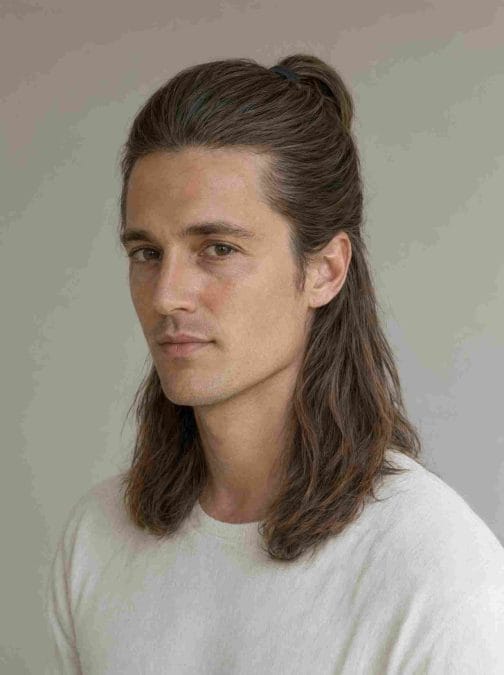
This style works with straight, wavy, and curly textures.
The low ponytail creates a controlled style for offices, interviews, and formal settings. Detangle the hair and gather it at the nape. Secure it loosely with a soft tie.

Low placement creates less pulling near the front hairline than a tight, high ponytail.
The slicked-back tuck keeps long hair controlled around the face during professional or formal events. Apply a small amount of styling cream to damp hair. Comb the hair backward and tuck both sides behind the ears.

Use a small amount of water-based pomade when thick hair requires extra control.
Natural flow creates a low-maintenance style for straight, wavy, or loosely curled hair. Apply lightweight styling cream to damp hair. Create a center part with a comb, then let the hair air-dry.

Tuck the sides behind the ears when the front sections fall across the face.
Match product weight and drying method to hair texture and density.
Avoid brushing dry curls because brushing separates curl groups and increases frizz.

Match style control to the activity and formality of the setting.
Hair that stays away from the face generally appears more controlled in professional settings.
Control the awkward stage with temporary styles, light product, and shape-preserving trims. This stage occurs when hair no longer holds short styles but cannot form a complete ponytail.
Use headbands, ear tucks, and half-up styles to manage shorter sections. Apply a small amount of matte paste to pieces that stick outwards.
Tell the barber or stylist that the goal is greater length. Request light shaping or internal weight removal while preserving the overall length. Compare these long haircuts for men before requesting a new shape or layers.
The duration varies with starting length, curl pattern, and growth rate.
Avoid 6 common mistakes that reduce control or increase stress on long hair.

The American Academy of Dermatology links repeated tension from tight hairstyles to traction alopecia. Changing tie positions also avoids placing repeated tension on one area.
A consistent routine keeps long hair controlled without relying on heavy products or daily heat. Prepare the hair gently, select one lightweight product, and use a style suited to the setting.
Start with one of the 5 everyday looks. Adjust the product and drying method according to texture, density, and moisture needs.
These answers cover professional styling, man-bun length, heatless methods, daily control, and tension safety.
Yes, long hair can appear professional when it is clean and controlled. Low ponytails, low buns, tucked-back styles, and neat half-up looks keep hair away from the face.
Hair is long enough for a full man bun when every section reaches the chosen tie position. Curl pattern, haircut shape, and placement affect the required length. Shorter hair may work in a half-up bun.
Natural flow with a center part is the simplest loose style. A low ponytail offers another quick option when every section reaches the nape.
Yes, air-drying supports natural flow, half-up styles, low ponytails, and man buns. Apply cream, mousse, or curl products to damp hair before air-drying.
Use lightweight products and carry a soft hair tie for quick adjustments. A low ponytail or half-up style restores control when loose hair loses shape.
Repeated tight tying can cause breakage, scalp discomfort, and hairline tension. Use soft ties, vary tie placement, and loosen any style that causes pain.


