Physical Address
Islamabad, PK
Physical Address
Islamabad, PK


Choosing between preppy men’s hairstyles comes down to more than picking a clean haircut. The shape, volume, side length, styling direction, and finish all affect how polished the result looks. A good choice also needs to work with your natural hair rather than fight against it.
Some preppy styles stay short and structured, such as the crew cut and Ivy League. Others use more length for a side sweep, brushed-back shape, short quiff, or natural flow. Straight, wavy, and curly hair can all work, but each texture changes how the same shape behaves.
This guide compares eight distinct options and explains what makes each one work. You’ll also learn how to choose a suitable style, create the right finish, and describe the cut clearly to your barber.
TL;DR
- Preppy hairstyles focus on clean shapes, controlled volume, low contrast, and a polished look.
- The Ivy League, side part, crew cut, classic taper, brushed-back style, short quiff, side sweep, and medium flow can all fit the look.
- Choose based on your hair length and texture first. Then consider face shape, density, and maintenance.
- Keep styling controlled rather than stiff. Matte, natural, and low-shine finishes can all work.
- Tell your barber the top length, styling direction, side length, taper, and level of contrast you want.
- Maintenance depends on the haircut and how defined you want the shape to stay.
A preppy hairstyle looks polished when its shape, volume, sides, and styling direction work together. “Preppy” is an aesthetic description, not a formal barbering category. The look comes from balanced proportions, controlled movement, and a deliberate finish.
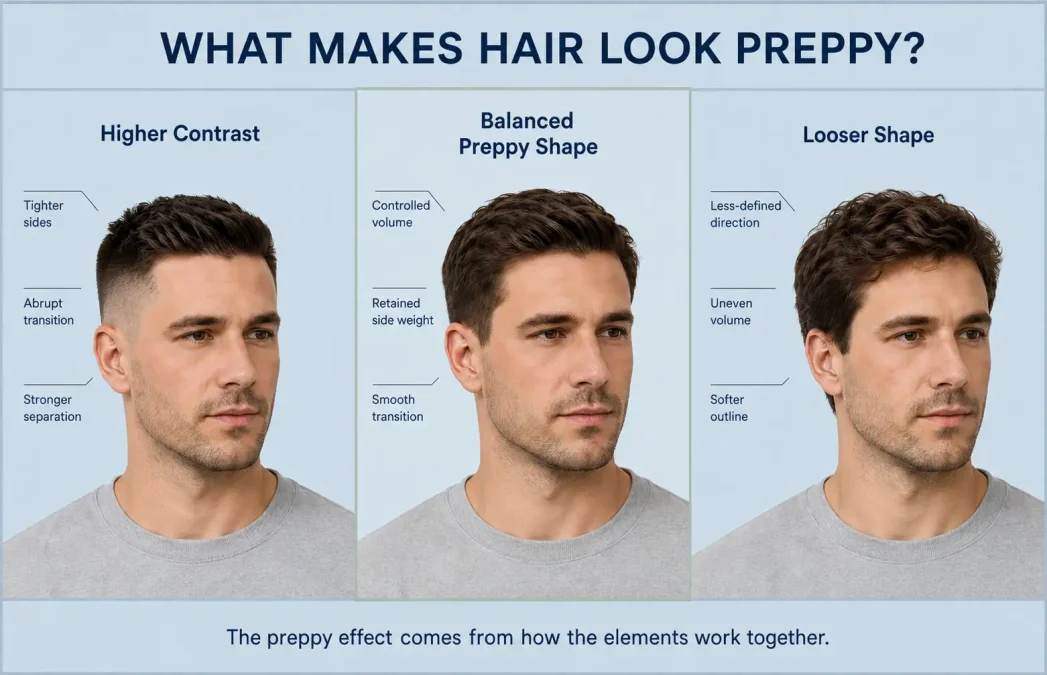
A clean shape starts with a clear relationship between the top, sides, and outline. Professional barbering standards treat balance, weight distribution, shape, and the natural hairline as important parts of a finished cut.
Clean sideburns and a defined neckline can also strengthen the overall shape. There is no fixed top-to-side ratio that makes a haircut preppy. The right proportions depend on hair texture, growth pattern, head shape, and the chosen style.
Controlled volume gives the hair enough fullness to hold its intended shape without looking exaggerated. Natural movement keeps the result from appearing stiff or heavily set.
A short quiff concentrates lift near the front. A side part usually keeps the shape lower and smoother. Medium-length flow spreads movement through longer layers. Straight, wavy, and curly hair can also create different amounts of visible volume at the same physical length.
Tapers, fades, partings, and side weight are separate haircut decisions rather than fixed preppy requirements. A gradual taper can shorten the sides while keeping a smooth transition to the top.
A visible part can add structure, but it is not essential. Brushed-back, side-swept, and flowing styles can remain polished without a visible part.
For the restrained preppy look described in this article, keeping some side weight and a gradual transition avoids excessive contrast. The exact terminology for a taper or fade can vary, so side length, transition height, and overall contrast still need to be specified.
Preppy hairstyles range from short, structured cuts to medium-length styles with softer movement. These options share a clear shape, controlled volume, and polished finish without requiring one exact fade or parting style.
The Ivy League is a longer version of the crew cut. It keeps enough length on top for a soft part, side sweep, or slight front lift, while the sides remain shorter.
Compared with a standard crew cut, the extra top length gives you more styling flexibility. A softer version can retain some length around the sides instead of tightly clipping them.
No single length distinguishes an Ivy League from a crew cut in every case. The final shape should suit your texture, growth pattern, and preferred level of contrast.
The classic side part directs the hair to one side, creating a neat, structured shape. The top needs enough length to lie or sweep naturally to one side.
The part can be soft and natural or more defined. Keeping some weight through the sides can create a smoother transition into the top.
Your natural growth pattern may affect where the part sits. Copying someone else’s exact part position may create a different look for your hair.
The crew cut is a shorter option with more length on top than on the sides and back. The top usually stays relatively compact rather than falling in long, flowing strands.
Shorter crew cuts often need little daily styling or product. Longer or more textured versions may need more control.
A crew cut does not require shaved sides or a skin fade. A softer taper can preserve its clean structure without creating strong contrast.
A classic taper haircut gradually shortens the hair on the sides, around the sideburns, and at the neckline. The transition can be smooth rather than abrupt.
The taper mainly describes the treatment of the sides and back. The top can still be parted, brushed back, textured, or styled with modest volume.
Tell your barber how much weight you want on the sides and how much contrast you want. “Taper” alone does not define one exact finished length or transition.
Brushed-back hair is defined more by styling direction than by one specific haircut. The top needs enough length to move away from the forehead and lay back.
For a preppy version, keep some natural movement instead of pressing the hair into a rigid slick-back. A flexible-hold product with a natural or low-shine finish can provide control while keeping the shape flexible.
Hair that naturally grows forward may require more drying time, product, or usable length to keep it moving backward.
A short quiff keeps extra usable length near the front. This allows the hair to lift before moving backward or slightly to one side.
For a preppy result, keep the height controlled rather than creating an oversized front or a sharply disconnected transition. A gradual side transition can keep the overall shape balanced.
Building lift and direction at the front while drying can establish the shape before applying a finishing product.
A textured side sweep combines directional styling with a softer, less rigid finish. The top remains long enough to move laterally, while texture keeps it from looking like a tightly combed side part.
This option gives you structure without requiring every strand to sit perfectly in place. Sides can also be left slightly longer to retain weight and soften the contrast with the top.
The exact length should suit your texture rather than conform to a single standard.
Medium-length flow keeps more length on top and at the sides so the hair can move naturally. Layering can create separation and prevent the cut from looking bulky or undefined.
Unlike shorter preppy cuts, this option depends less on crisp short edges and more on controlled movement. The hair should still look intentionally shaped rather than simply grown out.
Straight, wavy, and curly hair can each give the style a distinct appearance. Length and layering should be adjusted based on how the natural texture falls.
The right preppy hairstyle should match your hair length, natural texture, facial proportions, and daily routine. Start with your hair length and texture, then refine your choice based on face shape, density, and maintenance needs.
Short hair suits compact styles such as the crew cut. A little more top length lets an Ivy League be styled with a side sweep or soft part.
Extra length in front can support a short quiff. Medium length gives more room for brushed-back styles, textured side sweeps, and natural flow.
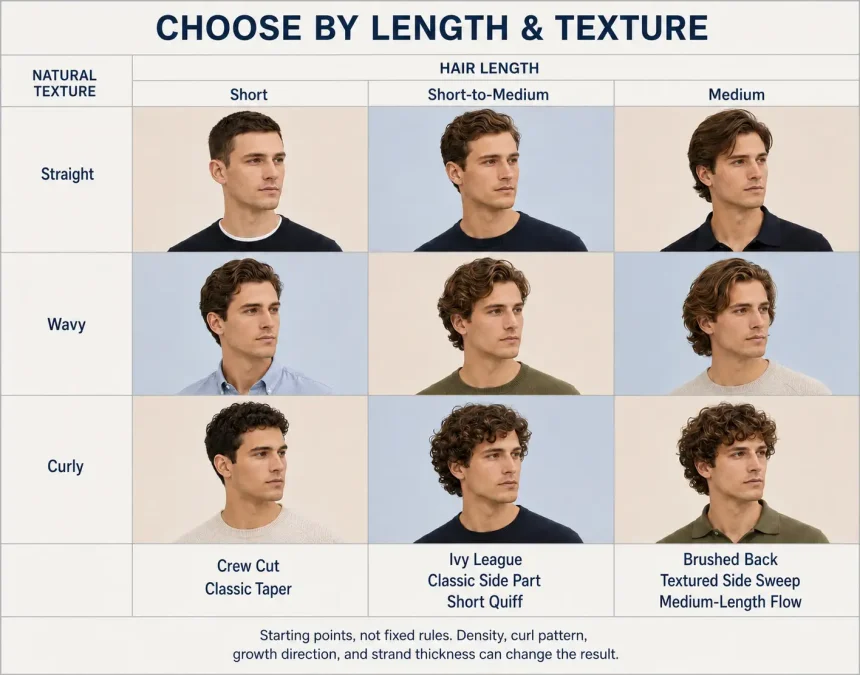
Texture changes how that length behaves. Straight hair usually shows length and direction clearly. Wavy and curly hair can create more visible volume and may need different layering or physical length to reach a similar shape.
Avoid rigid rules about length. Density, strand thickness, curl pattern, and growth direction can all change the final result.
Face shape can help you judge balance, but it should not decide the haircut by itself. Consider how top height, side width, and the overall silhouette affect your proportions.
Hair density also changes the finished shape. Higher density can create more weight and fullness, while lower density can affect volume and scalp visibility.
Density is not the same as strand thickness. Someone can have many fine hairs or fewer coarse hairs. Both characteristics can influence how much volume, texture, and side weight the haircut can support.
Think about both daily styling and maintenance between barber visits. They are not the same thing.
A short crew cut may need little daily product. An Ivy League, side part, or short quiff usually needs more frequent styling and control on top. Medium-length flow involves more hair to wash, dry, and manage.
Very tight fades often depend on sharp contrast between shorter and longer lengths, so visible growth can change that effect sooner than with a softer taper. There is no universal trim schedule for these styles.
Choose a haircut that matches both the daily styling you want and the level of upkeep you prefer for shape.
Preppy hair should look controlled without appearing stiff or overworked. Set the styling direction first, build only the volume the haircut needs, and finish with enough hold to keep the shape in place. The method should still suit your natural texture and growth pattern.
Start by deciding where the hair should move. A side part or side sweep directs the hair to one side. Brushed-back hair moves away from the forehead. A short quiff needs lift at the front before you move the hair back or slightly to one side.
Damp or towel-dried hair can make it easier to establish direction, depending on the product. Use your fingers, a comb, or a brush to guide the hair into shape as it dries. For a quiff, building lift at the front while drying can create the basic form before the finishing product is applied.
Use only the volume needed for the hairstyle. Straight, wavy, and curly hair behave differently, so each type may need a different level of smoothness or lift.
Choose the finish based on how polished or textured you want the hairstyle to look.
A matte finish reduces visible shine and can make texture more noticeable. A natural or low-shine finish keeps the hair from looking wet, while the product’s hold determines how much control it provides. A light natural shine can suit a side part or brushed-back style when you want a more polished finish.
Hold matters as much as shine. A product with flexible or medium hold can support the shape while allowing some movement. Apply enough product to control the hairstyle without making the hair look heavily coated.
Do not rely on the word “preppy” alone. Describe the top, sides, parting, and overall shape you want. A reference photo can help, but explain which details you want to keep. Your texture, density, growth pattern, and current length can affect the final result.
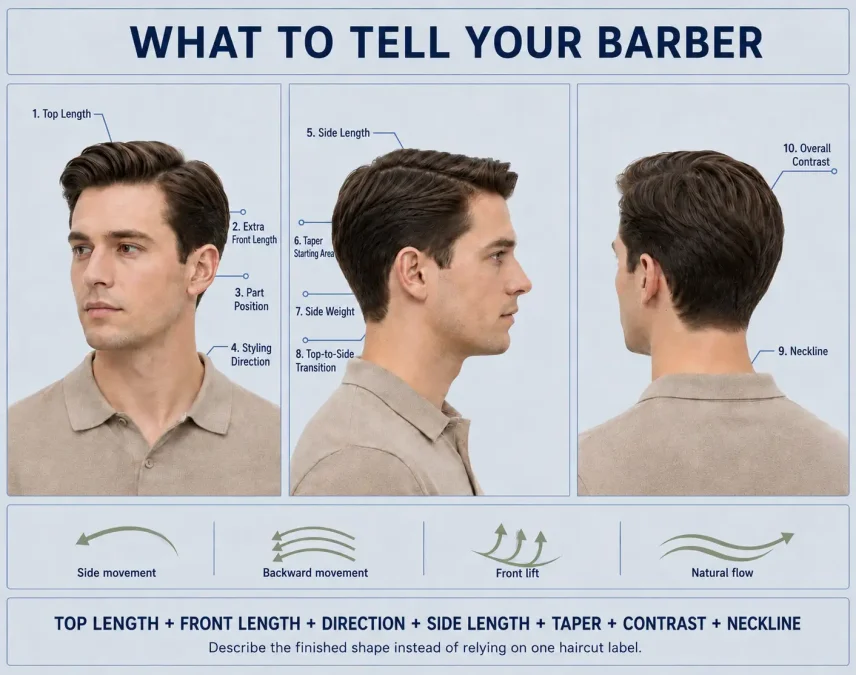
Start with the top. Explain how much length you want to keep and whether you need extra length at the front.
An Ivy League needs enough length on top to part or sweep to one side. A crew cut stays shorter and more compact. A short quiff needs extra length in front for lift. Medium-length flow needs enough length and layering to create movement.
Also explain whether you want a visible part and where the hair should move. Tell your barber if you plan to style it to the side, backward, upward, or with a softer natural flow.
Be more specific than simply asking for “short sides.” Describe the desired length of the sides, where the taper should begin, and how much weight you want to keep.
Also explain whether the sides should blend smoothly into the top and whether you want any skin exposed. For a restrained preppy result, a gradual connection usually fits the intended look better than a strong disconnection.
You can also specify the neckline and overall contrast. Terms such as “taper” or “fade” can vary in execution, so describe the finished result rather than relying on the label alone.
Maintain the haircut by protecting the shape that defines it rather than following one fixed trim schedule. How often you need a touch-up depends on hair growth, side length, taper intensity, and how crisp you want the outline to remain.
Short crew cuts may need little daily styling, but their compact proportions still change as the hair grows. Tight fades and very sharp edges can also reveal new growth sooner because their look depends more on the contrast created by short lengths.
Ivy League cuts, side parts, quiffs, and brushed-back styles need enough control to preserve the relationship between the top and sides. Medium-length flow may tolerate growth more easily, but its layers and bulk still need periodic reshaping.
For daily upkeep, maintain the intended styling direction and style it only as much as needed. If you blow-dry your hair, avoid applying excessive heat to one area for too long.
The right preppy hairstyle should look polished without feeling forced. A shorter crew cut or an Ivy League cut offers a cleaner, more structured shape, while a side sweep, brushed-back style, or medium-length flow allows more movement.
Your natural hair should guide the final choice. Length, texture, density, growth pattern, and maintenance needs can all change how the same haircut looks and behaves.
Once you choose a style, focus on clear proportions, controlled volume, and a finish that suits the haircut. Give your barber specific instructions instead of relying on the word “preppy” alone. That makes it easier to create a classic look that also works with your hair and daily routine.
No. The Ivy League is one hairstyle that fits the preppy look, but it’s not the only choice. Side parts, crew cuts, classic tapers, brushed-back styles, short quiffs, and neat medium-length styles can also appear preppy. The key is a polished shape, balanced volume, and clean finish.
Yes. A visible side part is common in classic preppy hairstyles, but it is not required. Brushed-back hair, textured side sweeps, short quiffs, and medium-length flow can create the polished look. Clean proportions, controlled volume, restrained contrast, and intentional styling matter more than having a defined part.
An Ivy League haircut has more length on top than a crew cut. This extra length allows for side-parted or swept styles. In contrast, a crew cut is shorter and offers less styling room. Both can fit a preppy look, but the Ivy League offers more styling flexibility on top.
Yes. Preppy hairstyles can work in both casual and professional settings. A cleaner, more controlled finish can suit work or formal settings, while softer texture and natural movement can make the same haircut feel more relaxed.


