Physical Address
Islamabad, PK
Physical Address
Islamabad, PK

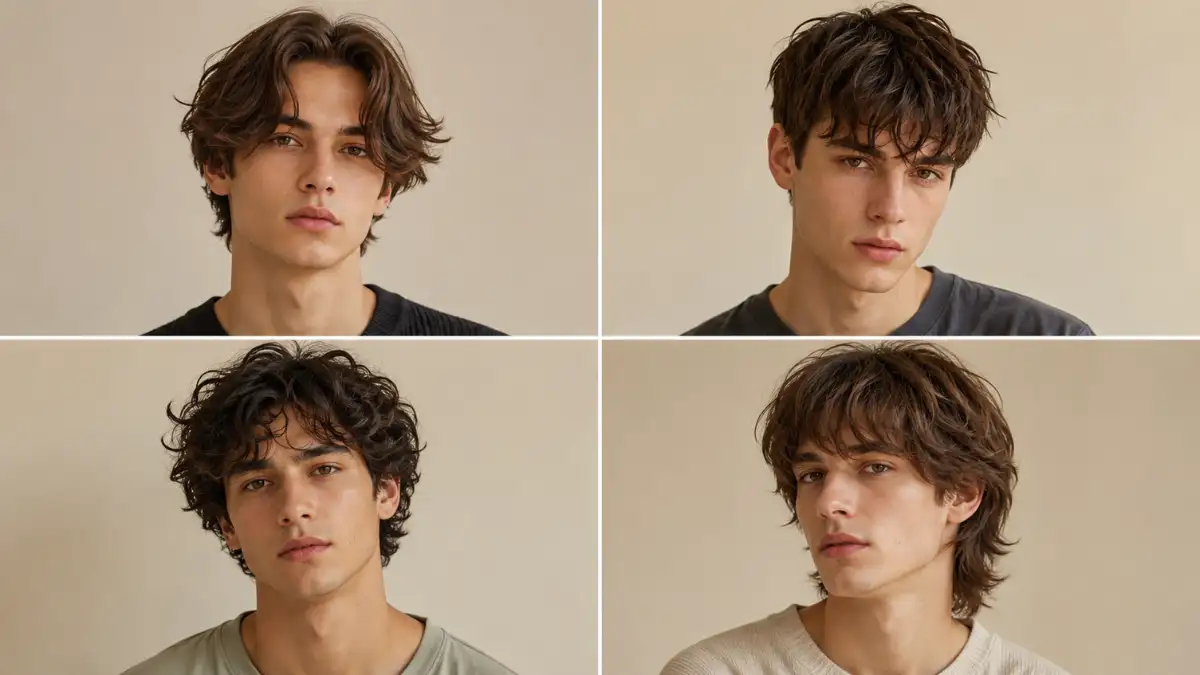
A soft boy aesthetic hairstyle should be soft but not shapeless. Focus on face-framing pieces, natural movement, light volume, and a relaxed finish instead of sticking to one specific cut. Straight, wavy, and curly hair can all work, but choose the right style based on your texture, length, and styling preferences.
This guide covers four soft boy hairstyle forms: fluffy middle parts, textured fringes, loose waves or curls, and softer layered shag or wolf cuts. It explains how to match each style to your hair, achieve a relaxed look, and describe it to your barber. By the end, you’ll have a clearer idea of what suits your hair and routine.
TL;DR
- A soft boy aesthetic hairstyle is defined by a relaxed shape, face-framing, natural movement, soft volume, and a flexible finish.
- Fluffy middle parts, textured fringes, loose waves or curls, and soft shag or wolf cuts are four practical ways to create the look.
- Choose the style around your natural texture and current hair length rather than forcing one exact haircut.
- Hair density and face shape can help refine the cut, but they are supporting factors rather than strict rules.
- Styling should keep the hair soft and movable. Light blow-drying, finger shaping, and small amounts of product usually work better than a stiff finish.
- Show your barber a clear reference photo and explain the fringe, layers, overall length, and front direction you want.
A soft boy aesthetic hairstyle is defined more by its overall feel than by one exact haircut. The look features a relaxed shape and face-framing fringe. It has natural movement, soft volume, and visible texture. The finish should feel light, not stiff or overly styled.
The haircut creates the base through length, layers, fringe shape, and how much fullness is left in different areas. Styling then changes how that base sits by adding direction, separation, volume, or a slightly tousled finish.
Curtain hair, textured fringes, shaggy layers, and fluffy styles can all create this effect. Straight, wavy, and curly hair can also work, so a middle part or one specific texture is not required.
The main difference between these four forms is how the hair frames the face and creates movement. Some rely on parting or fringe direction, while others depend more on natural texture or layering.
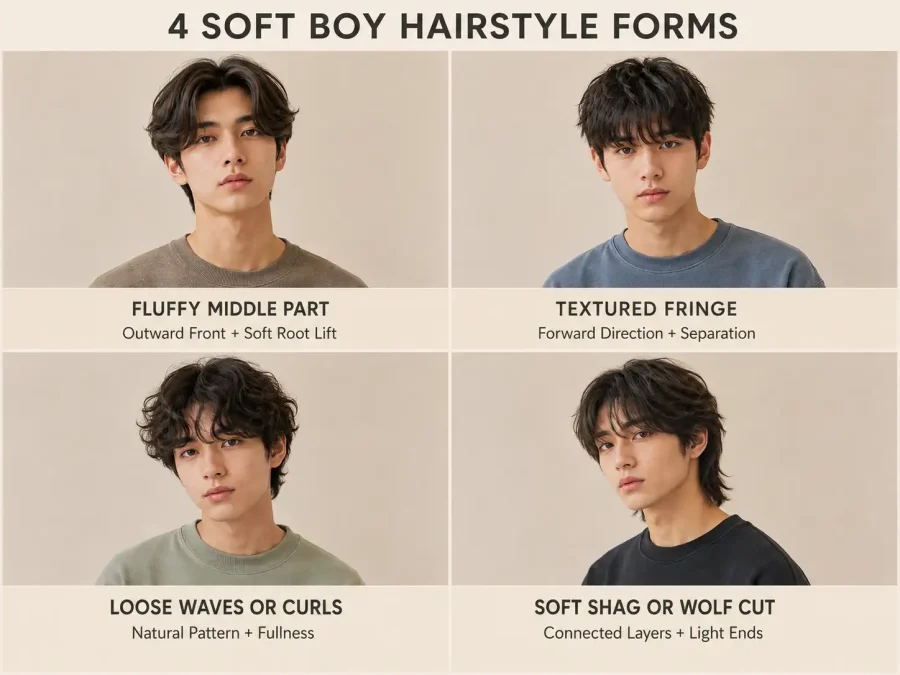
This style uses a center or near-center part with longer front pieces falling to each side of the face. Soft root volume and a slight outward bend create the curtain shape. The result is a softer, open shape that frames the face without looking flat or rigid.
A textured fringe directs the hair forward instead of splitting it down the middle. Soft, separated pieces partly cover the forehead and create a more tousled look than a smooth, solid fringe. The focus stays on visible texture and loose movement across the front.
This form is driven mainly by the natural wave or curl pattern rather than by one required parting. The texture creates movement and fullness around the forehead, temples, and crown. Layers can help manage bulk while keeping the natural pattern visible and relaxed.
A layered shag or soft wolf cut uses shorter layers around the crown and face, with more length left toward the back. A softer version keeps the shape connected and the ends light rather than sharply separated, giving the haircut a more expressive but still relaxed finish.
Start with your natural texture and current length. These two factors affect how easily the hair can create movement, volume, and face framing. Density, face shape, and maintenance can refine the choice, but they should not be treated as strict rules.
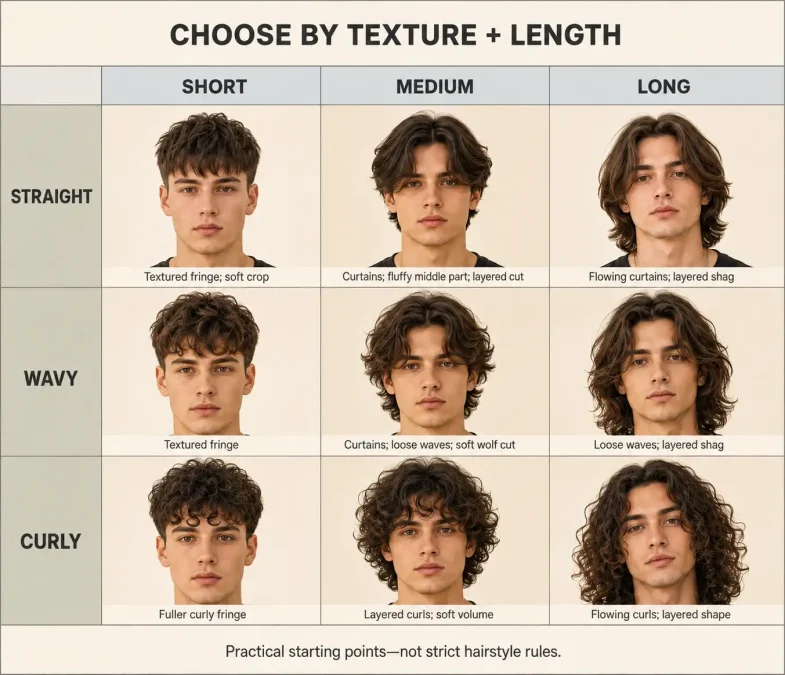
Straight hair can work well with fluffy middle parts, textured fringes, and layered cuts, especially when the cut or styling adds movement. Wavy hair often has a more natural bend, so curtain styles, loose waves, and soft wolf cuts may need less shaping. Curly hair can create the look through fuller fringes, layered shapes, or soft volume that keeps the curl pattern visible.
Shorter hair is better suited to compact textured fringes and softer cropped shapes. Medium hair gives you more room for curtains, fluffy volume, waves, and layering. Longer hair allows for more face-framing movement and works well with flowing curtains, loose curls, or waves, and layered shag or wolf-cut shapes. Choose a length that also fits how much styling and upkeep you want.
Hair density affects how full the style looks and how much layering it can handle. Lower-density hair may look fuller when more weight is left in the shape. Face shape can guide small changes in height, side width, and fringe placement, but it does not determine which soft boy hairstyle you can wear.
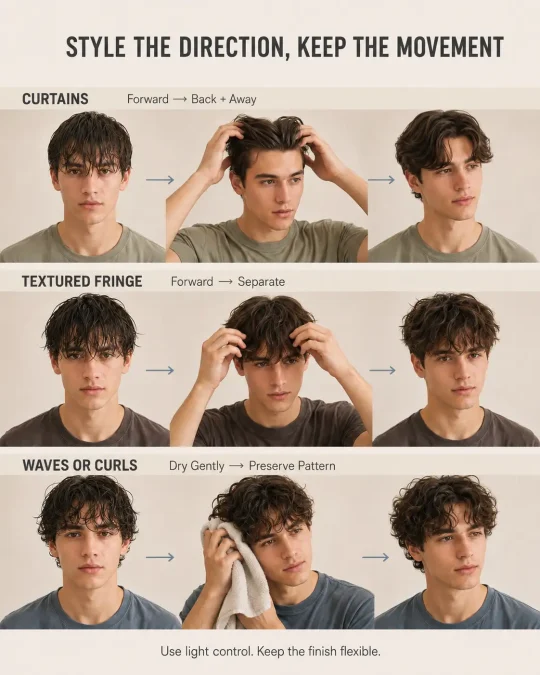
Start with damp hair and use your fingers to shape it as you dry. Keep the hair moving naturally as it dries. Build enough volume and texture to give it shape without making the finish stiff.
For a middle part or curtain shape, guide the front forward first, then sweep it back and away from the face as it dries. For a textured fringe, direct the hair forward and separate the front into softer pieces with your fingers. For wavy or curly hair, use gentle drying methods and limit excessive heat to help reduce damage and preserve the hair’s natural texture, following the American Academy of Dermatology’s hair-care guidance.
Use the product only when the hair needs extra grip or control. Sea salt spray can add texture and separation, while a light styling cream or matte clay can help define the finished shape. Keep the product light so the hair stays flexible and natural looking.
Show your barber a clear reference photo and describe the details you want. Explain the fringe length, overall length, layers, and whether the front should part or fall forward. Your barber can then adapt the cut to your texture and growth pattern.
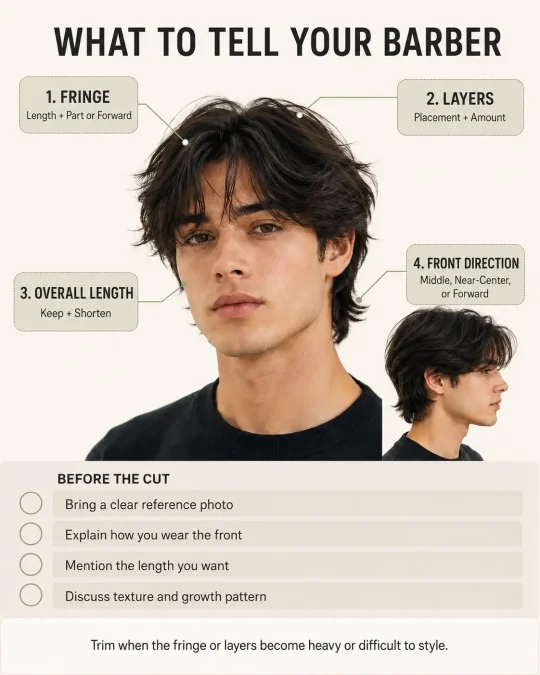
As the hair grows, watch how the fringe and layers sit. Get a trim when the fringe or layers start to feel heavy, uneven, or harder to style rather than following one fixed schedule.
The right soft boy hairstyle is the one that creates a relaxed, textured look without fighting your natural hair. A fluffy middle part may suit someone who wants more face-framing, while a textured fringe offers a shorter, forward shape. Waves, curls, shags, and soft wolf cuts give you other ways to add movement and personality.
Start with your texture and current length, then choose the fringe, layering, and amount of volume that feels practical for your routine. The best option is not the one that follows every soft boy styling cue. It is the version that gives you the relaxed shape and movement you want while still working with your natural hair.