Physical Address
Islamabad, PK
Physical Address
Islamabad, PK


Mens haircuts for straight hair often work well when the cut adds texture, controls bulk, and supports natural movement. Straight strands reveal blunt edges, poor blending, and flat areas easily. A suitable cut balances density, face shape, hairline, growth direction, length, and styling time. Options range from short crops to medium curtain cuts and long layered styles. This guide covers barber instructions, such as top length and fade height, plus styling products, such as clay and texture powder.
A haircut works for straight hair when it balances texture, weight, volume, and natural growth direction. Blunt edges, uneven layers, and poor blending appear clearly on straight strands. Point cutting and internal layers create separation. Low tapers, mid fades, and skin fades reduce bulk around the ears and neckline.
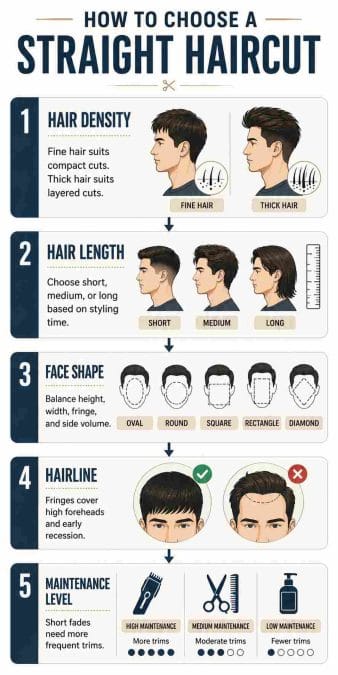
Fine straight hair suits compact cuts, including textured crops, Caesar cuts, and crew cuts. By contrast, thick straight hair suits layered styles, including two block haircuts, modern mullets, and bro flow. Flat hair gains lift from textured quiffs, short fringes, and layered tops. Face shape also affects suitable height and side volume. The NCBI overview What is the structure of hair and how does it grow? reports average scalp-hair growth of about 1 centimeter monthly.

Choose the best haircut by matching 5 factors: density, length, face shape, hairline, and maintenance level. Fine hair suits compact cuts, including textured crops, French crops, and crew cuts. Dense hair suits bulk-controlling styles, including undercuts, modern mullets, and layered flow cuts.
Round faces benefit from height and shorter sides. Oblong faces often suit fringes, curtain bangs, and medium layers. Receding hairlines pair well with Caesar cuts and French crops. Cowlicks and crown patterns also affect suitable length. Male Androgenetic Alopecia affects 30% to 50% of men by age 50.
These 25 mens haircuts for straight hair combine clean structure, controlled texture, and balanced volume. Short cuts reduce daily styling. Medium and long cuts use layers and fringes to create movement.

The textured crop adds separation and lift to flat straight hair. Textured crops commonly keep about 1 to 2 inches on top with tapered sides. Compact cuts, including crops, Caesars, and buzz cuts, can reduce visible density contrast.

The French crop combines a textured top with a short forward fringe. This shape suits fine hair, high foreheads, and receding temples.
Compare variations in 12 French Crop Hairstyles for Men (Every Face Shape).

The Caesar cut usually keeps a short top with a compact horizontal fringe. Its close shape often suits fine hair.

The crew cut keeps the front longer and shortens toward the crown. A taper creates a clean, low-maintenance finish.
Explore variations in 15 Masculine Crew Cut Hairstyles for Men.

The buzz cut keeps straight hair uniformly short with minimal styling. The Ultimate Guide to Hair Clipper Guard Sizes explains how guards like #2, #3, and #4 create distinct lengths.

The Ivy League adds parting length to a classic crew cut. About 1.5 to 2.5 inches on top usually supports a side part.

The side part gives straight hair a polished, controlled shape. About 2 to 4 inches on top often creates a defined part.

The comb over sweeps medium-length hair across its natural part. A low or mid fade creates a cleaner outline.

The low taper shortens only the temples and neckline. This cut preserves side length for office, school, and formal styles.

The taper fade blends a wider side area into shorter hair. Its gradual transition controls outward growth around the ears and nape.

The mid fade starts near the temples and creates balanced contrast. It pairs with crops, quiffs, and side parts.

The skin fade blends the sides down to scalp level. Strong contrast often pairs well with dense textured tops.

The drop fade curves lower behind the ears and follows the skull shape. This outline complements crops, quiffs, and slick backs.

The burst fade forms a semicircular blend around each ear. It suits modern mullets, faux hawks, and textured tops.
Compare fade types in 27 Fade Hairstyles for Men: Proven 2026 Picks.

The quiff creates front height while keeping the crown controlled. About 3 inches often provides enough length for a short quiff.

The pompadour sweeps longer hair upward and backward. A top length of about 3 to 5 inches supports a medium-height pompadour.

The slick back directs medium-length hair away from the forehead. Light layering prevents a stiff or heavy finish.

The undercut separates a longer top from short sides with limited or no blending. It supports slick backs, side sweeps, and textured finishes.

The two block haircut keeps the crown long and the sides short. Dense hair benefits from its internal weight removal.

The middle part divides medium-length hair evenly across both sides. Internal layers prevent a flat or heavy crown.

Curtain bangs frame the face with a soft center split. Cheekbone-length pieces create movement around the forehead and temples.

The layered medium cut removes internal bulk while preserving length. Gradual layers improve movement around the crown and ends.
Compare layered options in 19 Medium Length Hairstyles for Men in 2026.

The bro flow directs medium-length hair backward and behind the ears. Long layers control weight and maintain natural movement.

The modern mullet combines a textured top, shorter sides, and longer back layers. Low tapers and burst fades define its shape.

Long straight layers prevent shoulder-length hair from looking flat or bottom-heavy. Layers beginning near the jaw improve shape and movement.
Fine straight hair often suits compact cuts, thick hair suits bulk-controlled cuts, and flat hair benefits from lifted styles. Textured crops, French crops, and crew cuts make fine strands look fuller. Limited texturizing preserves visible weight and reduces scalp exposure.
Thick hair suits undercuts, modern mullets, and layered medium cuts. These shapes remove side or internal bulk. Quiffs, textured fringes, and curtain bangs create height for flat hair. Sea salt spray, texture powder, and matte clay add grip and support root lift.

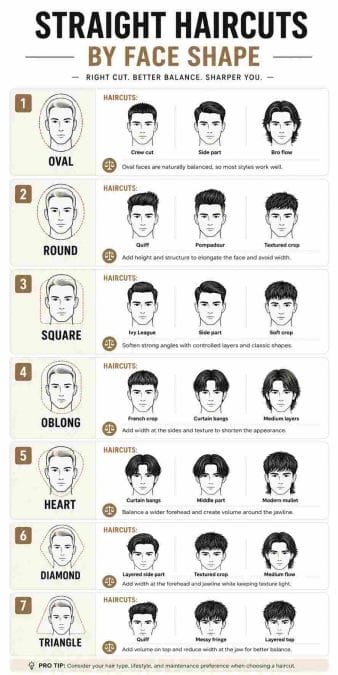
Straight haircuts create visual balance when height, width, fringe placement, and side volume complement the face shape. Oval faces often suit crew cuts, side parts, and bro flow. Quiffs, pompadours, and textured crops with shorter sides add length to round faces.
Square faces often suit Ivy League cuts, side parts, and soft textured crops. French crops, curtain bangs, and medium layers with limited height balance oblong faces. Heart faces often suit curtain bangs, middle parts, and modern mullets. Layered side parts, textured crops, and medium flow complement diamond faces. Triangle faces often suit quiffs, messy fringes, and layered tops. French crops and Caesar cuts can also soften receding hairlines.
French crops, Caesar cuts, and curtain bangs reduce visible forehead height on straight hair. Forward-falling strands create controlled fringe coverage. Suitable fringe length depends on forehead height, hair density, and styling direction.
Textured or side-swept fronts soften wide foreheads and early temple recession. Low tapers remove less side length than high skin fades and create softer contrast. Slick backs, high-volume quiffs, and flat middle parts reveal more forehead.

Ask for 5 details: haircut name, top length, side and back length, fade height, and texture. Use exact terms, such as 2 inches on top, a #1 guard, or a low taper. Also specify a tapered, rounded, or blocked neckline.
Show front, side, and back reference photos with similar hair density, length, and texture. Mention flat roots, thick sides, cowlicks, double crowns, or receding temples. Request point cutting for movement or blunt cutting for a solid edge. Tell the barber how many minutes you spend styling each morning.
Style men’s straight hair in 5 steps: towel-dry, pre-style, blow-dry, cool, and finish. Towel-dry until the hair feels damp rather than soaking wet. Next, apply sea salt spray or volumizing mousse. Add heat protectant before using medium heat. The American Academy of Dermatology guide Hair styling without damage recommends partial air-drying and low or medium heat.
Blow-dry against the natural fall using fingers or a vent brush. Keep the dryer moving, then finish with cool air. Start with the manufacturer’s minimum recommended amount. Crops suit clay or powder. Curtain bangs, bro flow, and long layers suit light cream. 7 Pro Hair Styling Techniques for Men (That Last All Day) explains blow-drying, volume control, and product application.
The best products for men’s straight hair include matte clay, texture powder, sea salt spray, pomade, and lightweight cream. Matte clay adds grip to textured crops, crew cuts, and side parts. Texture powder lifts fine roots. Sea salt spray supports quiffs, curtain bangs, and layered cuts.
Traditional shine-finish pomade adds gloss to slick backs, pompadours, and polished side parts. Lightweight cream smooths bro flow, modern mullets, and long layers. Start with the lowest amount listed in the product directions. Add more only when required. Apply texture powder at the roots according to the product directions. Use heat protectant before blow-drying.
Maintain straight haircuts with scheduled trims, gentle washing, light conditioning, and controlled product use. Skin fades and sharp lineups often need refreshing every 1 to 2 weeks. Mid fades, burst fades, and textured crops usually hold their shape for 3 to 4 weeks. Bro flow, modern mullets, and long layers often need reshaping every 6 to 10 weeks.
Wash based on scalp oiliness using gentle shampoo. Apply lightweight conditioner to the mid-lengths and ends. Use clarifying shampoo after visible clay, pomade, or powder buildup. Before blow-drying, apply heat protectant. Scalp hair grows about 1 centimeter monthly, which softens edges and adds bulk.

The 6 common mistakes are excess blunt weight, over-thinning, poor fade blending, heavy products, ignored growth patterns, and delayed trims. Excess blunt weight makes crops, slick backs, and crew cuts look stiff. Over-thinning exposes scalp on fine hair. Poor blending leaves visible lines on straight strands.
Heavy waxes, oily pomades, and thick creams flatten fine hair. Ignoring cowlicks, crown patterns, and natural parts causes uneven lift. High skin fades can highlight thinning temples and crowns. Delayed trims create bulky sides, uneven fringes, and overgrown necklines.
In conclusion, mens haircuts for straight hair often work well when texture, density, face shape, and maintenance level stay balanced. Short options, including textured crops, crew cuts, and fades, provide clean structure. Curtain bangs, bro flow, and layered cuts create movement at medium and long lengths.
Clear barber instructions, lightweight products, proper blow-drying, and regular trims preserve the chosen shape. Select 1 haircut that matches your density and styling routine. Save 3 reference photos showing the front, side, and back before your next barber consultation.
A textured crop is a versatile haircut for men with straight hair. It adds shape, texture, and volume without heavy styling. French crops, crew cuts, Ivy League cuts, and low tapers also suit straight hair.
A textured crop makes straight hair look thicker by adding short layers and separation. French crops, messy fringes, and crew cuts also improve fullness. Lightweight products work better than heavy oils or greasy pomades for fine hair.
Straight hair can suit fades because clean clipper transitions remain visible. Low tapers, mid fades, and skin fades suit straight hair. Fine hair often benefits from softer fades, while dense hair can support stronger contrast.
A textured crop, short quiff, or messy fringe can add lift to flat straight hair. These cuts add lift at the top. Blow-drying and texture powder create root volume without making the hair stiff.
A fringe haircut suits straight hair and a big forehead. French crops, Caesar cuts, long fringes, and side-swept fringes reduce visible forehead height. Forward-styled fringes can also cover early temple recession.
Ask your barber for the haircut name, top length, side length, fade height, and texture level. Show front and side reference photos. Mention flatness, bulk, cowlicks, or a receding hairline.
The best products for men’s straight hair are matte clay, texture powder, sea salt spray, and lightweight styling cream. These products add grip, volume, and movement. Rich conditioners, heavy oils, and greasy pomades can flatten fine hair near the roots.
Straight haircuts often need maintenance every 1 to 10 weeks, depending on length and edge sharpness. Skin fades often need cleanup every 1 to 2 weeks. Crops, crew cuts, and Ivy League cuts stay clean for about 3 to 4 weeks. Medium and long layers often keep their shape for 6 to 10 weeks.
Excess blunt weight, heavy products, poor layering, and unsuitable fade height can weaken straight haircut shapes. Heavy, unlayered tops can look stiff. Thick products flatten fine hair. High fades can look harsh when the top has low volume.
Textured crops, French crops, low tapers, two block cuts, curtain bangs, and modern mullets are common straight-hair options. These cuts combine texture, clean sides, and natural movement.


