Physical Address
Islamabad, PK
Physical Address
Islamabad, PK

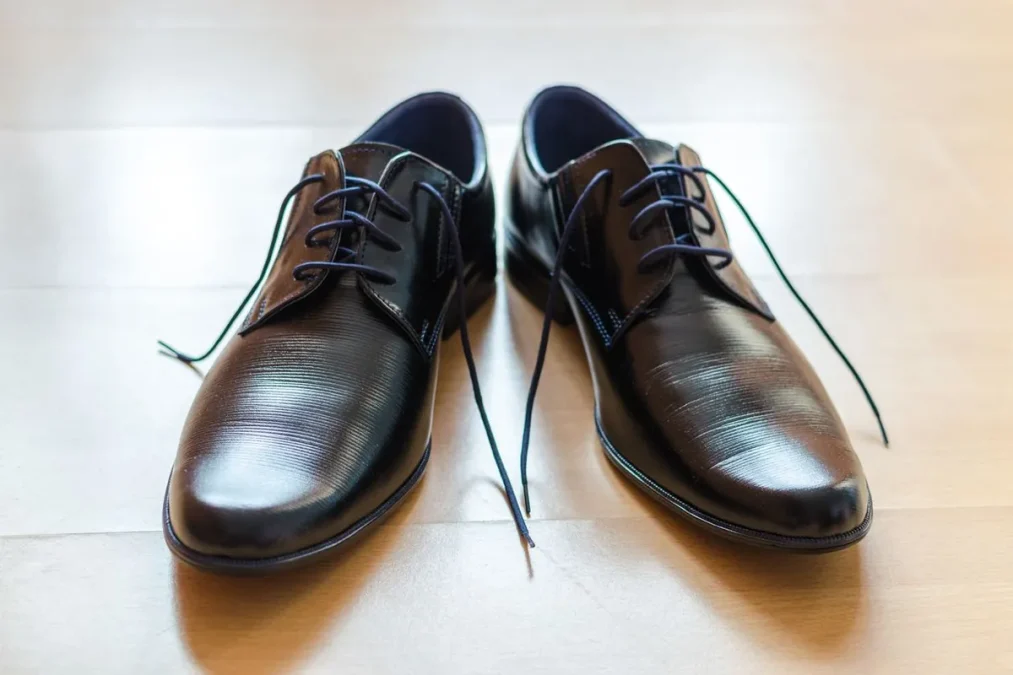
A dress shoe is the shoe that finishes a formal outfit. It is the shoe for a suit, for formal trousers, for a smart event, the shoe that says the outfit is complete. Most men own one pair of dress shoes and wear them with everything. That works, until it does not. A very formal shoe with a casual outfit looks off, and a soft shoe with a dark suit looks off too.
This guide gives you eleven plain dress shoe styles for every event: what each one is, when to wear it, how it should fit, and how to match it to your outfit. It also explains what a dress shoe is made of, how a dress shoe should fit, what to avoid, and a simple routine that puts it all together.
You do not need a closet full of shoes. You need to know the eleven styles, pick the right one for the event, and match it to your outfit. That is what this guide is for.
A dress shoe is a shoe made to be worn with formal or smart clothes: a suit, formal trousers, or a smart outfit. It is the shoe that finishes a formal outfit, the way a belt finishes it at the waist.
A dress shoe has five plain parts. The upper is the leather top of the shoe, the part you see most. The sole is the bottom that touches the ground. The heel is the raised back part under the sole. The toe is the front part. The laces are on lace-up styles. They are how the shoe fastens.
That is all a dress shoe is: an upper, a sole, a heel, a toe, and laces on the styles that have them. The eleven styles in this guide are just eleven ways of putting those parts together: different lacing, different heights, different shapes, for different events.
For a broader background on dress shoes, see the Wikipedia article on dress shoes.
A dress shoe should fit snug at the heel, with room for the toes. The heel should not slip much when you walk. If the heel slips a lot, the shoe does not fit, and a shoe that does not fit will hurt by the end of the day.
New leather shoes can feel stiff at first. That is normal, as a tendency. The leather softens with a few wears. But stiff is not the same as tight. A shoe that pinches your toes will not soften into a good fit. Snug at the heel, room for the toes. That is the test.
One thing to know: a dress shoe that fits is judged by feel, not by a number. This guide gives no size rule, because feet are not the same from shoe to shoe. Try the shoe on, walk in it, and check the heel and the toes.
“The shoe that fits one person pinches another; there is no recipe for living that suits all cases.”
Carl Jung, Modern Man in Search of a Soul (1933)
An Oxford is a lace-up shoe with closed lacing. The lace holes sit under the front part of the shoe, so the two sides meet in a clean line. It is the plainest lace-up shoe, and it is the most formal lace-up dress shoe, as a tendency.
This is the shoe for a suit, most often in black, as a tendency. It is the shoe for a dark suit, a formal event, and a day when the outfit must look sharp. The clean line of the closed lacing is what makes it formal. There is nothing extra on it.
Wear it with a suit. Black with a black or dark suit, as a tendency. If you own only one pair of dress shoes, the black Oxford is the one to own first. It covers the most formal days.
A Derby is a lace-up shoe with open lacing. The lace holes sit on flaps sewn on top of the front part, so the sides open a little. It looks much like an Oxford, but the laces sit on top instead of under.
This is a step less formal than the Oxford, as a tendency, and it gives more room across the front of the foot. If the Oxford feels too tight across the front, the Derby is the shoe to try. It is the lace-up shoe for men whose feet need a little more room.
Wear it with a suit or smart trousers, as a tendency. It is the shoe for a smart day when the Oxford feels too tight or too formal. Brown Derbies suit brown, navy, and grey suits, as a tendency.
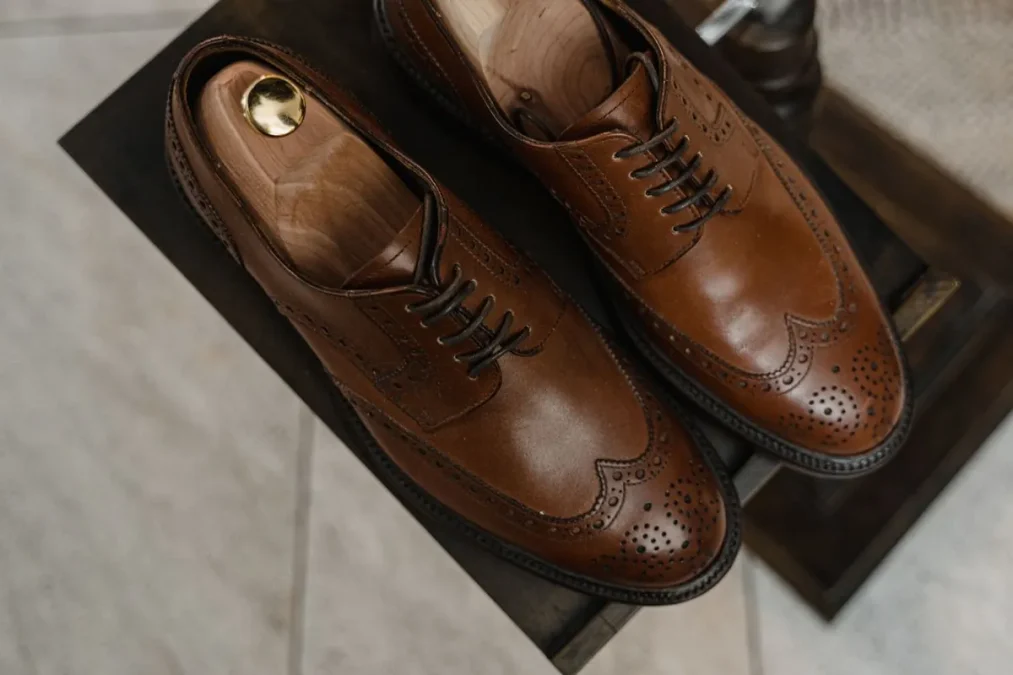
A Brogue is a shoe with small punched holes along the seams. The holes are decoration. They do not go through the shoe. A brogue can be an Oxford or a Derby with this hole pattern. A wingtip is a brogue with a W-shaped piece across the toe.
The holes soften the shoe. A brogue is less formal than a plain Oxford or Derby, as a tendency. The holes say the shoe is not for the most formal day. But it is still a dress shoe, and it is still made for smart clothes.
Wear it with smart-casual outfits, and with suits that are not black tie, as a tendency. A brown brogue with a navy suit is a plain, good pair. A black brogue is the softer choice for a dark suit.
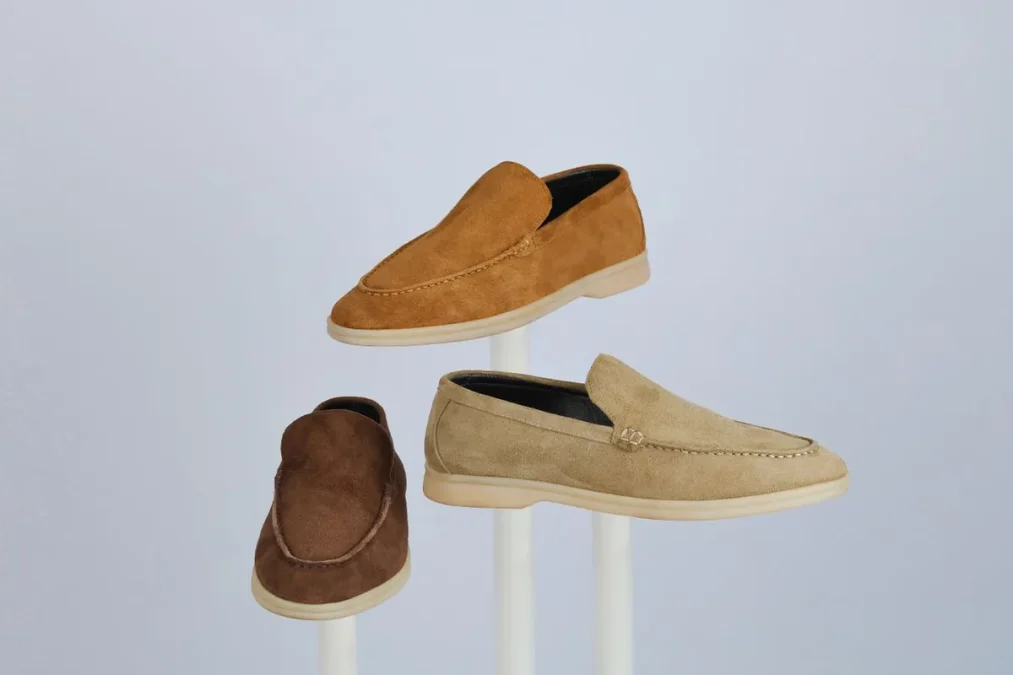
A Loafer is a slip-on shoe with no laces. A penny loafer has a strap across the front with a small slot in it. A tassel loafer has small tassels on the front. It is the easy dress shoe: put it on, take it off, no laces.
This is the shoe for warm days and relaxed smart outfits, as a tendency. It is less formal than an Oxford, as a tendency, and it suits smart trousers or a suit without a tie. The lack of laces is what makes it easy, and what makes it less formal.
Wear it with smart trousers or a suit without a tie, in warm weather, as a tendency. It is the shoe for a smart day that does not need laces. It is not the shoe for black tie, or for the most formal suit.
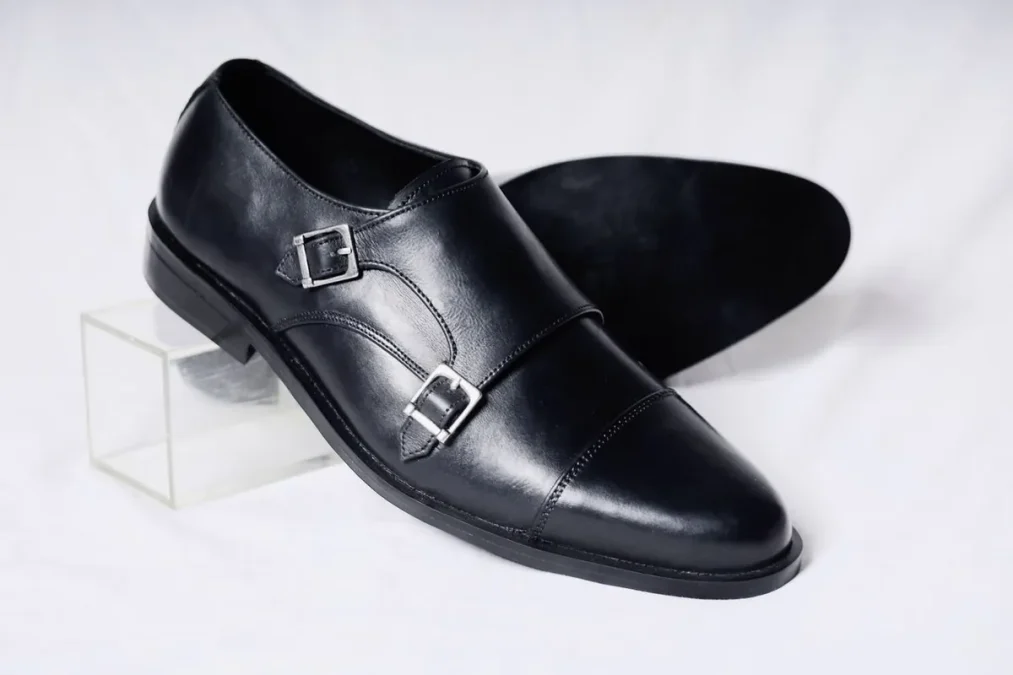
A Monk strap shoe fastens with a buckle and a strap instead of laces. One buckle is a single monk; two buckles is a double monk. There are no laces at all. The strap holds the shoe shut.
This shoe sits between a lace-up and a slip-on in formality, as a tendency. The buckle gives it a little more weight than a loafer, and a little less weight than a lace-up. It is the shoe for a man who wants something a little different from laces.
Wear it with a suit or smart trousers, as a tendency. The double monk is the common kind, and it suits a smart day. It is a plain shoe with one clear detail, the buckle, and that is what makes it stand out.
A Chelsea boot is an ankle boot with elastic sides and no laces. It pulls on and off, and the elastic sides are what hold it to the foot. It is a dress boot, not a work boot: clean leather, clean shape, no heavy sole.
This is the dress boot for cold weather, as a tendency. It is easy to wear: no laces, no buckle, just pull it on. The clean sides make it look neat with a suit, and the ankle height keeps the foot warm.
Wear it with a suit or smart trousers, in cold weather, as a tendency. Black with a dark suit, brown with a brown or navy suit. It is the boot for a smart day when a shoe feels too light for the weather.
A Chukka boot is an ankle boot with two or three pairs of lace holes and a plain toe. It is a simple boot: plain front, short laces, ankle height. It is plainer in shape than the Chelsea, but it has laces where the Chelsea has elastic.
This is a smart-casual boot, as a tendency. It suits smart-casual outfits: a shirt and chinos, a knit and trousers, a relaxed day that still needs to look neat. It is less formal than a dress shoe, as a tendency, and more formal than a casual shoe.
Wear it with smart-casual outfits, as a tendency. It is the boot for a day that is not a suit day, but is not a jeans day either. It sits in the middle, and that is where it belongs.
A Wholecut is a shoe made from one piece of leather, with no seams on the upper except at the back. It has a very clean, plain look: one smooth piece of leather, with nothing extra on it. It is one of the most formal dress shoes, as a tendency.
This is the shoe for a suit, when you want the cleanest look. The lack of seams is what makes it formal. There is nothing to draw the eye away from the shape of the shoe. It is the Oxford’s quieter cousin: just as formal, but plainer still.
Wear it with a suit, as a tendency, most often in black. It is the shoe for a formal event when the plain Oxford feels too common. It is not the shoe for a casual day. It is too clean for that.
“Mode passes; style remains.”
Coco Chanel, McCall’s, November 1965
A Dress boot is a lace-up boot that reaches the ankle, made like a dress shoe: the same clean leather and shape, but taller. It is a dress shoe with more cover, for a day when a shoe is not enough.
This is the dress shoe for cold days and smart outfits, as a tendency. It has the same clean look as an Oxford or a Derby, with the ankle height of a boot. It is the shoe for a suit in winter, or for a smart day in the rain.
Wear it with a suit or smart trousers, in cold weather, as a tendency. It is the boot for a formal day when the weather is against you. It keeps the clean look, and it keeps the foot warm.

An Opera pump is a very formal slip-on shoe with a low cut and a bow on the front. It has no laces and no buckle, just a low, plain shoe with a small bow. It is the most formal evening shoe, as a tendency.
This is the shoe for black tie, the most formal evening dress. It is worn with a dinner jacket and a bow tie, and with nothing less formal than that. It is not a shoe for a suit, and it is not a shoe for a smart day. It is a shoe for one event: black tie.
Wear it with black tie only, as a tendency. If the event is not black tie, the opera pump is the wrong shoe. It is the most formal shoe of the eleven, and it belongs to the most formal night.
A Spectator shoe is a two-tone shoe, usually two colours of leather on one shoe. The toe and heel are often one colour, and the middle is another. It is a bold dress shoe, the one that draws the eye.
This is the shoe for warm days and light, smart outfits, as a tendency. It suits a light suit, a linen shirt, a day when the outfit has room for a bold shoe. It is not a shoe for a dark suit or a formal event. It is too loud for that.
Wear it with light, smart outfits in warm weather, as a tendency. It is the shoe for a man who wants his shoes to be seen. If the rest of the outfit is plain, the spectator shoe is the one detail that speaks.
Matching dress shoes is simple. There are three rules, and they are all plain.
First, match the shoes to the outfit. Black shoes go with black or dark suits as a tendency; brown shoes go with brown, navy, and grey suits as a tendency. The most formal shoe goes with the most formal moment: an Oxford or a wholecut for a dark suit, an opera pump for black tie. A softer shoe, a loafer, a brogue, a chukka boot, goes with a smart-casual moment.
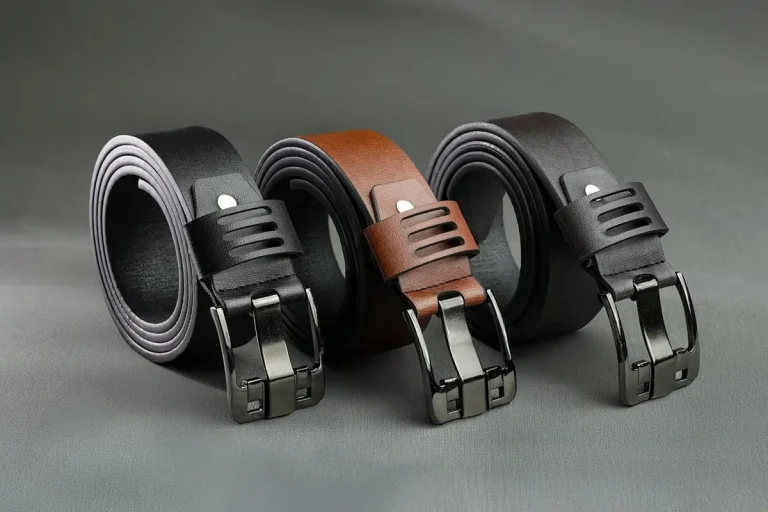
Second, match the belt to the shoes. A black belt goes with black shoes; a brown belt goes with brown shoes, as a tendency. The belt and the shoes do not need to be the same shade, but they should be in the same family.
Third, match the shoes to the moment. A very formal shoe with a very casual outfit tends to look off, and a casual shoe with a formal suit tends to look off too. The shoe should sit at the same level of dress as the rest of the outfit. A dark suit wants a dark, formal shoe. A light, smart outfit wants a softer shoe.
Three rules, and that is all: shoes to the outfit, belt to the shoes, shoes to the moment.
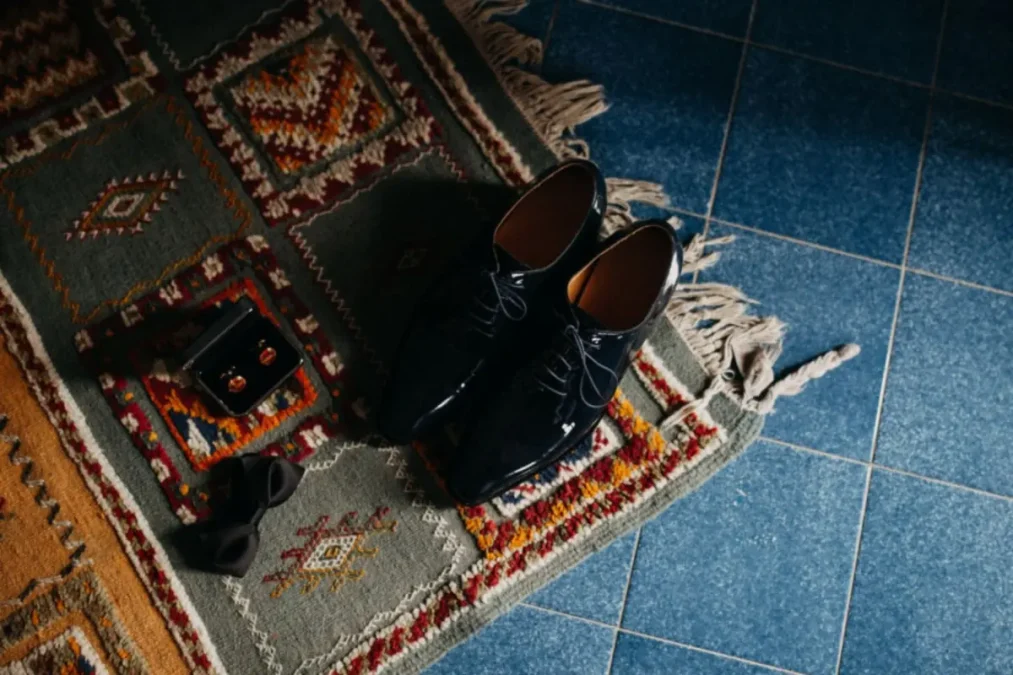
“You can have anything you want in life if you dress for it.”
Edith Head, The Dress Doctor (1959)
Choose. Pick the shoe that fits the moment: an Oxford or a wholecut for a dark suit, a loafer or a brogue for smart-casual, a Chelsea boot or a dress boot for a cold day.
Check. Snug at the heel, room for the toes, heel does not slip much. If it does not fit, it is the wrong shoe.
Match. Shoes to the outfit, belt to the shoes. Black with black, brown with brown.
Care. Keep them dry and clean, brush them when they look dull, and rest them between wears so they keep their shape.
Nothing new here. This is the eleven styles, the fit, and the matching in order, as a habit: choose, check, match, care. Do it the same way each day, and the shoe stops being a question.
A dress shoe is a shoe made for formal or smart clothes, with five plain parts: upper, sole, heel, toe, and laces on lace-up styles. It should fit snug at the heel, with room for the toes, and the heel should not slip much. The eleven styles, Oxford, Derby, Brogue, Loafer, Monk strap, Chelsea boot, Chukka boot, Wholecut, Dress boot, Opera pump, and Spectator shoe, cover every event, from black tie to smart-casual. Matching is three plain rules: shoes to the outfit, belt to the shoes, shoes to the moment. What to avoid is just as plain: a shoe that does not fit, the wrong shoe for the moment, a belt that does not match the shoes, and a shoe that is wet or out of shape. And the routine is only four steps: choose, check, match, care.
An Oxford has closed lacing: the lace holes sit under the front part of the shoe, so the two sides meet in a clean line. A Derby has open lacing: the lace holes sit on flaps sewn on top, so the sides open a little. The Oxford is the more formal of the two, as a tendency. The Derby gives more room across the front of the foot, as a tendency. Both are lace-up dress shoes; the difference is how the laces are set.
Wear dress shoes with formal or smart clothes: a suit, formal trousers, or a smart outfit. The most formal shoe goes with the most formal moment: an Oxford or a wholecut with a dark suit, an opera pump with black tie. A softer dress shoe, a loafer, a brogue, a chukka boot, suits a smart-casual moment, as a tendency. Dress shoes are not the shoe for shorts, a T-shirt, or a very casual day.
Yes, as a tendency: match the belt to the shoes. A black belt goes with black shoes; a brown belt goes with brown shoes. The belt and the shoes do not need to be the same shade, but they should be in the same family. This is the plain matching rule, and it is the one to follow first.
A soft dress shoe can work with dark, plain jeans and a smart top, as a tendency: a loafer or a clean Derby, for example. A very formal dress shoe, a plain black Oxford or a wholecut, tends to look off with jeans, because the shoe is more formal than the rest of the outfit. If the jeans are faded or torn, no dress shoe fits the moment. The shoe should sit at the same level of dress as the rest of the outfit.
Brogues are dress shoes with small punched holes along the seams. The holes are decoration. A brogue can be an Oxford or a Derby with this hole pattern. A wingtip is a brogue with a W-shaped piece across the toe. The holes soften the shoe. A brogue is less formal than a plain Oxford or Derby, as a tendency. Brogues suit smart-casual outfits, and suits that are not black tie, as a tendency.
Yes, a loafer is a dress shoe with no laces. It is a slip-on shoe: a penny loafer has a strap with a small slot across the front, and a tassel loafer has small tassels. A loafer is less formal than an Oxford, as a tendency, and it suits smart trousers or a suit without a tie, in warm weather, as a tendency. It is the easy dress shoe: put it on, take it off, no laces.
A dress shoe should fit snug at the heel, with room for the toes. The heel should not slip much when you walk. New leather shoes can feel stiff at first and soften with a few wears, as a tendency. This guide gives no fixed size number, because a dress shoe that fits is judged by feel: snug heel, room for toes, not by a number.
Keep them dry and clean, as a tendency. Leather lasts longer when it is kept dry. Brush them when they look dull, and let them rest between wears so they keep their shape, as a tendency. Do not let them stay wet, and do not bend them out of shape. A shoe that is wet or bent out of shape can lose its shape over time. This guide gives no fixed care schedule, because care is judged by look: when they look dull, brush them, not by a number.