Physical Address
Islamabad, PK
Physical Address
Islamabad, PK

A boot is the shoe that covers your ankle. It is the shoe for cold days, wet days, hard work, rough ground, and smart evenings, the shoe that does the jobs a plain shoe cannot do. Most men own one pair of boots and wear them for everything. That works, until it does not. A work boot with a suit looks off, and a dress boot on a muddy trail slips and soaks through.
This guide gives you fifteen plain boot styles for every season: what each one is, when to wear it, how it should fit, and how to match it to your outfit and the weather. It also explains what a boot is made of, how a boot should fit, what to avoid, and a simple routine that puts it all together.
You do not need a closet full of boots. You need to know the fifteen styles, pick the right one for the day and the weather, and match it to your outfit. That is what this guide is for.
A boot is a shoe that covers the ankle. A shoe stops below the ankle; a boot rises above it. That extra height is what makes a boot a boot: it gives more cover, more warmth, and more support around the ankle, as a tendency. A boot is the shoe you reach for when a shoe is not enough: cold days, wet days, rough ground, hard work.
A boot has six plain parts. The upper is the top of the boot, the leather or other material you see most. The sole is the bottom that touches the ground. The heel is the raised back part under the sole. The toe is the front part. The shaft is the tall part that covers the ankle and leg, the part a shoe does not have. The fastening is how the boot closes: laces, a zip, elastic sides, or a buckle, on the styles that have them.
That is all a boot is: an upper, a sole, a heel, a toe, a shaft, and a fastening. The fifteen styles in this guide are just fifteen ways of putting those parts together: different heights, different soles, different fastenings, for different days and different weather.
“You gotta have style. It helps you get down the stairs. It helps you get up in the morning. It’s a way of life. Without it you’re nobody.”
Diana Vreeland
For a broader background on boots, see the Wikipedia article on Boot.
A boot should fit snug at the heel, with room for the toes. The heel should not slip much when you walk. If the heel slips a lot, the boot does not fit. And a boot that does not fit will hurt by the end of the day.
New leather boots can feel stiff at first. That is normal, as a tendency. The leather softens with a few wears. But stiff is not the same as tight. A boot that pinches your toes will not soften into a good fit. Snug at the heel, room for the toes. That is the test.
One thing to know: thick socks change the fit. Boots meant for cold days are best tried on with the socks you will wear. A boot that fits in thin socks can feel tight in thick ones. And a boot that fits is judged by feel, not by a number. This guide gives no size rule, because feet are not the same from boot to boot. Try the boot on, walk in it, and check the heel and the toes.
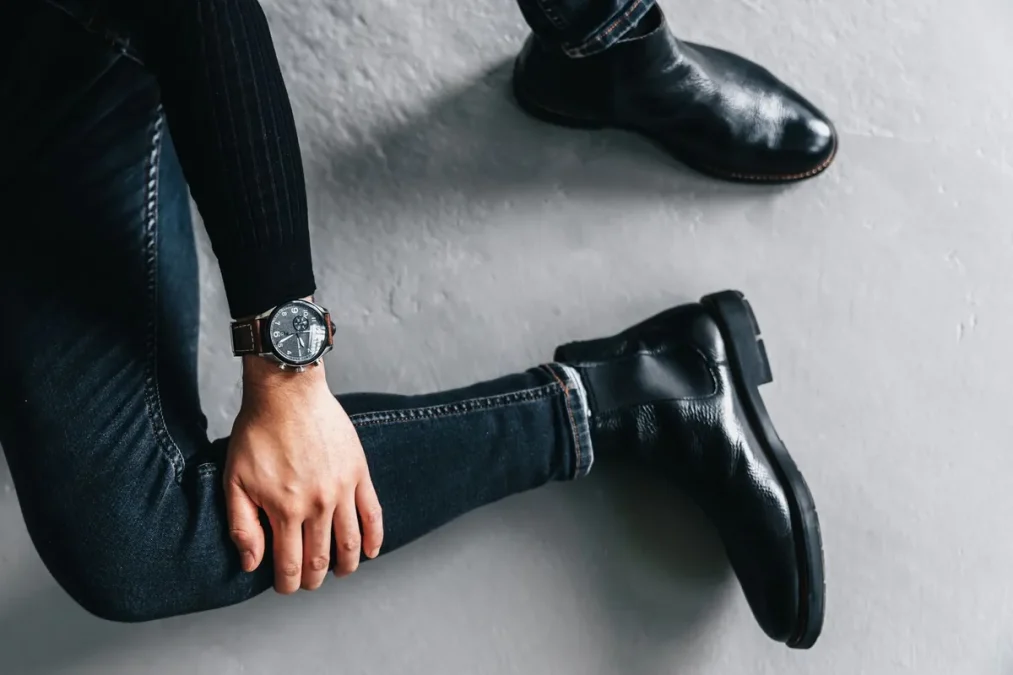
A Chelsea boot is an ankle boot with elastic sides and no laces. It pulls on and off. No laces to tie, no zip to pull. The elastic sides are the whole trick: they stretch to let your foot in, then hold the boot close to your ankle.
This is the easy smart boot. No laces means a clean side and a quick step out the door, and the neat shape means it suits smart clothes. It is the boot for men who want a smart boot without the fuss of laces.
Wear it with a suit or smart trousers, in cold weather, as a tendency. Black Chelsea boots go with dark suits; brown Chelsea boots go with brown, navy, and grey outfits, as a tendency. If you own only one pair of boots for smart days, the Chelsea is the one to own first.
A Chukka boot is an ankle boot with two or three pairs of lace holes and a plain toe. It is short, simple, and light, the plainest lace-up boot there is. Nothing extra on it: no tall shaft, no thick sole, no decoration.
This is the everyday smart-casual boot. It is plainer than most boots, which is why it works with so many outfits. It does not try to be a work boot or a dress boot, so it fits in between. It is the boot for a day that is not quite formal and not quite casual.
Wear it with smart-casual outfits, as a tendency: smart trousers, dark jeans, a plain shirt or a light jacket. It is the boot for a day out, a casual office, or a smart lunch.
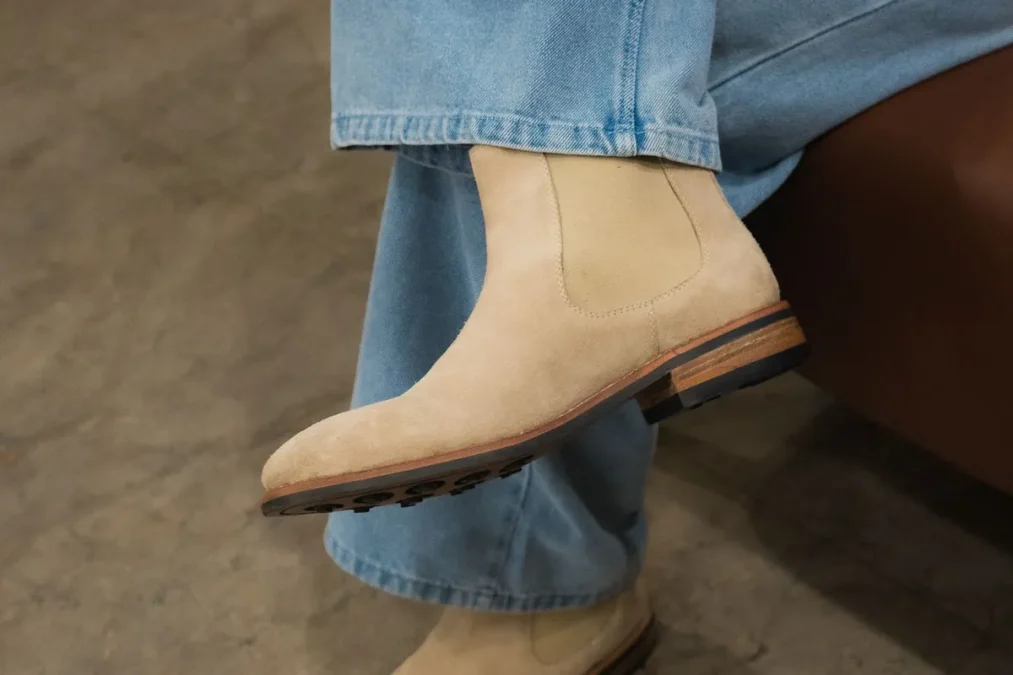
A Desert boot is a kind of chukka boot made from soft suede, with a light crepe sole. It looks like a chukka boot, but the suede and the soft, pale sole make it lighter and easier. It is the warm-weather chukka.
This is the boot for warm days. The suede breathes and the light sole feels easy on the foot, as a tendency. But suede has a cost: it marks and stains more easily than smooth leather, so a desert boot needs more care, and it is not the boot for heavy rain.
Wear it with light, smart-casual outfits in warm weather, as a tendency: light trousers or dark jeans, and a plain shirt. Keep it dry, and brush it when it looks dull.
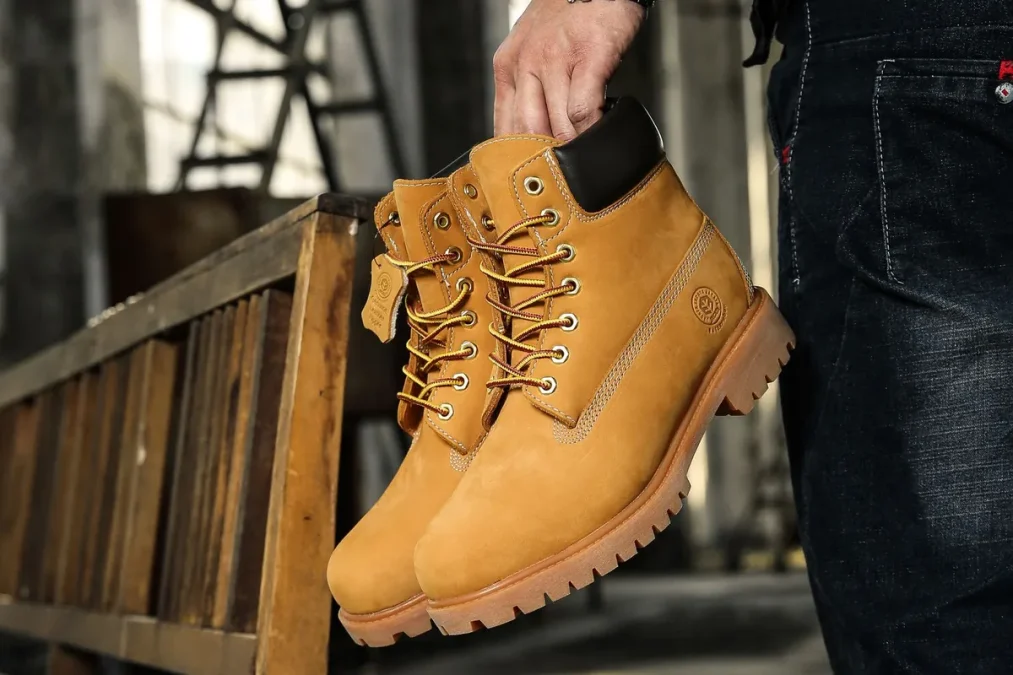
A Work boot is a tough boot made for hard jobs: building, lifting, and working on your feet all day. It often has a steel toe and a thick sole. It is built to protect the foot first and to look good second.
This is the boot for the job site. The steel toe guards the toes, the thick sole guards the foot from below, and the tall, tough upper guards the ankle. It is the boot for days when your feet take a beating.
Wear it for work, with work clothes, not with a suit. A work boot is honest about what it is: a tool for the job. Pair it with sturdy trousers and a work jacket, and leave the suit for another day.
A Hiking boot is a sturdy boot made for walking on rough ground. It has grip on the sole, support around the ankle, and room for thick socks, as a tendency. It is taller and tougher than a walking shoe, and it is made for ground that is not flat.
This is the boot for trails and hills. The grip keeps you steady on loose ground, the ankle support keeps you steady on uneven ground, and the room for thick socks keeps your feet warm on a long walk. It is the boot for a day outdoors, on purpose.
Wear it for walking and hiking, with outdoor clothes and thick socks, as a tendency. Try it on with the socks you will hike in. The fit changes with the socks.
“The mountains are calling and I must go.”
John Muir, letter to his sister Sarah Muir Galloway, 3 September 1873
A Combat boot is a tall lace-up boot in the military style, with a thick sole and a plain, hard-wearing look. It laces high up the leg, and it is made to last: thick leather, strong sole, no soft parts.
This is the bold boot. It is tall, tough, and hard to miss. It says the outfit is casual and strong, not soft and formal. It is the boot for men who like a boot that looks like it means it.
Wear it with casual outfits, as a tendency: dark jeans, sturdy trousers, a plain jacket. Do not wear it with a formal suit: it is the wrong boot for a formal moment, and it will look it.
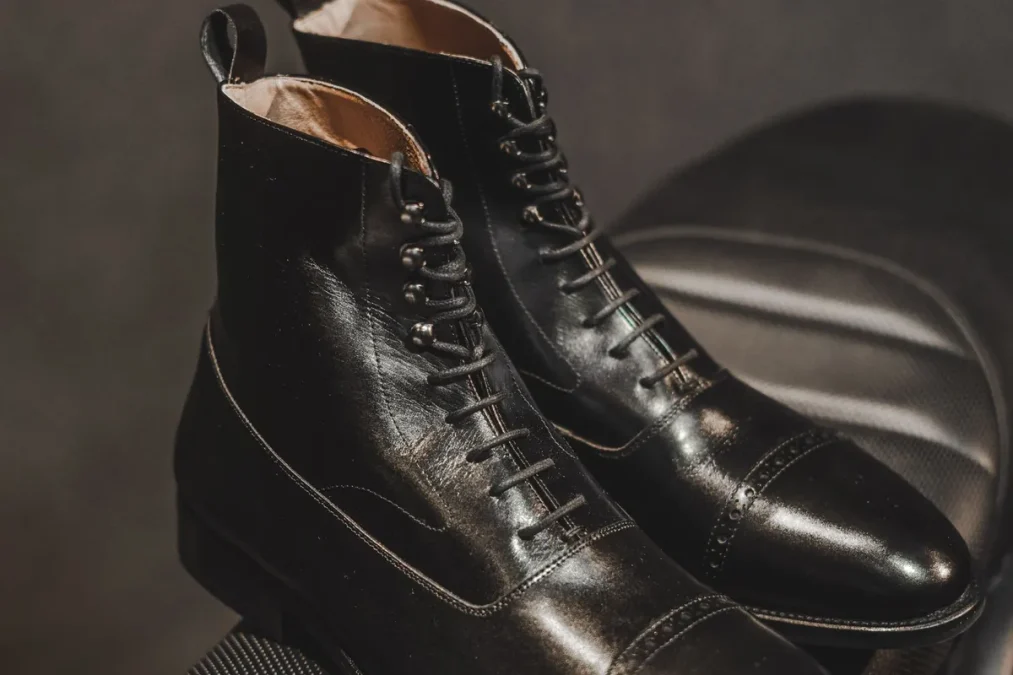
A Dress boot is a lace-up boot that reaches the ankle, made like a dress shoe, the same clean leather and shape, but taller. It is the dress shoe for cold days: the same clean look, with more cover.
This is the boot for a smart evening in cold weather. It gives you the clean leather and the neat shape of a dress shoe, and the height of a boot, so your ankles stay warm and your outfit still looks smart. The dress-shoes guide covers how formal a dress boot is in more detail.
Wear it with a suit or smart trousers, in cold weather, as a tendency. Black dress boots go with dark suits; brown dress boots go with brown, navy, and grey outfits, as a tendency.
A Cowboy boot is a tall western boot with a pointed toe and a stacked heel, often with stitched patterns. It is the western boot, the one with a clear style of its own, and the one everyone knows by sight.
This is the boot with a personality. The pointed toe, the stacked heel, and the stitching make it stand out, and it suits outfits with a western touch. It is not a quiet boot. It is the boot you wear when you want the boots to be the point.
Wear it with casual outfits that have a western touch, as a tendency: jeans, a plain shirt, a denim or leather jacket. It is a casual boot, not a formal one.
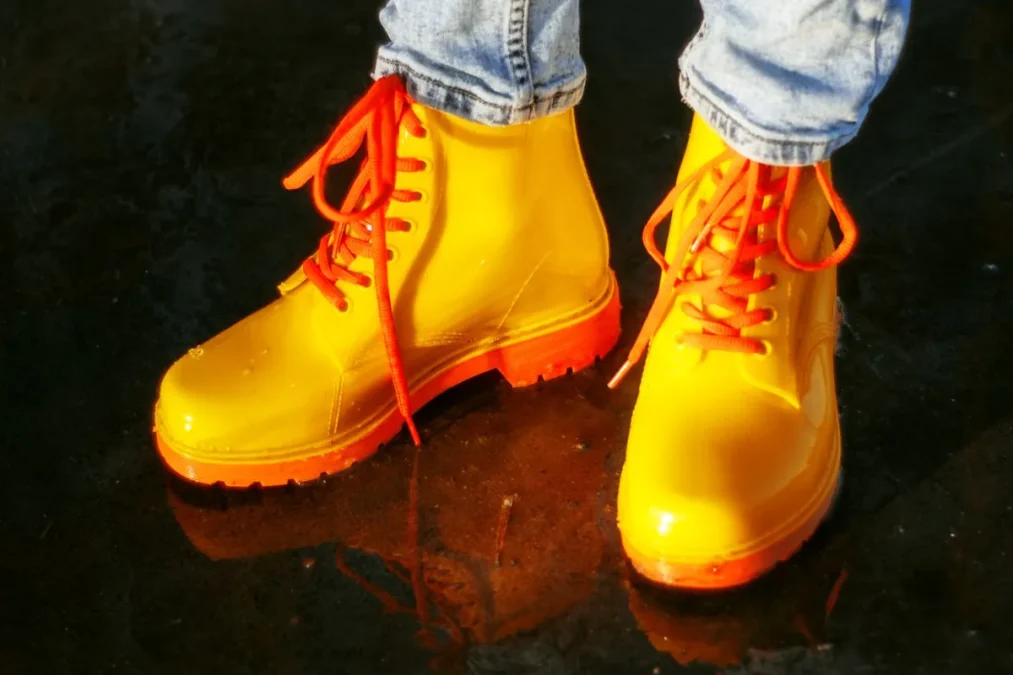
A Rain boot is a waterproof boot, most often made from rubber, that keeps feet dry in rain and mud. It is tall, plain, and practical, the boot for days when the ground is wet and a leather boot would soak through.
This is the wet-day boot. It does one job, and it does it well: it keeps water out. It is also easy to clean. A wipe is often enough, and mud comes off without a brush or polish.
Wear it on wet days, with casual clothes. It is not a smart boot and not a work boot. It is the boot you pull on when it rains, and pull off when you come inside.
A Snow boot is an insulated boot made for cold and snow. It keeps feet warm inside, and it gives grip on ice and snow, as a tendency. It is the boot for deep cold, the boot that is built for winter, not just for a cold day.
This is the cold-weather boot. Warm feet and a steady step are what it gives you, where a plain boot slips and a shoe freezes. It is often bulkier than a dress boot, because the warmth takes room. That is the trade, and it is worth it on a snowy day.
Wear it in snow and deep cold, with warm socks and winter clothes, as a tendency. Try it on with the thick socks you will wear in snow. The fit changes with the socks.
A Motorcycle boot is a tough boot made for riding, with a low heel, a strong sole, and often buckles or straps. It protects the foot and ankle on a bike, as a tendency. The low heel keeps the foot steady on the peg, and the strong sole guards it from below.
This is the riding boot. It is built for the bike first, and for the look second. The buckles and straps are not just decoration. They hold the boot close to the foot while you ride.
Wear it for riding, and with casual outfits that have a riding touch, as a tendency: dark jeans, a plain jacket, a leather jacket if you ride. It is a casual boot, not a formal one.
A Jodhpur boot is an ankle boot that fastens with a strap and a buckle around the ankle. It comes from riding boots. The strap held the boot close while riding, and it keeps that clean, smart look today.
This is the strap boot. It is a little different from laces, and that is its charm: one buckle, one strap, and a clean ankle. It looks smart without looking formal, and it is easy to put on and take off.
Wear it with smart-casual outfits, as a tendency: smart trousers or dark jeans, and a plain shirt or a light jacket. It is the boot for a smart day when you want something a little different from laces.
A Brogue boot is a boot with small punched holes along the seams. The holes are decoration. They do not go through the boot. A brogue boot is a boot with this hole pattern, most often on a lace-up shape.
This is the patterned boot. The holes soften the boot, so it is less formal than a plain boot, as a tendency. The holes say the boot is not for the most formal day. But it is still a boot made for smart clothes, and it is still a good boot for a smart-casual day.
Wear it with smart-casual outfits, as a tendency. It is the boot for a day when a plain boot feels too plain, but a dress boot feels too formal.
A Cap-toe boot is a boot with a plain extra piece of leather across the toe, a cap. The cap makes the toe look clean and neat, with a clear line across the front of the boot.
This is the neat boot. The cap is a small detail, but it changes the look: the toe looks tidy and finished, and the boot looks a little smarter than a plain boot. It is the boot for men who like a clean line.
Wear it with work and smart-casual outfits, as a tendency. It is the boot for a smart workday, a casual office, or a day when you want a boot that looks neat without looking formal.
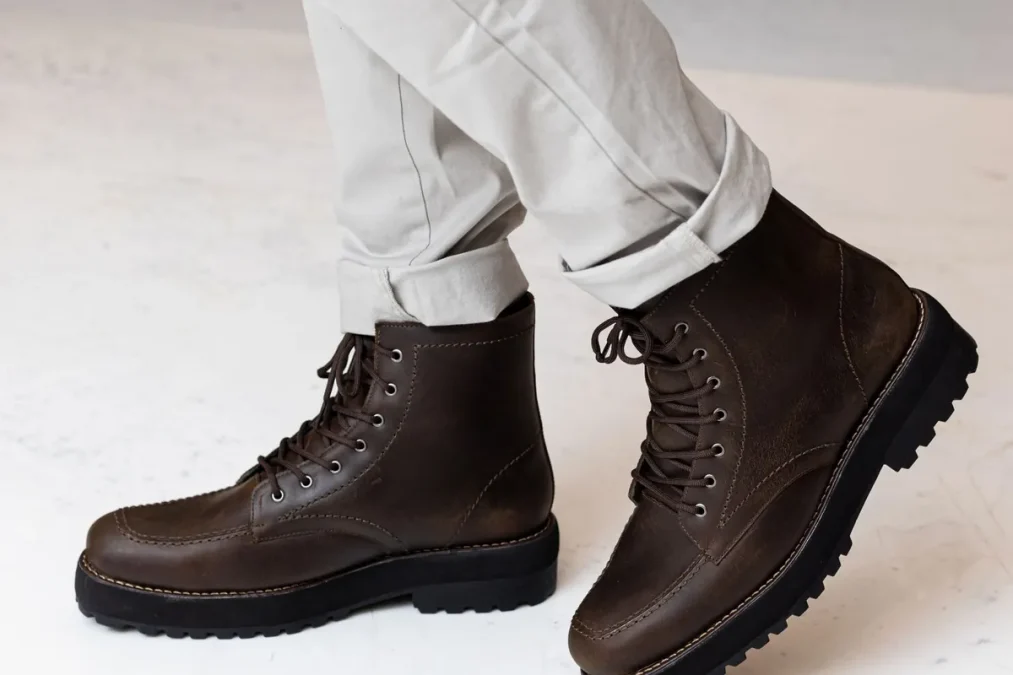
A Service boot is a plain lace-up boot with a clean shape and a sturdy sole, the simple, do-anything boot. It is not a work boot and not a dress boot: it sits between the two, as a tendency, tough enough for most days and clean enough for smart-casual outfits.
This is the everyday boot. It is the boot for men who want one pair that does most days: sturdy enough for rough ground, clean enough for a smart lunch, and simple enough to go with jeans or smart trousers. It is the boot that does not try to be special, and that is why it works so often.
Wear it as an everyday boot, with jeans or smart-casual outfits, as a tendency. If you own only one pair of boots for everyday wear, the service boot is the one to own first.
Match the boots to the outfit first. Black boots go with black or dark outfits, as a tendency; brown boots go with brown, navy, and grey outfits, as a tendency. The colour rule is the same as for shoes, and it is the rule that holds the outfit together.
Match the boots to the weather and the moment next. Rain boots for wet days, snow boots for snow, hiking boots for trails, dress boots for a smart evening, work boots for the job site. The right boot for the day is the boot that fits the weather and the moment. A boot that fights the day will look wrong, even if the colour is right.
Match the belt to the boots last. Black belt with black boots, brown belt with brown boots, as a tendency. The belts guide covers belts in full. The rule is simple: the belt and the boots should be the same colour family, so the outfit looks finished from top to bottom.
“I still have my feet on the ground, I just wear better shoes.”
Oprah Winfrey (Vogue, April 1998)
A boot is a shoe that covers the ankle, and that extra height is what makes it the shoe for cold days, wet days, hard work, rough ground, and smart evenings. It should fit snug at the heel, with room for the toes, and it is judged by feel, not by a number.
The fifteen styles cover every season: Chelsea and dress boots for smart days, chukka and desert boots for warm days, work and hiking boots for hard days outdoors, combat and cowboy boots for bold casual days, rain and snow boots for wet and cold days, motorcycle and jodhpur boots for riding and smart-casual days, and brogue, cap-toe, and service boots for the days in between.
Match the boots to the outfit and the weather, and the belt to the boots. Avoid the wrong boot for the moment, a boot that does not fit, and a boot that is wet, dirty, or out of shape. And keep the simple routine: choose, check, match, care. That is the whole guide, in four steps.
A boot covers the ankle; a shoe stops below it. That extra height is the whole difference: it gives more cover, more warmth, and more support around the ankle, as a tendency. A boot has a shaft, the tall part that covers the ankle and leg, which a shoe does not have.
Start with the boots that fit your days. For most men, a plain pair of Chelsea boots or service boots covers the most ground. They work with smart-casual outfits and cold days, as a tendency. Add rain boots if your days are wet, and work boots or hiking boots only if your work or your walking needs them. One good pair that fits well beats three pairs that do not.
Yes, if they are the right boots. Dress boots and Chelsea boots are made for smart outfits, and they go with a suit in cold weather, as a tendency. Work boots, hiking boots, combat boots, and rain boots do not go with a suit. They are the wrong boots for a formal moment.
Yes, as a tendency. The plain rule is the same as for shoes: black belt with black boots, brown belt with brown boots. It is a small detail, but it is the one people notice. A belt that does not match the boots breaks the look.
Rain boots are best for rain. They are waterproof, most often made from rubber, and they keep feet dry in rain and mud. Snow boots are best for snow. They are insulated, so they keep feet warm, and they give grip on ice and snow, as a tendency. Suede desert boots are not a good choice for heavy rain, because suede marks and stains more easily than smooth leather.
Chelsea boots sit in the middle, as a tendency. They are smart enough for a suit or smart trousers, and easy enough for smart-casual outfits. The elastic sides and clean shape make them neat, and the lack of laces keeps them simple. They are the easy smart boot, not a formal shoe and not a work boot.
A boot should fit snug at the heel, with room for the toes, and the heel should not slip much when you walk. New leather boots can feel stiff at first and soften with a few wears, as a tendency. Try boots on with the socks you will wear. Thick socks change the fit, so boots meant for cold days are best tried on with thick socks.
Keep them dry and clean, brush them when they look dull, and rest them between wears so they keep their shape. A boot that is wet or bent out of shape can lose its shape over time. Rubber rain boots are simpler. A wipe is often enough. No fixed schedule is given: care is judged by how the boots look, not by a number of days.


