Physical Address
Islamabad, PK
Physical Address
Islamabad, PK

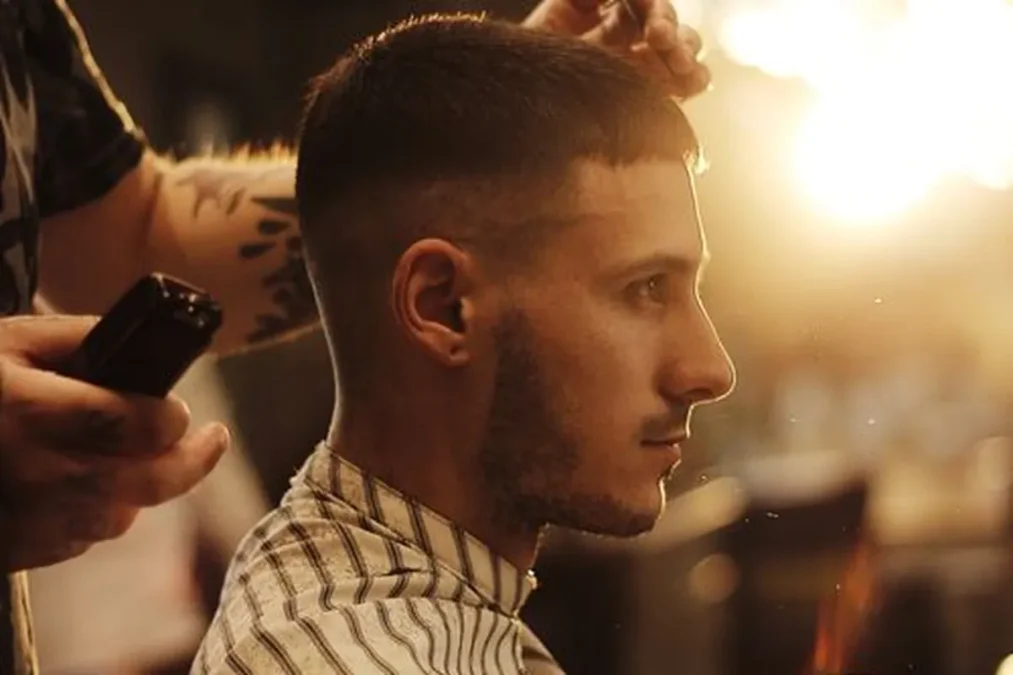
Thick hair has a different problem from most hair. It is not that it will not hold a style — it is that it has too much of its own opinion. It goes wide instead of sitting down, it pushes out of shape as the day goes on, and it frizzes at the edges while the middle stays heavy. The product that fixes that is rarely the lightest one on the shelf. For thick hair, the governing rule is grip, not weightlessness: you need a product with enough hold to control bulk, shape, and frizz, without stiffness, greasiness, buildup, or a helmet look.
This guide to products for thick hair covers six product types that do that job, in the order a man with thick hair actually needs them: strong-hold pomade, clay, paste, styling cream, leave-in and defining cream, and serum or oil for the ends. It also covers how much to use, how to apply it, how to wash it out, and what to avoid. It does not rank brands, name a single winner, or give prices, because the category is the decision: get the category right first, and the individual jar matters far less. For the broader picture, see our men’s haircuts guide.
Before any product, one distinction matters, because it changes which product fits. Thick and coarse are not the same word, even though sources use them as if they were.
Thick usually means density: many strands on the head. Coarse means strand diameter: each individual strand is wide and stiff. A man can have thick hair made of fine strands, or thinner hair made of coarse strands, or — the hardest case for products — hair that is both thick and coarse. The article keeps the two apart wherever sources allow it, and says so where they do not, because a product that controls coarse strands may be more than fine-but-dense hair needs.
The coarser the strand, the more grip the product needs. Very coarse hair tends to need the strongest options in this guide — clay, paste, or a strong-hold pomade — while less coarse thick hair can often get away with a styling cream for everyday looks. That is the single most useful filter in the whole article: if you know whether your hair is coarse as well as thick, half the shortlist sorts itself. If you are not sure, the cut is a clue worth asking your barber about, because a layered cut reduces bulk and adds movement on thick coarse hair — but cuts themselves are covered in our guide to the best haircuts for men with thick hair, not re-covered here.
Where fine hair needs lightness, thick hair needs grip. That mirror image is the whole article in one line, and it explains most of the mistakes men with thick hair make: they buy the light, airy product marketed as effortless, and then wonder why their hair is back to its own shape by midday.
Read the six as ranges, not ratings, because hold varies by formula inside every category. Strong-hold pomade gives structured hold with shine, for combed styles. Clay gives matte, grippy hold for textured styles. Paste gives pliable hold with a softer, more natural finish than clay. Styling cream gives medium hold with natural movement, for everyday looks on less coarse thick hair. Leave-in and defining cream give the hydration base that thick wavy hair needs before any styling product. Serum and oil give smoothing and shine, but only on mid-lengths and ends. A light hairspray finish is an optional last step for humidity concern in one source’s account — it is not counted among the six, because it does not hold a style on its own.
Sources repeatedly say that lightweight sprays and mousses usually lack the grip to control thick strands. That is a statement about their role as the main hold, not a ban: mousse still appears in thick wavy routines as a defining product, after a leave-in, and sea salt spray can add texture. But as the product that is supposed to keep bulk and shape under control all day, a lightweight product is asking a light tool to do a heavy job. If your style falls apart by lunch, the likeliest cause is not that you need more of the light product — it is that you need a grippier category.
Strong hold is wanted here; stiffness is not, and the two are different things. A good strong-hold product for thick hair stays pliable — you can push the hair back into shape, and it does not set into a shell. A stiff product may hold, but it looks like a helmet and feels like one too, and it is usually a sign of too much product rather than the wrong category. Hold, finish, and amount are three separate dials, and this guide treats them that way throughout.
Pomade is the classic, polished product, and for thick hair its value is specific: it gives structured styles both grip and shine. If your style is shaped with a comb — a slick back, a side part, a pompadour — pomade is where this guide starts.
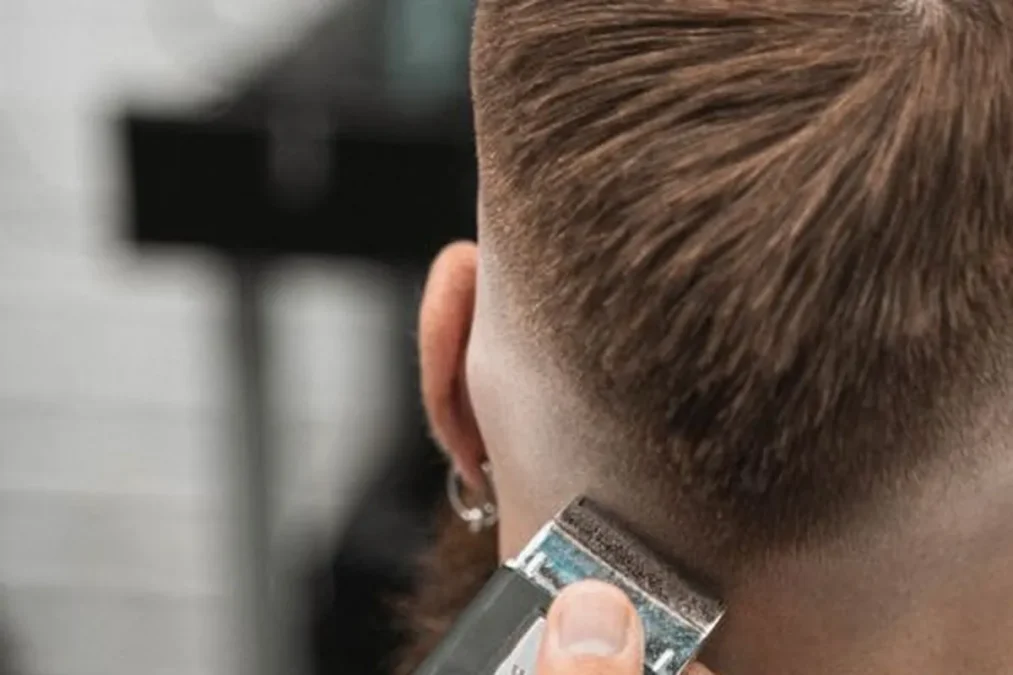
Strong-hold pomade holds thick hair in a combed shape and adds shine, which is part of the look for those styles rather than a side effect. Its hold varies by formula, so the range matters more than any single label: a lighter water-based pomade and a heavy oil-based pomade are barely the same product in hold terms, which is why the wash split below matters. For a fuller account of how pomade compares with the other styling categories, see our comparison of pomade vs clay vs wax vs paste — this section gives only the thick-hair verdict.
Water-based pomade washes out easiest, often with a single shampoo, and starts each day from a clean slate — but it may set slightly, and restyling later in the day may need a little water. Oil-based pomade never dries: it stays pliable and reworkable all day, and one source credits it with stronger resistance to humidity, though that is that source’s claim rather than a measured result. The price is washability — oil-based pomade is the hardest of the products in this guide to remove and needs a degreasing shampoo or a shampoo-first-on-dry-hair technique. Choose between them by routine: wash daily and restyle from clean hair, and water-based is the practical pick; restyle across days and tolerate the wash-out effort, and oil-based earns its keep.
Pomade suits structured, combed styles on thick hair, and it suits men who want shine as part of the look. It does not suit matte, textured styles — that is clay or paste territory, and using pomade there is a finish mistake, not a hold mistake. It also does not suit a man who wants a dry, untouched look: if the shine bothers you, the category is wrong whatever its hold.
Clay is the matte, grippy product, and for thick hair it is the control product the sources point to most consistently. Where pomade polishes, clay grips: it holds texture in place without shine, which is exactly what a modern textured cut on thick hair needs.
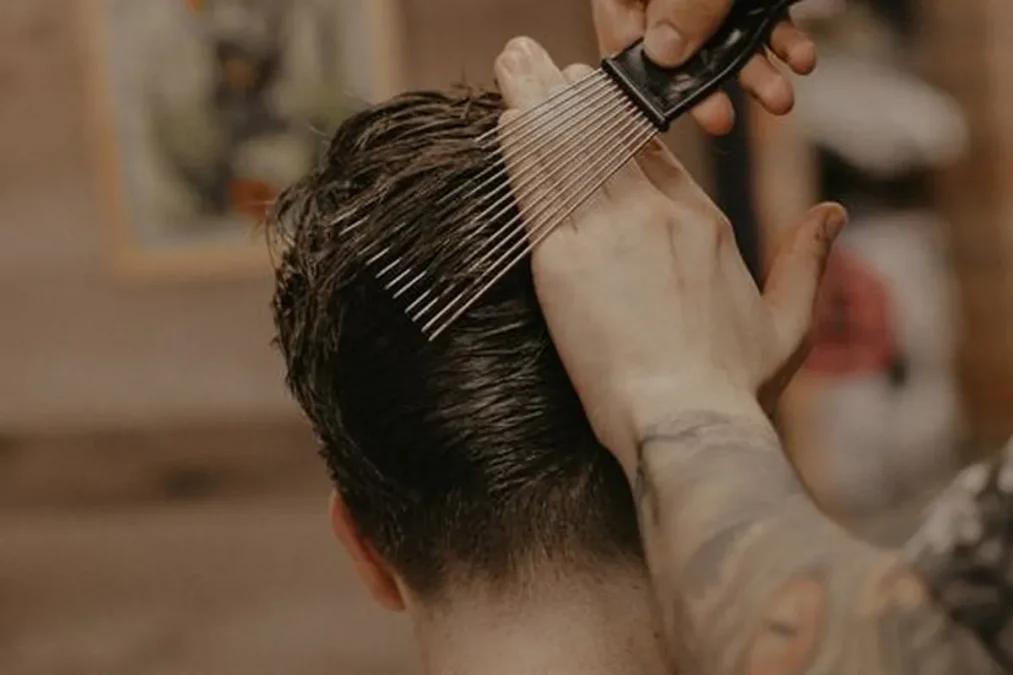
Clay gives strong, pliable hold with a matte finish — the most consistent finding about clay across sources is its lack of shine, more consistent than any agreement on its exact hold. Sources say clays and pastes typically outperform creams on very coarse hair because they grip strands more aggressively, and clay is the grippier end of that pair. Its hold is best described as medium to firm, varying by formula, but its grip — the way it catches and holds strands — is what thick hair actually feels.
Clay’s texture is dry and grippy, which is the mechanism behind its hold: grip lifts roots and holds separation instead of sliding over the hair. That same grip means application matters — a small amount warmed between the palms and worked back to front, as the application section below sets out, rather than a large amount pressed onto the top layer, which is how clay ends up looking dusty or uneven. Clay suits textured, finger-styled looks: crops, textured quiffs, and messy-but-intentional styles where the hair is meant to look separated, not combed flat.
Clay’s washability is formula-dependent, so no single claim covers all clays. Water-soluble clays wash out easily with no residue, while heavier clay-and-wax blends need more shampooing. If wash-out ease matters to you, that distinction is worth more than the hold label: a clay that washes out easily and a clay that needs real shampooing effort are both called clay, and the jar will not always tell you which one you have. When in doubt, the water-based end of the range is the safer daily choice for thick hair that is washed often.
Paste is clay’s softer neighbour: pliable hold with a more natural finish. It belongs in this guide as its own type, not merged into clay, because sources give it a different feel and finish — and because that difference decides which of the two a man with thick hair actually wants.
Paste’s hold is the widest disagreement in the styling-product sources: comparisons range from light-medium to firm depending on the formula, so the honest range for paste is light-medium to firm. Its finish is matte to low sheen — styled, but not slick, and softer-looking than clay’s dry matte. For thick hair, that makes paste the choice when you want control without the dry, grippy look: the hair stays in shape but still looks like hair, not like a product demonstration.
Paste feels thick and flexible, like a heavier cream: it moves without stiffness and does not set hard, which makes it forgiving to restyle through the day. It suits a wider range of lengths than clay in the sources’ account, and it suits men who run their hands through their hair — the product gives rather than resists. Application follows the same rule as everywhere in this guide: small amount, warmed in the palms, back to front, more only if needed. Paste’s flexibility is also its trap: because it never feels stiff, it is easy to keep adding more, and the result is heaviness rather than hold.
Most pastes wash out easily, often with a single shampoo, and water-based pastes are among the easiest products in this guide to remove. That ease is a real advantage for thick hair that is washed often, and it is one reason paste works as an everyday product where a heavier clay might not. It does not make paste a light product, though — washability and hold are separate axes, and an easy-wash paste can still hold thick hair well.
Styling cream is the medium-hold, natural-movement product, and for thick hair its place is specific: it is the everyday option, not the control option. That placement matters, because cream is often sold as if it did everything, and for very coarse hair it does not.
Styling cream gives medium hold with a natural finish — the hair moves, falls, and looks largely unstyled, just better behaved. That is its appeal and its limit in the same fact. For less coarse thick hair, medium hold may be entirely enough for an everyday look, especially on shorter or layered cuts where the cut is already doing much of the control work. The finish is natural rather than shiny or matte in any strong sense, which suits men who do not want their hair to look “done”.
Cream suits everyday, low-effort styles on thick hair that is not very coarse, and it suits men whose main complaint is frizz and flyaways rather than bulk that will not stay down. It also suits longer thick hair where a heavier product would look overworked: a cream can calm the surface without flattening the length. In those cases it is a genuine answer, not a compromise.
For very coarse hair, sources place cream below clay and paste, because it does not grip strands aggressively enough to control them. If your hair pushes a cream aside by midday, that is not a sign that you applied it wrong — it is a sign that the category is too light for your coarseness, and the fix is a grippier category rather than more cream. This is the thick-vs-coarse distinction from the start of the article doing practical work: the same cream can be right for one thick head and wrong for another, and coarseness is what tells them apart.
Thick wavy hair has an extra step that straight thick hair does not: before any styling product, it needs a hydration base. Without it, the styling product sits on dry, frizzy hair and fights it all day. With it, the styling product has something smooth to work with.
One source gives the order plainly, and it is worth following because the order is the point: leave-in conditioner on damp hair first, then defining cream (and mousse in its defining role, where used), then serum or oil on dry hair for flyaways. Each layer has a different job, and swapping them — styling product first, hydration after — puts the control product on top of frizz instead of underneath it. This base is a foundation, not a styling choice: it does not replace the styling product, it prepares the hair for it.
The leave-in keeps the cuticle smooth and helps prevent frizz forming, which is the foundational hydration thick wavy hair needs. The defining cream then shapes the wave pattern rather than fighting it, giving definition without the stiffness a strong styling product alone might cause. Neither layer is about hold in the pomade-or-clay sense; they are about making the hair behave well enough that the styling product does not have to do all the work. That division of labour is why thick wavy hair often looks better with two lighter layers than with one heavy product.
Straight thick hair generally does not need this base: its problem is bulk and shape, not wave definition, and a leave-in layer may add weight without adding benefit. Short thick hair that is cut close may also not need it, because there is less length to frizz or define. The base is for thick wavy hair, and for longer thick hair whose ends dry out first — in those cases the ends, in particular, benefit from the leave-in step, as the wash section below notes.
Serums and oils are the smoothing products, and for thick hair their rule is the shortest in this guide: ends only, never roots. Get that placement right and they are genuinely useful; get it wrong and they are the fastest way to make thick hair look greasy.
A lightweight serum or oil smooths flyaways, adds shine, and in some accounts gives heat protection. Those are surface jobs, and they are jobs for the part of the hair that actually frays: the mid-lengths and the ends, which dry out first on longer thick hair. Used there, a serum can be the difference between a style that looks finished and one that looks frizzy at the edges even though the shape is right.
Heavy butters and creams at the roots are what weigh hair down, in the wavy-thick sources’ account — and the same applies to serums and oils applied at the roots. Thick hair already has weight and bulk at the root; adding a smoothing product there does not smooth it, it flattens and greases it. The rule is therefore placement, not amount alone: even a small amount in the wrong place causes the problem, and even a generous amount on the ends usually does not. If your hair looks greasy after a serum, check where you put it before you blame the product.
Serum and oil go on dry hair, after styling, for flyaways — that timing matters, because on damp hair they mix into the styling layers instead of sitting on the surface where flyaways live. A small amount, spread through the palms and pressed onto mid-lengths and ends, is the pattern in the sources. There is no dose stated here as a universal rule, because formulas vary; start small and add only if the ends still look dry, exactly as the application section below sets out for every product in this guide.
The product category gets you most of the way, but amount, application, and washing decide whether the result looks controlled or just overloaded. These are the practical rules that repeat across sources, and they apply to every product above.
The rule repeated across sources is: small amount, warmed between the palms, worked from back to front, more added only if needed. Over-application of any strong product makes hair look greasy and heavy, whatever the category — and thick hair, which already has bulk, shows over-application faster than fine hair does. Starting small is not caution for its own sake; it is the only way to find the amount your hair actually needs, because that amount varies with length, coarseness, and the product’s formula, and no fixed dose covers all three.
Application state changes the result, and it changes it differently by product. Pomade hold is stronger on dry hair and lighter on damp hair in one source’s account, while creams and leave-ins go on damp hair. The practical reading is: hydrating and defining layers go on damp hair, because they need the hair wet to distribute and to lock in smoothness; styling products for control generally work better on dry or towel-dried hair, where their grip is not diluted. If a product seems too weak, check whether you applied it to soaking hair before you switch categories.
Water-based formulas wash out easiest without buildup, which is one reason they suit thick hair that is washed often. When hair feels heavy or dull from buildup — the sign that layering has caught up with you — a clarifying wash resets it, removing the residue that ordinary shampoo leaves behind. Deep conditioning or a leave-in for long thick hair ends, which dry out first, belongs on the care side of the same routine. Washing frequency itself is a range in the sources, from a few washes per week in one long-hair guide to daily-use formulas elsewhere, so this guide states it as a range tied to scalp oiliness and activity, not a fixed rule. The schedule question — how often to trim, how often to wash as a routine — stays in the maintenance guide, mentioned here only where washing affects the product choice.
Most bad thick-hair product days are not caused by a bad product. They are caused by one of four errors, each with a straightforward fix.
Lightweight sprays and mousses usually lack the grip to control thick strands, so using one as the main hold is the commonest category error for thick hair. The fix is not more of the light product; it is a grippier category — clay, paste, or strong-hold pomade — with the light product kept, if at all, in its defining or texture role. If a product’s marketing promises effortless lightness, ask whether lightness is what your hair actually needs: for thick hair, it usually is not.
Over-application makes any strong product look greasy and heavy, and thick hair shows it first because it already has bulk. The fix is the application rule above: start small, warm it in the palms, work back to front, and add more only if the style genuinely needs it. If your hair looks worse after styling than before, amount is the first thing to check, before category — a right product used in too large an amount still looks wrong.
Layering heavy products repeatedly without washing leaves residue that makes waves look dull and heavy, in the sources’ account. The fix is the wash side of the routine: water-based formulas for easy daily washing, and a clarifying reset when the hair feels heavy or dull. Restyling with water-reactivatable formulas — a splash of water after a workout, in one source’s account — can extend a style without adding another layer of product, which is a better answer than stacking more on top.
Products designed for fine or straight hair can leave thick waves greasy or flat in one source’s account, because they solve a problem thick hair does not have — adding volume or lightness — and may add weight where thick hair needs grip. The contrast is useful to state plainly: fine hair’s problem is usually volume, thick hair’s is control, so a product praised for adding volume is not automatically good for thick hair. For the fine-hair side of that contrast, see our guide to good haircuts for men with fine hair — the cuts, not a fine-hair product guide, which does not exist on this site.
The product is only half the result. The other half is the cut it sits on, the routine that maintains it, and the style philosophy that decides how much effort you want to spend at all.
Ask whether your hair is coarse as well as thick, and whether a layered cut would reduce your bulk — that answer sorts the product shortlist faster than any jar label. Ask, too, whether your current cut is fighting your product: a cut that leaves too much weight in one place will defeat even the right product, and a cut that removes bulk may let a lighter product do the job. The thick-hair cuts guide linked above is the place to start that conversation, not a substitute for it. The maintenance schedule — how often to trim, how often to wash as a routine — is covered in a separate guide, mentioned here only; and the minimalist approach to how many products and steps you keep at all is a separate topic, still to be written.
For general hair-care basics, see the American Academy of Dermatology’s tips for healthy hair.
For thick hair, pick by grip first, finish second, and amount always: the right category, in a small amount, applied back to front, washed out properly, will control bulk, shape, and frizz without stiffness, greasiness, or buildup.
There is no universal winner, and any guide that names one is oversimplifying. The answer depends on finish (shiny or matte), style (structured or textured), and coarseness (very coarse needs clay, paste, or strong-hold pomade; less coarse thick hair can use styling cream for everyday looks). Use the six types in this guide as the shortlist and the grip rule as the filter, and the right product for your style will narrow itself down.
Thick means density — many strands. Coarse means strand diameter — each strand is wide and stiff. Sources often use the words interchangeably, and this guide flags that rather than silently correcting it. Yes, it changes the product: coarser hair generally needs stronger grip, while less coarse thick hair can use lighter options like styling cream.
Both can control thick hair — finish decides, not a ranking. Use pomade for structured, shiny styles shaped with a comb: slick backs, side parts, pompadours. Use clay for matte, textured styles shaped with fingers: textured crops and quiffs. If you want shine, pomade; if you want matte, clay. The wrong finish in the right hold still looks wrong.
Yes, for less coarse thick hair and everyday natural looks, styling cream is a genuine answer: medium hold, natural movement, hair that looks unstyled but better behaved. It is too light as the control option for very coarse hair, where clay, paste, or strong-hold pomade fit better. Coarseness, not thickness alone, is what decides.
Leave-in conditioner on damp hair first, then defining cream (and mousse only in its defining role, where used), then serum or oil on dry hair for flyaways — on mid-lengths and ends, not roots. The order is the point: hydration first, definition second, smoothing last. Swapping them puts the styling product on top of frizz instead of underneath it.
Start small, warm the product between your palms, work it from back to front, and add more only if needed. No fixed dose is stated here as a universal rule, because amount varies with length, coarseness, and formula. Over-application is the commonest cause of a greasy, heavy result, and it is the first thing to check before switching products.
Use water-based formulas, which wash out easiest without buildup, and use a clarifying wash to reset hair that feels heavy or dull from residue. Washing frequency itself is a range in the sources, tied to scalp oiliness and activity, not a fixed rule — so this guide does not prescribe a number of washes per week. If you layer heavy products repeatedly without washing, dullness and heaviness are the expected result, not a product failure.
Mixing is mentioned here only as a general practice some men use, with no recipe claimed and no combination prescribed. The caution is practical: layering heavy products repeatedly without washing makes waves look dull and heavy, so mixing is not a reason to skip washing. If you mix, start small with each product, keep the total amount low, and wash out properly — and if the result looks heavy, reduce the amount before you blame either product.